Most players think a pickleball paddle setup is one decision: buy the paddle. Then they get to the court, the handle turns into a wet bar of soap by the third game, the ball sails long on every other drive, and they blame the paddle. A real pickleball paddle setup is three decisions stacked on top of each other. The face and core you buy, the shape you buy it in, and the grip you wrap around the handle before you ever step on the court.
I have watched this go wrong a few hundred times at my club. A member shows up with a brand new paddle, a beautiful raw carbon face, and a factory grip that has been sitting in a warehouse since spring. They play three games, hate the paddle, and put it on the used rack. Nine times out of ten the paddle was fine. The setup was not.
Here is the order I would do things in, and the gear I would do it with.
Why you should trust me
I am Coach Ray. I played tennis through college, picked up pickleball in 2019, and now I coach full time at a club with 400 members in Naples, Florida. Over the last five years I have demoed more than 60 paddles. I keep a log on each one: how big the sweet spot plays, how the face texture holds up, what the edge guard looks like after three months of doubles, and whether the handle is still comfortable in hour two.
The feedback I get comes from both ends of the speed spectrum. My juniors tell me immediately when a paddle is too hot to control. The 70-and-over league tells me when a paddle is too heavy by the third game. When those two groups agree on something, I write it down.
What I do not do is recommend a paddle because someone waved it at a camera. The paddle market is 90 percent marketing and 10 percent graphite, and the fastest way to waste money is to buy the loudest product instead of the right one.
How I judge a paddle setup
Three criteria, in this order.
Sweet spot before power. Sweet spot size beats raw power for about nine out of ten players. You do not need power you cannot control. A big, forgiving hitting zone keeps the ball in the court on off-center contact, and off-center contact is most of recreational doubles. If you are choosing between a hotter paddle and a more forgiving one, take the forgiving one until your third shot drop lands six out of ten times.
A face texture that survives. Raw carbon fiber gives you a grippy surface and a firm response, but grit is not permanent. Sweat, grit from the court, and UV all wear a face down. A textured face that is dead in six weeks is a failed product no matter how it plays fresh, so I check the face every month and I tell members to do the same.
A grip that works in humidity. This is the one nobody budgets for. Naples in August is a different sport than Naples in January. A slick handle forces you to squeeze, and squeezing kills your touch at the net. A tacky, moisture-wicking overgrip costs less than a bucket of balls and it fixes more bad shots than a new paddle does.
Then the two specs that decide how the paddle actually behaves: core thickness and shape. Core thickness is the quiet variable. A thicker core plays softer, absorbs more pace, and gives you a more forgiving response. A thinner core plays firmer and faster, which helps you win hand battles at the kitchen line but punishes sloppy contact. Shape decides how much reach you trade for forgiveness. There is no universal right answer, only the answer that matches your game.
What you need before you start
You need two things: a paddle whose specs match how you play, and a fresh overgrip on the handle. That is the whole shopping list. Everything else is marketing.
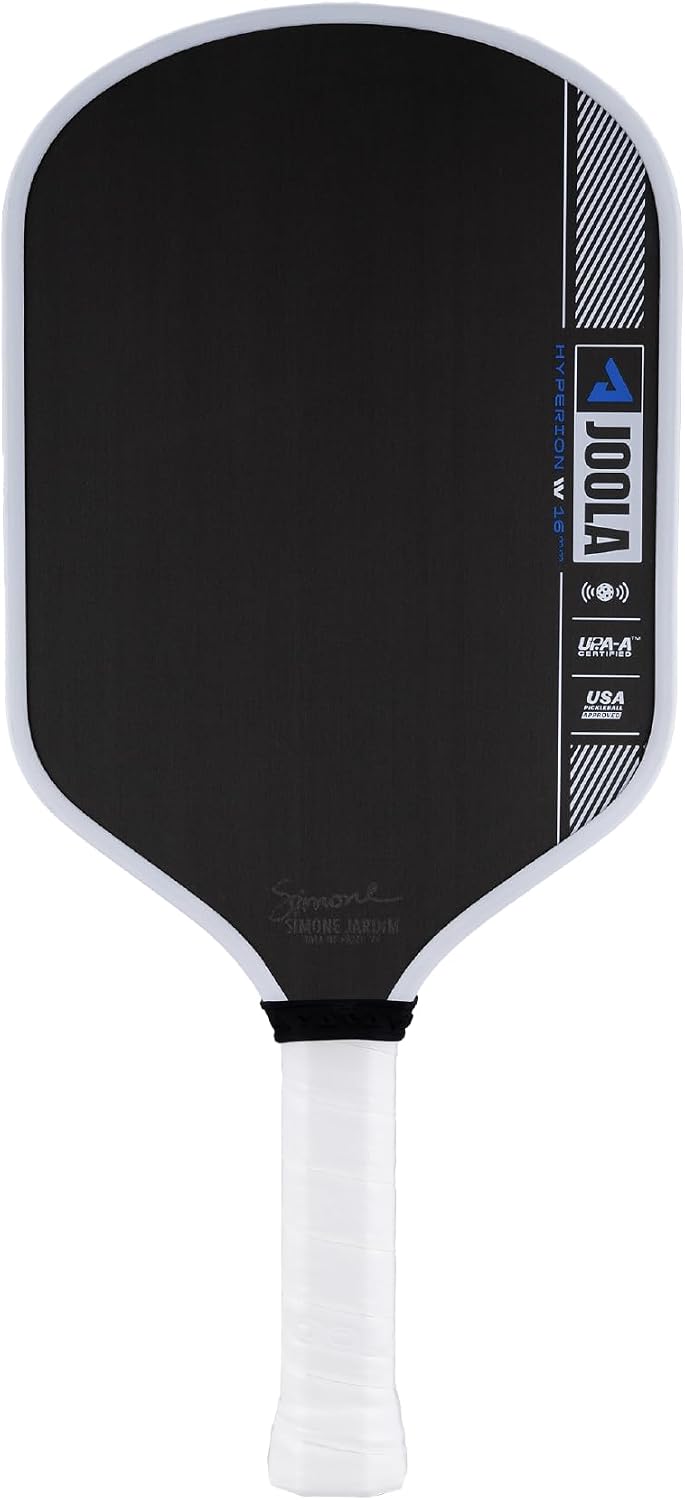
Our pick: JOOLA Pro IV Pickleball Paddles, Raw Carbon Fiber Surface, Perseus, Hyperion, Scorpeus & Magnus Shapes, 14mm/16mm, Tech Flex Power, Propulsion Core, Wide or Elongated, UPA-A and USAP Approved
 Visit on Amazon →
This is the paddle I hand to a member who wants one frame to grow into rather than three frames to cycle through. The reason is simple: it gives you the choice instead of making it for you. Four shapes (Perseus, Hyperion, Scorpeus and Magnus), two core thicknesses at 14mm and 16mm, and a choice between wide and elongated builds. That means the same model can be a control paddle for a 60-year-old doubles player and a power paddle for a former tennis player with fast hands.
The raw carbon fiber surface is the part that matters for spin, and it pairs with a Propulsion Core and Tech Flex Power construction that keeps the response firm without feeling like a plank. The approval side is the detail I care about most. It is UPA-A and USAP approved, and I have had too many members show up with a paddle that claimed approval and arrived unapproved to treat that as a footnote. If you play anything sanctioned, verify it before you buy it, not after.
Check current Amazon price. My honest read: this sits at the top of what I would spend before the money starts going to pro sponsorships instead of materials. Buy the 16mm in a wide shape if you are a doubles player who wins with patience. Buy the 14mm in an elongated shape if you have fast hands and already generate your own pace.
Flaws but not dealbreakers: The shape and thickness matrix is genuinely confusing if you shop fast. Slow down and pick based on how you actually lose points, not on what looks aggressive in a photo.
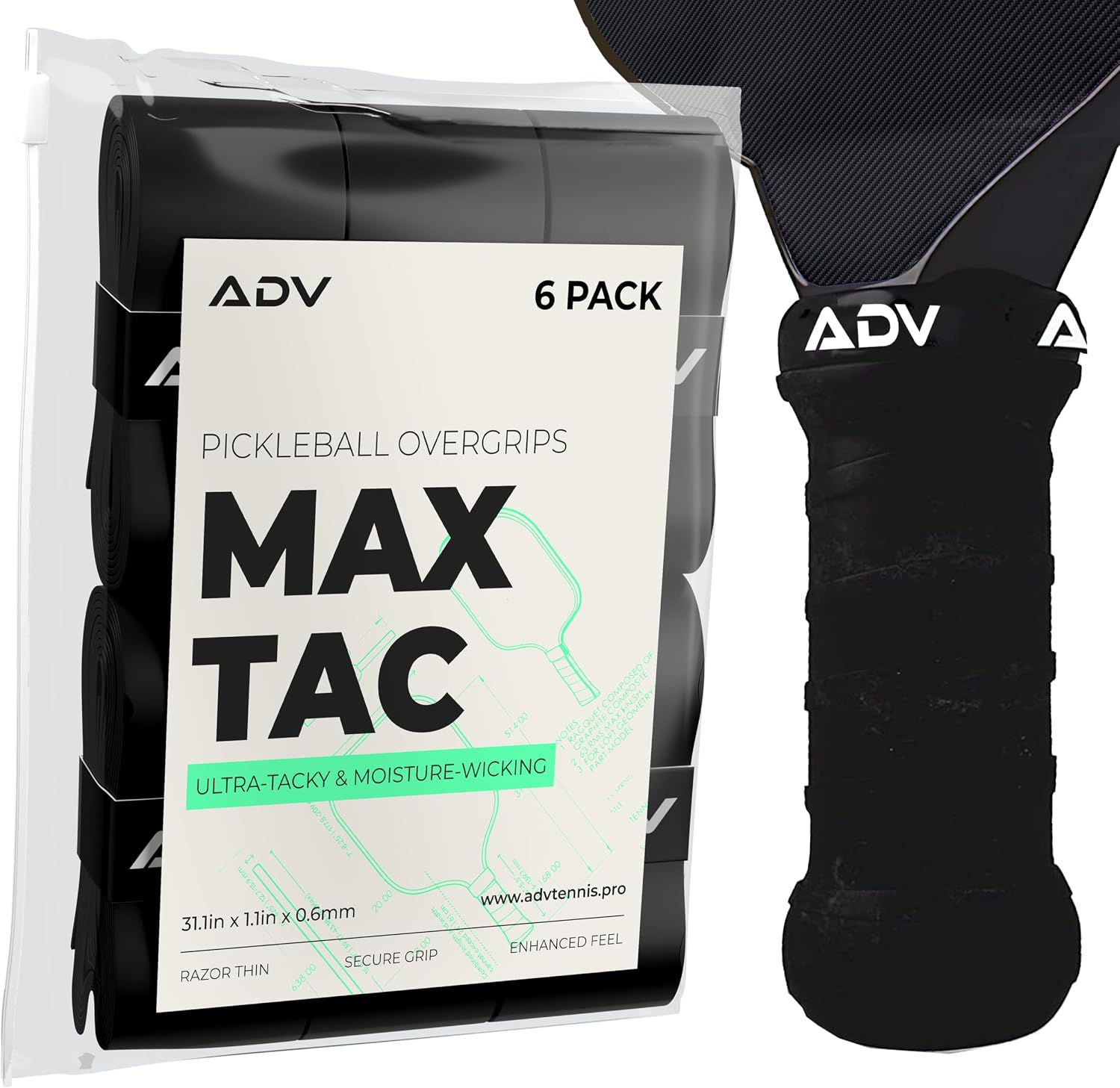
Budget pick: ADV MaxTac Pickleball Paddle Grip Tape - Tacky Moisture-Wicking Overgrip
 Visit on Amazon →
This is the cheapest upgrade in the sport and the one most players skip. Grip tape that disintegrates in Florida humidity is my single most common gear complaint, because a wet handle changes your swing without you noticing. You squeeze harder, your wrist tightens, and your dinks start popping up.
The MaxTac overgrip is tacky and moisture-wicking, which is exactly the combination you want in a warm climate. Tack gives you traction on contact. Moisture-wicking keeps that traction from turning greasy in the second hour. Wrap it over your factory grip, keep two spares in your bag, and change it the moment it stops feeling grippy when your hand is dry.
Check current Amazon price. If you take one thing from this article, take this one: a fresh overgrip on an average paddle beats a dead grip on an expensive one, every single time.
Flaws but not dealbreakers: It is a consumable, not a permanent fix. Expect to go through several a season if you play three or more times a week in summer.
The actual setup workflow
Now the part you came for. This works whether you are setting up a brand new paddle or fixing the one in your bag right now.
Step one: match core thickness to how you lose points. If you lose points by hitting long and by rushing, go thicker. A 16mm core gives you a softer response, a more forgiving hitting zone, and less vibration into your elbow. If you lose points because you get beaten at the net and your put-aways sit up, go thinner. A 14mm core plays firmer and faster. Write down the last three games you lost and why. That answer picks your core.
Step two: pick the shape for your role. Elongated shapes give you reach and leverage, which helps on serves and on balls you would otherwise have to lunge for. The trade is a smaller effective sweet spot. Wide shapes give you a bigger hitting zone and a more stable face on off-center contact, which is what most doubles players actually need on resets. If you play mostly doubles and you are not a former college tennis player, start wide.
Step three: verify approval before you commit. If you play tournaments, leagues with rules, or anything sanctioned, confirm the paddle is on the approved list for the body that governs your play. This model is UPA-A and USAP approved, so it clears that hurdle. Never take a marketplace listing's word for it.
Step four: decide whether to replace the grip or over-wrap it. Replacing means pulling the factory grip off down to the bare handle. Over-wrapping means taping directly over the existing grip. Over-wrapping is faster, adds a little cushion, and slightly increases handle size. If the factory grip is already slick or compressed, strip it first. If it is new, over-wrap it.
Step five: wrap the overgrip properly. Start at the bottom of the handle near the butt cap. Peel only a few inches of backing at a time so the adhesive does not dry out. Wrap upward in overlapping turns, covering roughly a quarter to a third of the tape width with each pass. The direction matters more than people think: wrap so the trailing edge of each turn faces down the handle, away from your top hand. That way your fingers slide over the seam instead of catching it. Finish at the top with the included finishing tape and press the whole wrap down firmly.
Step six: break it in with a real drill session, not a game. The first session on any new setup should be a drill session so you learn the sweet spot instead of guessing at it. Ten minutes of cross-court dinking to feel the face. Ten minutes of third shot drops to test the forgiveness. Ten minutes of wall hits or hand battles to test how the paddle responds when you are late. You are mapping the hitting zone, not winning points.
Step seven: rotate and replace on a schedule. Overgrip goes every six to ten sessions in warm weather, sooner if you sweat heavily. Check the face texture monthly by dragging a fingertip across it. Check the edge guard for chips, because a guard that catches the ball on a reset is a lost point you will blame on yourself. If the face is smooth and the guard is chewed up, the paddle is done regardless of how it felt on day one.
The mistakes I see every week
Buying power you cannot control. The most common error at my club is a mid-level player buying a hot paddle because it felt great in a five-minute demo. Five minutes of fresh feel tells you nothing about week six. Buy the paddle that keeps the ball in the court.
Playing on a dead grip. Nobody wants to spend on a consumable. Everybody wants to know why their dinks are popping up. These two facts are related.
Wrapping the overgrip the wrong direction. If the seam faces your top hand, your fingers catch it on every grip change. Rewrap it. It takes two minutes.
Judging a paddle from one session. A paddle that feels amazing fresh and dead after six weeks is a failed product. Judge it after three months of doubles, not after one open play night.
Trusting the "pro model" markup. The pro model premium is the worst deal in the sport right now. You are usually paying for a paint job and a sponsorship, not a different core.
What this setup costs you over a season
Think in two buckets. The paddle is a one-time purchase you should expect to keep for a year or more of regular play. The overgrip is a recurring cost that runs all season, and it is the smaller number by a wide margin. Check current Amazon price on both and do the math on your own play frequency: three sessions a week for six months means roughly a dozen overgrips if you change them on schedule.
That is the trade. A modest recurring spend on grips keeps the expensive item performing the way it did on day one. Players who skip it end up replacing the paddle early and blaming the manufacturer.
The paddle in this guide is the one-time decision, and the 16mm wide build is the version I would put in the hands of most recreational doubles players. The overgrip is the habit. Do the habit, and the paddle will feel new for a lot longer.
Quick answers
How often should I replace the overgrip? Every six to ten sessions of real play, sooner in summer humidity. If it feels slick when your hand is dry, it is done.
Does core thickness matter more than the face? For most recreational players, yes. A thicker core gives you a softer, more forgiving response and a bigger usable sweet spot. Face material matters for spin, but only if you already have the technique to generate it.
Can I over-wrap a brand new paddle? Yes, and you should. It adds cushion, improves tack, and protects the factory grip underneath.
Do I need an approved paddle? If you play anything sanctioned, yes. This model is UPA-A and USAP approved, but verify your specific configuration against your league's list before you buy.
Your paddle was probably never the problem. Your setup was. Fix the core, the shape, and the grip in that order, and you will stop shopping for a solution you already own.