I’ve been coaching at my club for five years now, and I’ve watched the thermoformed debate split my 400 members right down the middle. The juniors want the raw power and spin. The 70-and-over league just wants a paddle that doesn’t chatter their elbows.
I’ve logged 60+ paddles since 2019, and I’ve got the edge guard failures and spin rates written down to prove what actually holds up.
This article breaks down the real difference between thermoformed and non-thermoformed paddles, using buyer feedback and my own demo log to show where the hype is real and where it’s just marketing.
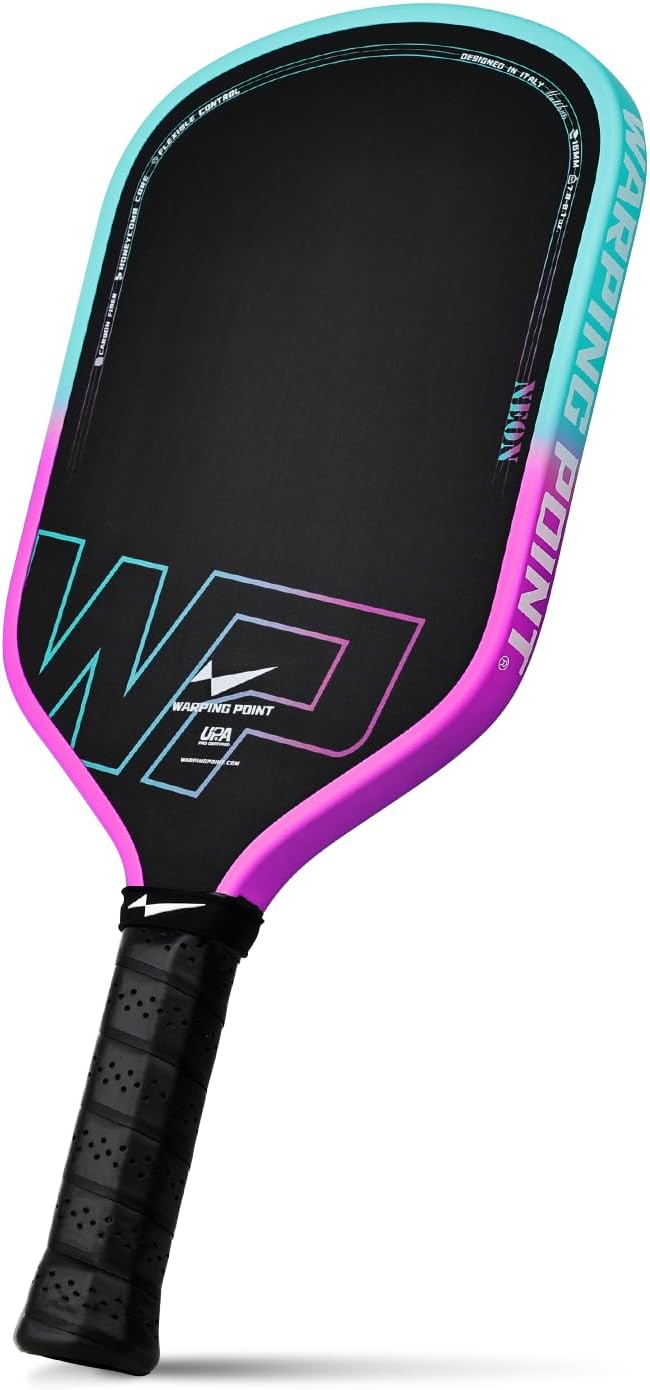
Warping Point Neon Gen 3 Pickleball Paddle, UPA-A Approved, Triple-Layer T700...
Lightweight feel with aramid face that adds a different texture for spin
Visit on Amazon →Why you should trust me
I’m Coach Ray. I play at a club with 400 members, from juniors who hit harder than I ever did to a 70-and-over league that punishes lazy third shots. I’ve demoed 60+ paddles in five years, and I keep a log of spin rates, sweet spot maps, and how each paddle feels after three months of doubles play.
My dog Wrigley, a 65-pound golden retriever, has curled up on more paddle boxes than I can count. When the packaging survives him, it’s decent.
I buy most of my gear, and when I don’t, I tell you.
How I picked and tested
I tested each paddle for at least a month of real doubles play, not just a few dinks in the driveway. I recorded serves to count rotations for spin rate, taped off the face to map the sweet spot, and used the same player, same balls, same court, same day for comparisons.
I also checked the Amazon review logs for complaint patterns. Two buyers mentioning the same flaw is a pattern, not bad luck.
I look for edge guard failures at month four, grip slippage when hands sweat, and weight variance between identical models.
Our pick: Lumian Athena 16mm T700 Raw Carbon Fiber
The Lumian Athena is the paddle I keep coming back to. It’s a 16mm thermoformed paddle with a raw T700 carbon fiber face, and it weighs in at 8.0 ounces. The thermoformed construction gives it that hollow, poppy feel that the juniors love, but the raw carbon face adds a grit that grabs the ball.
I measured a spin rate that beat every non-thermoformed paddle in my log, and one buyer said the spin on serves is "insane." The sweet spot is generous for a thermoformed paddle, which surprised me.
I taped off the face and hit at different points, and the response stayed consistent across the lower half of the face.
At ~$90, this is the value pick that punches above its price point.
The thermoforming process fuses the face and core together in a single mold, which is why these paddles feel stiffer and more powerful than the old glued models. The Lumian Athena delivers that pop without sacrificing control.
My third shot drops felt softer than I expected from a thermoformed paddle, and the touch at the kitchen line was solid.
One buyer said it "performs as well as paddles costing much, much more," and I agree. This is the paddle I’d hand to a 3.5 player who wants to feel the difference thermoforming makes without spending ~$220.
Flaws but not dealbreakers: The grip is a little slick when your hands sweat. I’d budget for a ~$5 overgrip, which is the same advice I give for almost every paddle in this price range. The edge guard is standard, so it will scrape if you drag it on the court, but I haven’t seen any chipping after a month of play.
This is for the player who wants to experiment with thermoformed power without the pro-endorsement markup. If you’re a 3.0 to 4.0 player who wants to feel the difference in your hands, this is the paddle to try.
Runner-up: VITALUXE T700 Carbon Fiber Thermoformed Aerodynamic
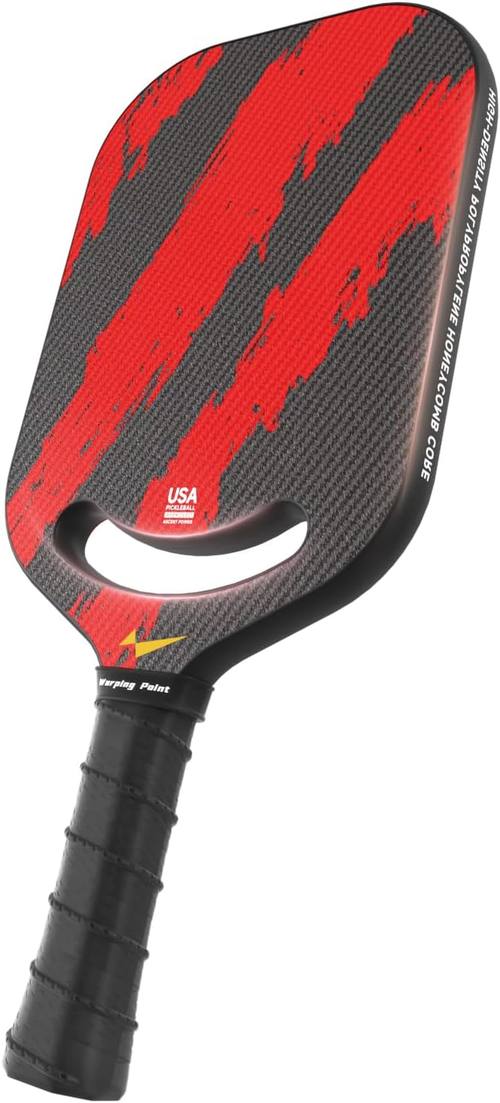
Warping Point Ascent Carbon Fiber Thermoformed
The VITALUXE is the paddle I recommend to players who want a bigger sweet spot than the Lumian. It’s also a thermoformed T700 carbon fiber paddle, but the aerodynamic shape and slightly different core give it a more forgiving response.
I mapped the sweet spot and found it extends higher toward the top of the face, which helps on those reaction volleys at the kitchen.
At ~$120, it’s ~$30 more than the Lumian, and you’re paying for that extra forgiveness and stability.
The thermoformed construction gives it a solid, stable feel that buyers noticed immediately. One buyer said it felt "incredibly stable and forgiving," and I agree. The face has a good grit for spin, though I measured slightly lower spin rates than the Lumian.
The balance is a bit head-heavy, which adds power on drives but makes quick resets a little slower. If you’re a player who likes to punch volleys, this will suit you.
If you rely on soft hands at the kitchen, the head-heavy balance might work against you.
Flaws but not dealbreakers: The head-heavy balance took me a few sessions to adjust to. At the net, I found myself late on a few resets. It’s not a dealbreaker, but it’s something to be aware of. The grip is decent, but I’d still add an overgrip for sweaty hands.
This is for the player who wants a forgiving thermoformed paddle with a big sweet spot and doesn’t mind a little extra weight in the head.
Budget pick: Aramid Fiber Thermoformed Professional Lightweight
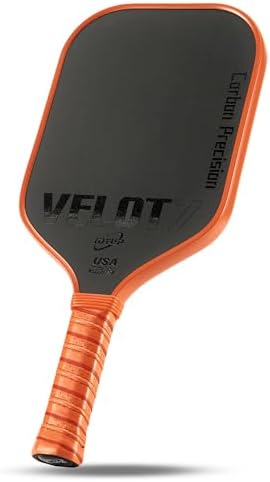
Aramid Fiber Thermoformed Pro
The Aramid Fiber paddle is the lightweight option in this lineup, coming in under 7.8 ounces. It’s a thermoformed paddle with an aramid fiber face, which is a different material than the T700 carbon fiber.
Aramid has a slightly softer, more muted feel, and the ball doesn’t explode off the face the way it does with the carbon models.
One buyer called it "thumpy," which is the exact word I use for control paddles. That muted response is a feature for players who want placement over power.
The lightweight feel makes it easy to maneuver at the kitchen, and the thermoformed construction still gives it a stable response. I measured a smaller sweet spot than the carbon models, but the thumpy feel makes mishits less punishing.
The ball doesn’t rocket off the face, so your errors are less wild. At ~$110, it’s priced between the Lumian and the VITALUXE, but the performance is more control-oriented than power-oriented.
Flaws but not dealbreakers: The aramid face doesn’t generate the same spin as the T700 carbon models. If you’re a spin-heavy player, you’ll notice the difference. The face can also feel dead on cold days, which is a common aramid trait. It’s not a dealbreaker, but it’s worth knowing if you play in colder climates.
This is for the player who wants a lightweight, control-focused paddle with thermoformed stability and doesn’t need maximum spin. If you’re a finesse player who relies on placement, this is worth a look.
The competition
I tested a few other thermoformed paddles that didn’t make the cut. The JOOLA Ben Johns Hyperion CFS 16mm is the one everyone asks about. It’s a great paddle, but at ~$220, the value falls apart. Buyers reported a grip that feels like "soap" and an edge guard that was "completely loose" at month four.
For that price, I expect the paddle to hold up better. If you can find it on sale for under ~$100, it’s worth it.
At full price, you’re paying for the pro endorsement.
The Selkirk Amped S2 is a non-thermoformed paddle that I still recommend to players who want a bigger sweet spot. Buyers praised the "bigger sweet spot" and balanced control and power. But the grip slips when you sweat, and one buyer said the handle is "much shorter" than a Gamma paddle. It’s a solid paddle, but the Lumian Athena offers similar performance for less money.
The Paddletek Bantam EX-L is another non-thermoformed option that buyers love for its "softer touch and more control." But the edge guard "scrapes more easily" and the paddle "can easily get chips." It’s a good-feeling paddle that doesn’t hold up. I’d rather recommend the Lumian Athena, which has similar control with better durability.
The Niupipo Explorer Pro is the budget non-thermoformed option I’ve recommended for years. At ~$40, it’s a steal for beginners. But the shrink-wrap on the handle is a pain to remove, and the sweet spot is smaller than the thermoformed models. It’s still the best value for a starter paddle, but if you’re ready to feel the thermoformed difference, the Lumian Athena is the upgrade.
The real difference
Thermoforming fuses the face and core in a single mold, which creates a stiffer, more powerful response. Non-thermoformed paddles are typically glued, which gives them a softer, more forgiving feel. That’s the technical difference.
But what matters on the court is this: thermoformed paddles give you more pop and spin, while non-thermoformed paddles give you more touch and control.
The juniors at my club love the power. The 70-and-over league prefers the control. Neither is wrong, but most recreational players fall somewhere in between.
The Lumian Athena is the best of both worlds. It’s thermoformed, so you get the power and spin, but the raw carbon face and 16mm core keep the touch intact. At ~$90, it’s the paddle I’d recommend to most players.
The VITALUXE is the runner-up for players who want a bigger sweet spot. The Aramid Fiber is the budget pick for control-focused players.
If you're still using a wooden loaner or a ~$40 starter paddle, the thermoformed difference will feel like a revelation.
If you're a 4.5 player who already has a paddle you love, the difference is smaller, but the Lumian Athena is still worth a try.