Related: Pickleball Paddle Weight: What 7.8 Ounces Actually Feels Like
Carbon fiber pickleball paddles are the default recommendation in 2026, and that is exactly why I want you to slow down before you buy one. I coach at a club with 400 members in Naples, Florida, and my demo bin has held more than 60 paddles in five years. The notes I keep are not about marketing copy. They are about which face textures were still biting after three months of doubles, which edge guards survived contact with the court, and which paddles were still in a member's bag instead of on a shelf in the garage.
Most of the players I fit sit between 3.0 and 3.5, and most of them are shopping for spin and power they cannot control yet. Sweet spot size beats raw power for nine out of ten of them. Core density numbers also mean very little unless the same player swings both paddles back to back, which is why everything below is organized around who a paddle actually suits rather than what its spec sheet brags about.
The four models here cover the practical range: a fiberglass set for households and beginners, a value carbon paddle with a thick core, a textured carbon model built around spin, and a flagship that comes in multiple shapes and two core thicknesses. Prices move on Amazon constantly, so check each listing before you commit. Here is how I would sort them.
Best Overall: JOOLA Pro IV
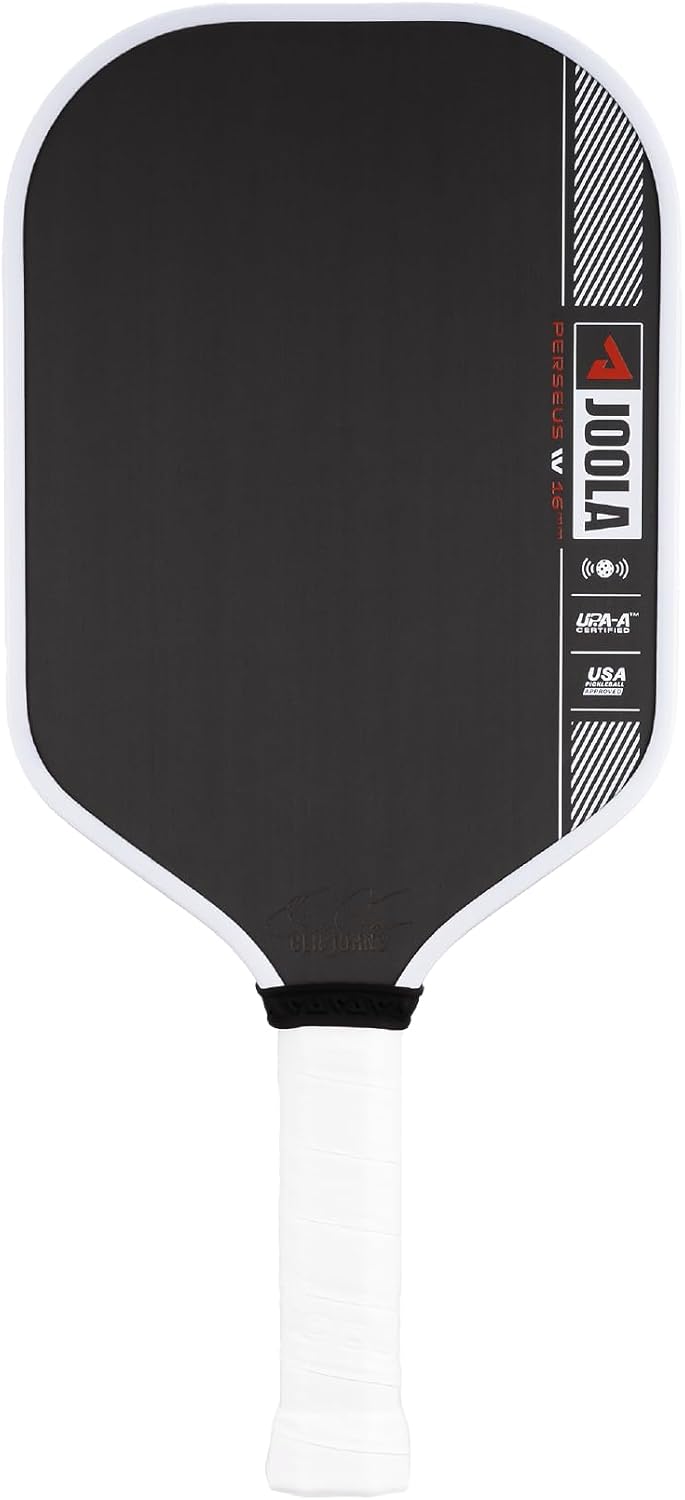
The Pro IV is the paddle I hand to a strong 3.5 or a 4.0 who is tired of experimenting. It is offered in Perseus, Hyperion, Scorpeus, and Magnus shapes, in 14mm and 16mm cores, and in wide or elongated builds. That range is the real feature. You match the paddle to your game instead of changing your game to fit a paddle, which is what most players end up doing when they buy on impulse.
The raw carbon fiber surface is the part I care about most. Raw carbon means the texture comes from the material itself rather than a sprayed grit layer that wears smooth in a few weeks. In Florida humidity, a face that goes slick is a face that stops holding spin, and I have watched plenty of players blame their technique for a paddle problem.
Approval is the first thing I check for anyone playing sanctioned events, and this one is listed as approved by both UPA-A and USAP. A paddle that claims approval and arrives unapproved is one of my least favorite things in this sport, and it happens more often than it should.
The catch is the shape and thickness you choose. A 14mm elongated build pops harder and punishes sloppy hands. If you are a 2.5 still learning to keep the ball down, this is more paddle than your swing can use, and you will play worse for a month before you play better.
Best Value Carbon Fiber: JOJOLEMON
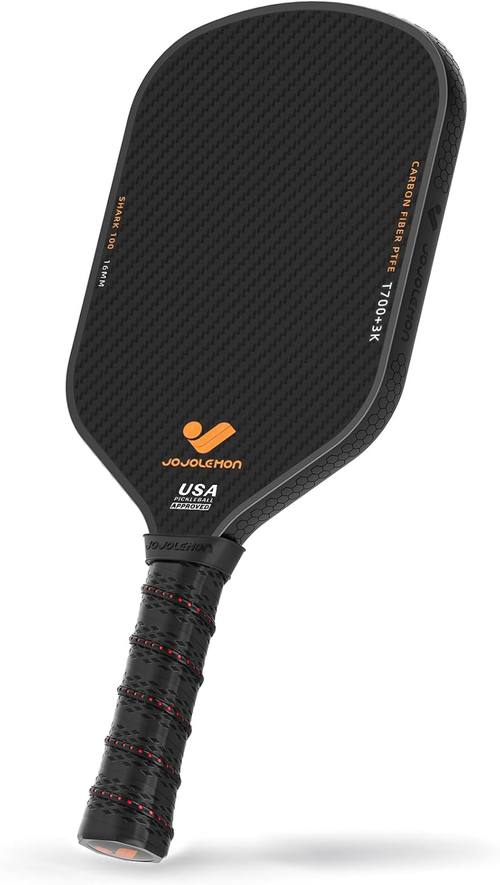
This is the paddle I would put in the hands of the recreational doubles player who wants carbon fiber without paying flagship money. The build is a carbon fiber face over a 16mm Shark Power polymer core, and that combination is the one most club players should be shopping for. The carbon gives you texture for spin. The 16mm core softens the pop, adds dwell time, and makes off-center contact less punishing, which is exactly what a 3.0 needs while they build consistency.
It is a control-first paddle, and the listing says as much. It is designed around spin and consistency rather than raw drive power. If you are losing points because you are hitting balls long, that trade is in your favor. If you are losing points because you cannot finish a point at the kitchen line, a thick control paddle will not fix that for you.
Two things to check before you buy. First, confirm the grip size feels right in your hand, because a paddle you cannot hold comfortably is a paddle you will not use well. Second, plan on replacing the grip tape at some point. Cheap tape and Florida humidity do not get along, and that is true of paddles at every price.
Best Spin Surface: TENVINA T700SC
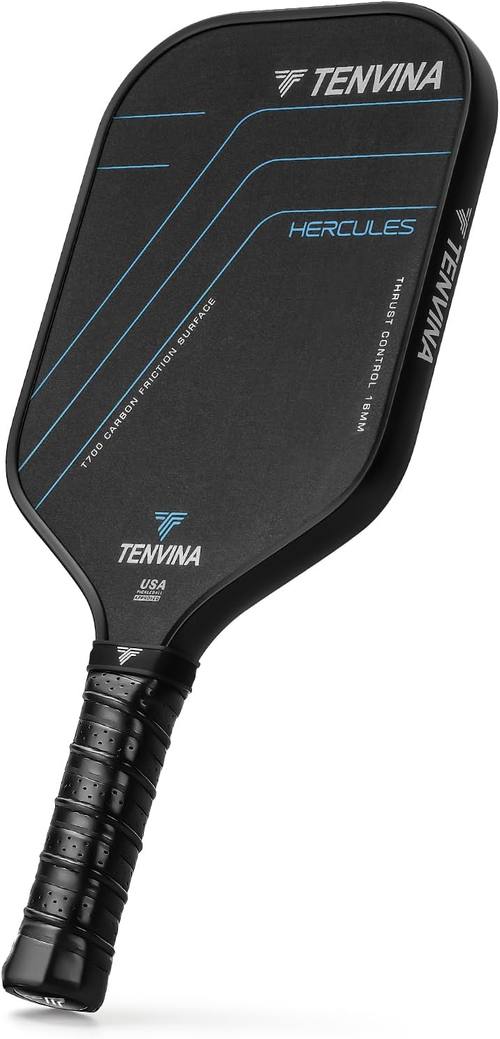
The TENVINA is the spin-first option in this group. It uses a multi-layer T700SC textured carbon fiber face, it is USAPA approved, and it comes in four shapes and thicknesses so you can pick between a wider, more forgiving head and a longer, faster one.
Spin is roughly 30 percent paddle and 70 percent technique. I can put more spin on a worn-out rental than most players get from an expensive paddle, so do not buy this expecting the ball to dive on its own. What a textured carbon face does give you is margin. When your contact is slightly off, a grippy surface still grabs some of the ball, and over a long match that margin shows up on the scorecard.
The honest warning is durability. Every textured face wears with play, and the question is how fast. My rule is simple: check the surface after a month of regular doubles, clean it the way the manufacturer recommends, and never store a paddle face-down in a hot car. A paddle that feels amazing in week one and dead by week eight is a failed product no matter how it played fresh.
If you play on rough outdoor courts, expect any face texture to wear faster. That is the court, not the paddle.
Best Starter Set: MTEN Pickleball Paddles Set
Fiberglass is the honest beginner material, and the MTEN set is the honest beginner answer. It is USAPA approved, it comes as a set of 2, 4, or a single paddle, and that set structure is the point. If you are buying for a household, a set of two or four means nobody sits out while one person waits for a paddle to arrive.
Fiberglass paddles feel heavier and produce easy pop with a short swing, which helps new players get the ball over the net while they learn. What they do not do is hold face texture the way carbon does, so spin will come from your hands, not your equipment. That is fine at the start. Learning to generate spin with a plain face makes you better later, when you do move to a textured carbon paddle.
This is also the right pick for a club loaner bin, a school program, or a grandparent who wants to try the sport before spending more. It is not the paddle for a 4.0 hunting spin, and I would not pretend otherwise.
How I judge a paddle
Four things, in order.
Approval status first. If a paddle claims USAPA or UPA-A approval, that claim should hold up. I check it before anything else, because an unapproved paddle is a problem in tournament play and a sign of sloppy quality control everywhere else.
Sweet spot second. I am looking for how far from center I can hit before the ball dies. A big sweet spot forgives late hands and bad footwork, and for most players that is worth more than a few extra miles per hour on a perfect strike.
Face durability third. I want to know whether the texture is part of the material or sprayed on top of it, and I want to know how the surface looks after real use, not after a demo session. Edges chip and faces peel. The brands that fix edge guards and keep texture alive get my repeat recommendations.
Feel at the net last. Does the paddle let you reset a hard drive, or does it pop the ball up for your opponent to finish? Does the edge guard catch the ball on low blocks? Those details decide matches in doubles far more often than raw power does.
I do not need a spec sheet to answer any of that. I need the same player swinging two paddles on the same day, in the same conditions, over several weeks.
The paddle reference table
This is the table I use when a member stops me at the net and asks what to buy. Prices change, so I leave that column to the listing.
| Paddle | Face | Core | Shape or set options | Best for | Price |
|---|---|---|---|---|---|
 Visit on Amazon → JOOLA Pro IV |
Raw carbon fiber | 14mm or 16mm with Propulsion Core | Perseus, Hyperion, Scorpeus, Magnus; wide or elongated | Strong 3.5 and up who want one paddle and no more shopping | $149.95 |
 Visit on Amazon → JOJOLEMON |
Carbon fiber | 16mm Shark Power polymer | Standard build | Recreational doubles players who want control and spin | $109.99 |
 Visit on Amazon → TENVINA T700SC |
Multi-layer textured T700SC carbon fiber | Multiple thickness options | Four shape options | Players working on spin who want shape choices | Check current Amazon price |
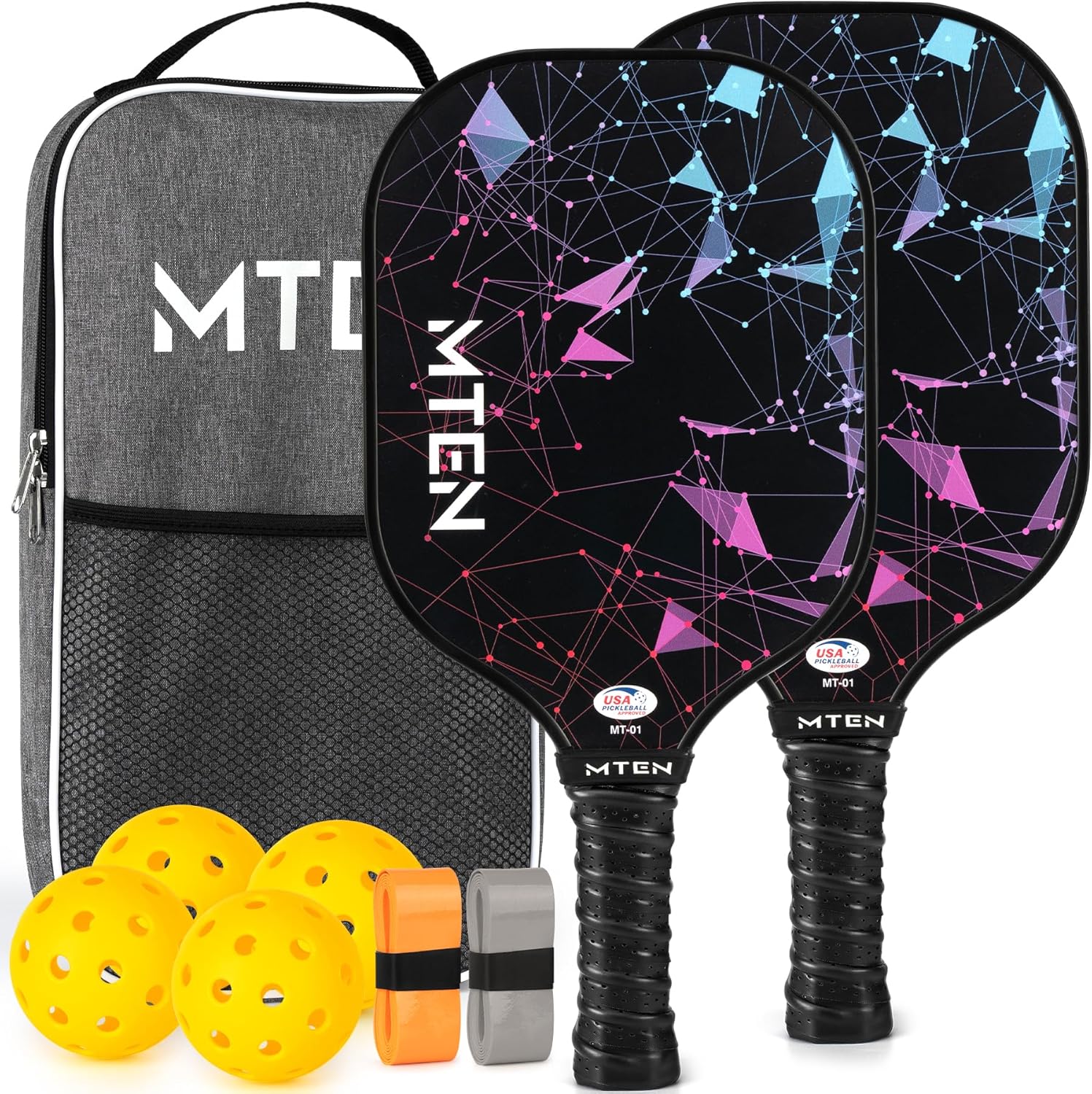 Visit on Amazon → MTEN set |
Fiberglass | See listing | Set of 1, 2, or 4 | Households, beginners, loaner bins | $29.99 |
Should you buy the JOOLA Pro IV?
Yes, if you are a strong intermediate or advanced player who wants to stop shopping. It is approved by both UPA-A and USAP, it comes in four shapes and two core thicknesses, and the raw carbon fiber face does not depend on a sprayed grit layer. Pick the 16mm wide build if you want forgiveness, and the 14mm elongated build if you already have fast hands and want more reach and pop.
Skip it if you are still learning to keep the ball in the court. A thick-core control paddle will help you more, and it will cost you less.
Should you buy the JOJOLEMON?
Yes, if you want carbon fiber feel without flagship pricing. The 16mm core is the forgiving choice for recreational doubles, and the carbon face gives you texture for spin. It is a control-first paddle, so do not expect it to win kitchen-line battles for you on its own. It rewards patient play, and patient play is what wins at the 3.0 and 3.5 level.
Should you buy the TENVINA T700SC?
Yes, if spin is the part of your game you are actively working on and you want to choose between four shapes and thicknesses. Pair it with a lesson or two, because the paddle will not spin the ball for you. Watch the face texture, check it after a month, and keep it out of a hot car.
Should you buy the MTEN set?
Yes, if you are buying for a household, a true beginner, or a club loaner bin. Fiberglass is durable, honest beginner material, and the set options mean everyone can play the same afternoon. It is not the paddle for a 4.0 chasing spin, and it is not trying to be.
The range in this group is wide, and that is the point. Buy the paddle that fits the player you are this season, not the player you hope to be next year. A mid-price, durable paddle with a big sweet spot will beat a flagship you cannot control every single time.