Related: Best Pickleball Paddles for Spin: What Actually Keeps Its Grit
I have demoed more than 60 paddles in five years of coaching at a club with 400 members in Naples, Florida, and the question I answer most often is not about brands. It is carbon fiber vs fiberglass pickleball paddles, and whether the upgrade changes anything for a recreational player. My answer is boring and honest: the material matters less than the sweet spot, the sweet spot matters less than your technique, and once your technique is decent, the face material decides how long the paddle keeps doing what you paid for.
I keep a log on every paddle that comes through the demo bag. Spin off the bounce, how far I can move the contact point toward the edge before the ball dies, and how the face and edge guard look after three months of doubles. I also collect feedback from both ends of the speed spectrum: the juniors in my clinic who swing at everything, and the 70-and-over league that plays a soft game and notices grip and weight before anything else.
What follows is four paddles I would hand to four different players. A thermoformed carbon build for the serious regular, a second carbon option built around spin and consistency, a graphite and fiberglass set for a new player or a household, and a light fiberglass paddle for the smallest budget in the group. I will also tell you who should skip each one, because that is the part most buying guides leave out.
Best Overall: Warping Point Neon Gen 3 Pickleball Paddle
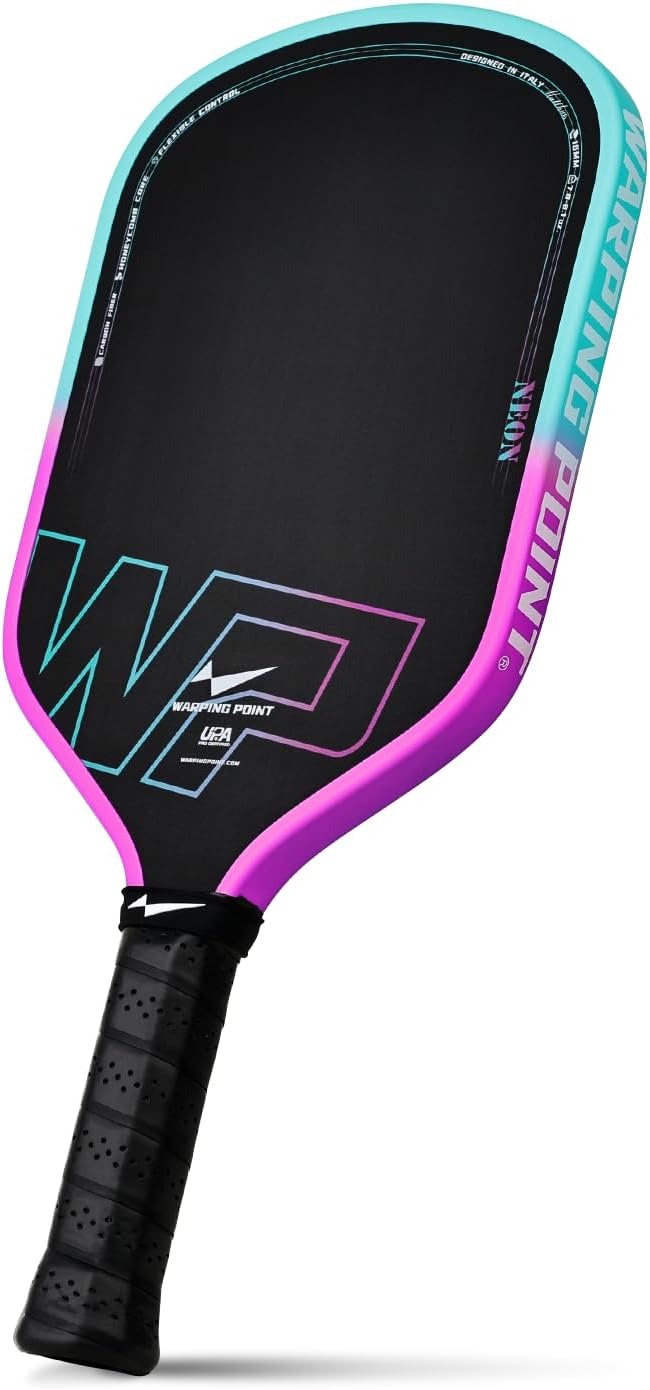
This is the paddle I recommend to the 3.5 and up player who is on court three or more times a week. The frame is thermoformed, the face is triple-layer T700 raw carbon fiber, the core is 16mm, and it carries UPA-A approval. Thermoformed versus non-thermoformed is the only real technology story in paddles over the last three years, and this is the build that shows why. The frame and face behave as one piece at contact instead of feeling hollow and glued together.
Raw carbon fiber is not a cosmetic choice. The texture is where the spin comes from, and the grit on this face was still doing its job at the end of my three-month check, which is more than I can say for plenty of faces in my log. Control and power both showed up in the same session, which is unusual at this price tier. The 16mm core is the thickness I steer most recreational players toward, because it buys a bigger sweet spot and softens the ball on resets.
Who should skip it: the beginner who plays once a week. A paddle with this much spin and control rewards a repeatable swing, and if you do not have one yet, you will not feel the difference. Skip it too if your tournament does not accept UPA-A approval. I have watched players buy paddles off a video and find out at check-in that they cannot use them. Read your event rules first.
Best for Spin and Consistency: JOJOLEMON Carbon Fiber Pickleball Paddle
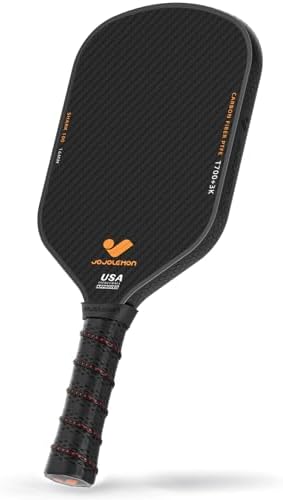
This is the second carbon option, and it takes a different route to a similar place. The face is carbon fiber, the core is a 16mm Shark Power polymer core, and the stated goal is spin and consistency. In my log, consistency is the word that separates it. The ball comes off the same whether I catch it dead center or a half inch off, and that is exactly what a 3.0 to 4.0 player needs.
If your miss is a half inch toward the edge, and it is for almost everyone I coach, a paddle that behaves the same across the face wins you more points than a paddle with a higher top-end power number. That is the whole argument for sweet spot over raw power. It is why this paddle stays in the demo bag for players moving up from a starter paddle and why I hand it to the adults in my intermediate clinic before I hand them anything louder.
The trade-offs are real. It is not a thermoformed frame, so the feel at contact is different from the Warping Point, and if you have trained on a thermoformed paddle you will notice it for a session or two. The 16mm core leans toward control, so a banger who wants the ball to jump off the face should look elsewhere. For everyone else who wants the ball to dip at the back line, this is the easier paddle to live with over a long season.
Best Set for New Players: Selkirk Sport SLK Club Pickleball Paddles Set
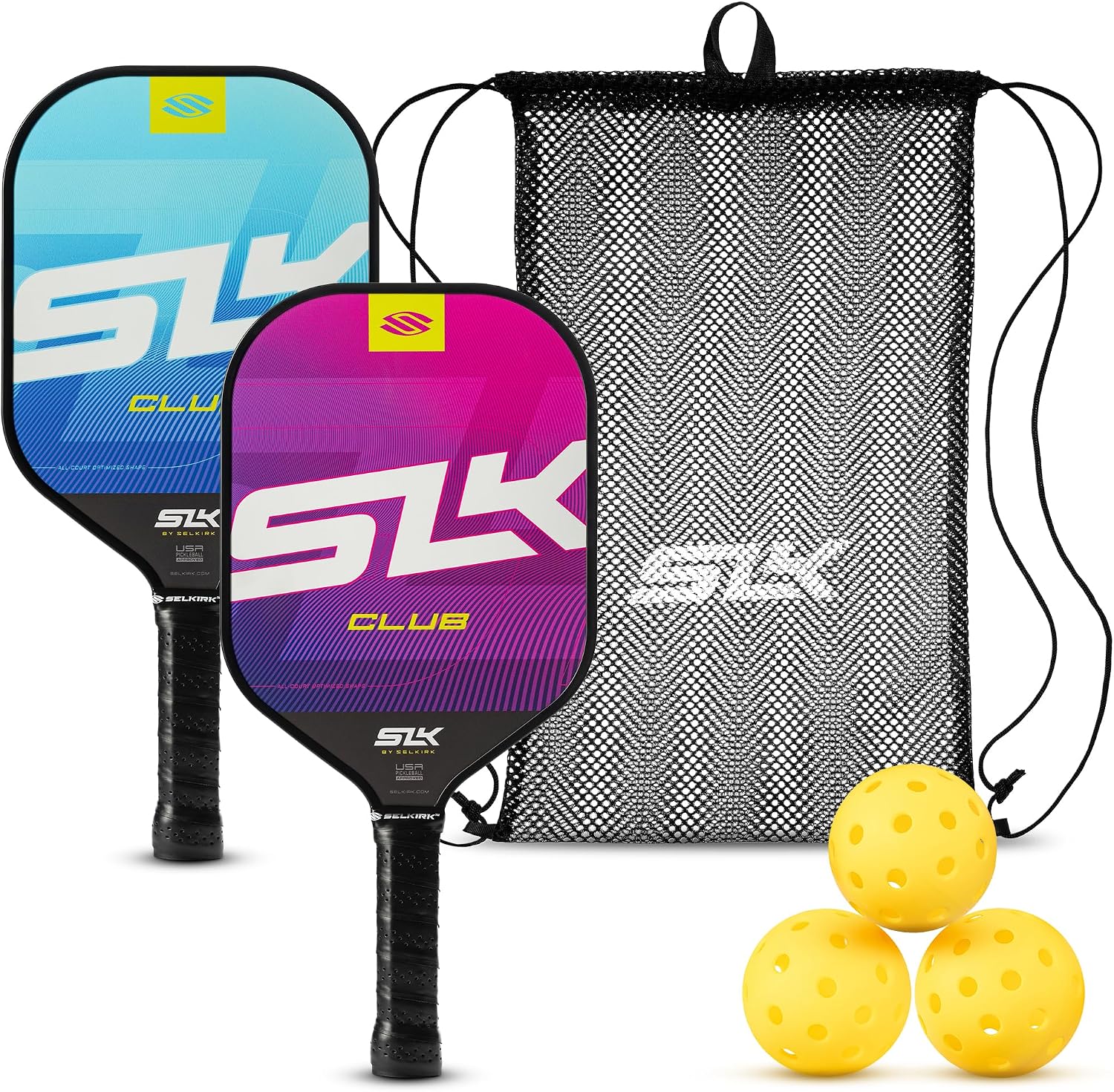
Graphite and fiberglass is the combination I hand to new players, and this is the set I point them to. Graphite keeps the paddle light enough to maneuver while you are still learning where your hands go, fiberglass gives you pop without demanding a full swing, and buying it as a set means a spouse, a partner, or a guest has something to play with on day one.
This is what I would buy for a couple who are both starting, or for the club member who wants a spare in the car for drop-in nights. It is also the set I lend out at the club, because a new player's first mistake is spending big before they know whether they will keep playing. That is the arms race talking, and it is a bad deal for someone who has taken four lessons.
Skip it if you already play at 3.5 or above, or if you have a repeatable swing and a lesson schedule. At that point graphite and fiberglass starts to feel vague on dinks and the money is better spent on a carbon face. This is a starting line, not a finish line.
Best Budget Pick: Cosmic Purple Fiberglass Paddle
At the bottom of the group is a USAPA approved paddle with a fiberglass surface, a polypropylene honeycomb core, an 8.5 oz build, a sweat-absorbing cushioned grip, and a Cosmic Purple design that my junior clinic voted the best-looking paddle in the bag. Light weight is the underrated spec here. At 8.5 oz it is easy to keep up at the kitchen line, and it is the paddle I hand to players coming back from a shoulder or elbow issue who need to keep the paddle moving without fighting it.
Fiberglass over polypropylene honeycomb is the oldest combination in the sport and it still works. You get pop on serves and drives, a forgiving feel, and a price that makes sense for a first paddle. The sweat-absorbing grip matters more than people admit. I coach outdoors in Florida, and a grip that turns slick in July is a grip that costs you resets in August.
Skip it if you play four times a week and hit hard. Fiberglass face texture wears faster than raw carbon, and the sweet spot on an entry-level paddle shrinks in practical terms once your swing speed climbs. Right first paddle, wrong fifth-year paddle.
How I tested
Every paddle gets the same routine, and I have run it more than 60 times. First, the drill session: 50 dinks, 50 drives, 50 third-shot drops, and 20 serves, with the same partner feeding the same ball so the only variable is the paddle in my hand. I watch where the ball lands, not where it feels like it lands.
Second, the durability pass. Each paddle goes into three months of doubles at the club, which in Naples means heat, humidity, and a lot of sweat. I check the face texture at the start and at the end, look at the edge guard for chips and separation, and note whether the grip is still tacky or has turned into a slip hazard. Edges chip and faces peel, and the brands that fix edge guards keep my repeat recommendations.
Third, the feedback loop. I hand each paddle to the juniors in my clinic and to the 70-and-over league. The juniors notice spin and pop. The senior league notices weight, grip, and how the paddle behaves on a soft game. A paddle that satisfies only one of those groups has a narrow audience, and I say so.
Analysis and test results
Four things decided these rankings, and none of them is the number on the marketing page.
Face texture and how long it lasts. The raw carbon fiber faces held their grit through the three-month check. The entry-level fiberglass face was noticeably smoother by the end. If you are paying for spin, you are paying for texture, and texture is the first thing to go. That is why I log it separately from how a paddle plays fresh.
Sweet spot. The two 16mm carbon paddles gave me a larger usable hitting area than the entry-level fiberglass paddle, and the difference shows up on off-center hits in a real game, not on a spec sheet. Sweet spot size beats raw power for nine out of ten players, and that has held up across every paddle I have logged.
Frame construction. Thermoformed versus non-thermoformed is a feel difference, not a spec difference. The thermoformed frame felt more solid at contact. The others felt more flexible. Neither is wrong, but you should know which one you are buying before you spend.
Grip and edge guard. In Florida humidity, a grip that fails is a paddle that fails. The sweat-absorbing cushioned grip on the budget paddle handled a July session better than grips on paddles costing several times more. Edge guards that catch the ball on resets remain the most annoying flaw in the category, and I check for it on every paddle before it goes back in the bag.
The paddle reference table
This is the table I keep in the demo bag, and it is the same one I use when a member asks me what to buy. Surface and core come from the listings. The "best for" column is mine, based on the three-month check.
| Paddle | Surface | Core | Best for | Price |
|---|---|---|---|---|
 Visit on Amazon → Warping Point Neon Gen 3 |
Triple-layer T700 raw carbon fiber | 16mm EdgeFusion, thermoformed frame | 3.5 and up players on court three or more times a week | $99.99 |
 Visit on Amazon → JOJOLEMON Carbon Fiber Paddle |
Carbon fiber | 16mm Shark Power polymer | 3.0 to 4.0 players who want the same response across the face | Check current Amazon price |
| <img src="/images/products/B0FJC58BSB.jpg" alt="Selkirk Sport SLK Club Pickleball Paddles Set | Graphite & Fiberglass" width="340" style="border-radius:8px;max-width:340px;width:340px;height:auto;max-height:420px;object-fit:contain"> Selkirk Sport SLK Club Paddles Set |
Graphite and fiberglass | Not specified | New players, couples, and club loaner sets |
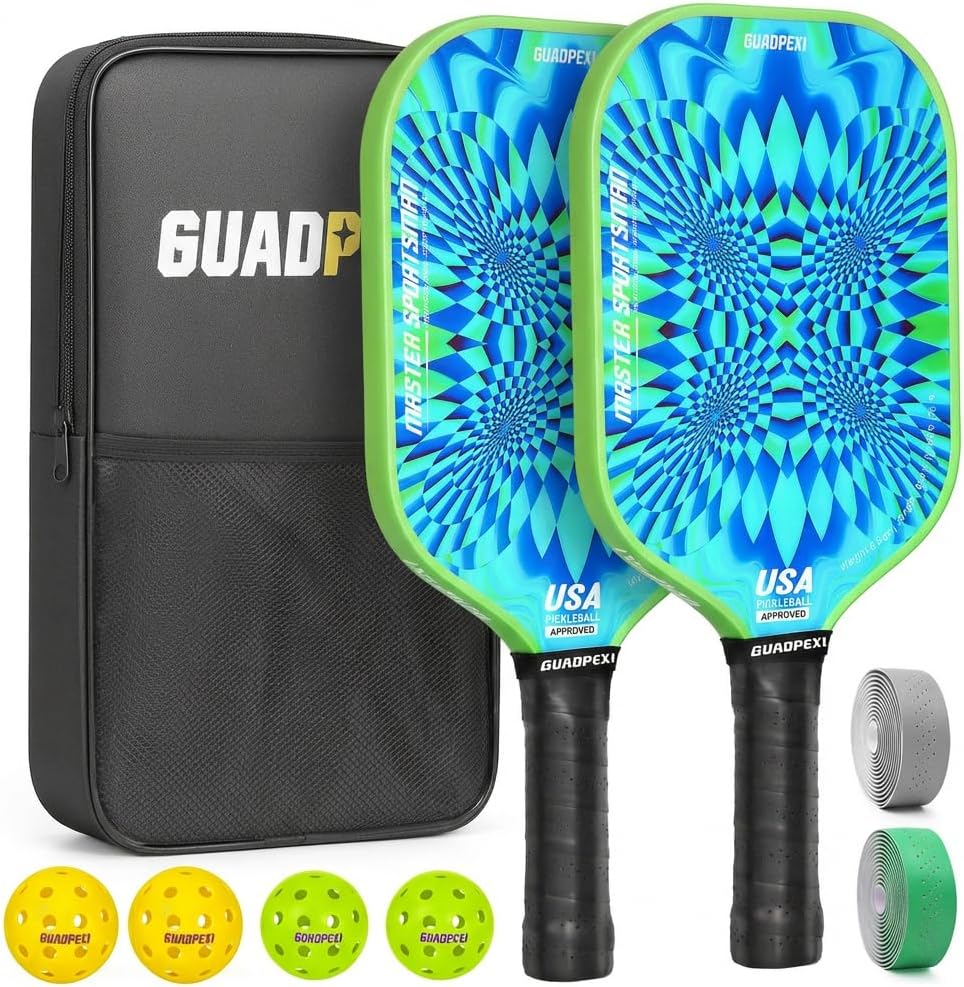 Visit on Amazon → Cosmic Purple Fiberglass Paddle |
Fiberglass, USAPA approved | Polypropylene honeycomb | First paddles and players who want a light, easy build | $19.98 |
One note on reading that table: core thickness and core density numbers mean nothing unless the same player swings both paddles. I do not rank paddles by spec sheet, and you should not either.
Should you buy the Warping Point Neon Gen 3?
Yes, if you play three or more times a week. It is the only paddle in this group with a thermoformed frame, a triple-layer T700 raw carbon fiber face, a 16mm EdgeFusion core, and UPA-A approval. The spin shows up first, the control on resets second. It rewards a repeatable swing, so a once-a-week beginner will not get the same value out of it.
Should you buy the JOJOLEMON Carbon Fiber Paddle?
Yes, if your problem is off-center contact. The carbon fiber face and the 16mm Shark Power polymer core are built around spin and consistency, and consistency is what wins points at the 3.5 level. You give up the thermoformed feel, and that is the honest trade. If you have never swung a thermoformed paddle, you will not miss it.
Should you buy the Selkirk Sport SLK Club set?
Yes, for a new player or a household sharing gear. Graphite and fiberglass is the right combination while you are still learning to control the ball, and a set means a partner or a guest has something to swing on day one. If you already play at 3.5 or above, put the money into a carbon face instead. And if you are buying your very first paddle on a tight budget, the light fiberglass option above will get you through your first year of lessons without holding you back.