Related: Pickleball Paddle Core Thickness, Explained for Real Players
The first thing I tell anyone who walks into our club's demo night is that the paddle is the cheapest part of getting better. Then I hand them a carbon fiber paddle and watch what happens to their third shot drop. Carbon fiber pickleball paddles are not magic, but they do change what the ball does off the face, and most players feel that difference inside the first ten minutes.
We run a demo program in Naples so members stop buying paddles off a fifteen second video. Four paddles come up in nearly every conversation I have with recreational players. Two of them are carbon faced sets that make sense for beginners and family play. Two of them are single paddles built for players who already know what they want. This is the breakdown I give them, sorted by who should actually buy which one.
Best for Control and Spin: JOOLA Vision
The JOOLA Vision is a 16mm paddle with a textured carbon grip surface, and 16mm is the number that matters most here. A thicker core gives you a wider sweet spot and a softer feel at contact, and softer contact means the ball sits on the face a fraction longer. That dwell time is where control and spin actually come from.
I care less about the marketing language and more about what a textured surface does over a season. Face texture grabs the ball, and grip is what turns a flat drive into a dipping one. But texture is also the first thing to wear. If you play three times a week outdoors in Florida sun, you should expect a textured face to feel different by month three than it did on day one. That is not a knock on this paddle. It is true of every textured face I have ever logged, and it is why I tell members to clean their face and store the paddle out of a hot car.
The 16mm core makes this the paddle I hand to the player who keeps popping the ball up. If your problem is that everything you hit sails long, you do not need more power. You need a face that forgives you, and a thicker core does that better than any spec sheet claim about spin rate.
Best Premium Carbon Face: ProKennex Black Ace Pro
The Black Ace Pro leads with a Toray 700 carbon fiber face and a Comfort Pro Grip. Toray 700 is a known carbon fiber grade, and a carbon face is stiffer and thinner than a fiberglass face at the same weight, which is the whole reason carbon has taken over the category. Stiffer face, more energy returned, and a firmer feel on blocks.
The Comfort Pro Grip is the part I would point a 55-year-old recreational player toward. Grip is not a small detail. It is the difference between a paddle you can hold loosely for three hours of doubles and a paddle that has you squeezing to keep it from twisting. If you have any elbow or wrist complaint, grip and weight matter more than the face material, and I will argue that with anybody.
This is not the paddle I hand to a beginner. It is a single paddle at a premium price, built for a player who already has a repeatable swing and wants a firm, crisp response on volleys and drives. If you are still learning where the ball goes off the face, a stiff carbon face will tell you the truth a little too loudly.
Best Beginner Set: Carbon Fiber Surface Set with 14mm Core
This is the set I recommend to the person who has played twice and is not sure they will play twenty times. A 14mm polypropylene honeycomb core with a carbon fiber surface is a genuinely reasonable first paddle, not a toy. The core is thinner than the 16mm paddles above, so it plays a little livelier and a little less forgiving, and it keeps the weight down, which matters when your hand is still learning the game.
The set is USAPA approved and it comes in twos or fours, which is the part I like most. The single biggest blocker for new players at our club is not equipment quality. It is showing up to a court with nothing to hit with. A box with two or four paddles and a carbon surface solves that in one purchase.
Two honest notes. First, a set paddle is built to a price, so the edge guard and the grip wrap are usually where the savings show up. Second, "USAPA approved" is a claim you should verify on the listing before you buy, because I have seen unapproved paddles sold with approved language in the title. Check it. It takes thirty seconds and it saves you a tournament entry headache later.
Best Set for Families and Club Lending: DULCE DOM Paddle Set
The DULCE DOM set is the one I would buy for a household, a school program, or a club lending bin. It is USAPA approved and it comes in sets of two or four, which is the entire point. Nobody at a family cookout wants to trade paddles between games.
I keep a handful of set paddles in my truck for exactly this. When a member brings three grandkids to open play, the equipment question needs to be answered in one click, not after an hour of research. A set like this does that job.
What it will not do is turn into a tournament paddle. If you get serious, you will outgrow it, and that is fine. That is the correct outcome. Buy the set, play for six months, then come back and spend real money on the paddle that matches the game you actually have.
How I test paddles
Every paddle that comes through our program gets the same treatment, and none of it is glamorous. I hit with it myself, then I hand it to three players at different levels: a 4.5 doubles player, a 3.5 who plays twice a week, and someone from our 70 and over league. Same player, same partner, same drill, two paddles side by side. That is the only comparison worth anything. A core density number means nothing if two different players swing the two paddles.
I keep a log. Spin feel on serves and third shots, how big the sweet spot feels when I catch one off center, how the grip holds up in Naples humidity, and what the edge guard looks like after a few months of doubles. I do not need a lab. I need to know whether the paddle still plays like itself in week ten.
The durability piece is the one most reviews skip. Edges chip. Faces peel. Grip wraps disintegrate in Florida summer heat faster than anywhere else in the country, which makes our club an accidental torture test. A paddle that feels incredible in session one and dead in week six is a failed product no matter how it played fresh.
What the specs actually tell you
Core thickness is the first number to look at. A 16mm core plays softer, with a bigger sweet spot and more control. A 14mm core plays a bit livelier and swings a bit quicker. Neither is better. They suit different players, and the player who pops the ball up needs the thicker one.
Face material is the second. Carbon fiber is stiffer than fiberglass, returns more energy, and tends to hold its shape longer. Fiberglass feels softer and costs less. If a listing says carbon, check whether it means the whole face or just a layer. The word gets used loosely.
Then come the things that never make the marketing copy: grip circumference, grip condition out of the box, edge guard shape, and whether the guard catches the ball on a low reset. An edge guard that grabs the ball on a defensive reset is a real problem and no spec sheet will tell you about it. That is a hands on finding, and it is why I still recommend demoing before you buy whenever your club or a local shop will let you.
Paddle comparison table
This is the short version I keep on my phone for demo nights. Match the paddle to the player, not to the price tag.
| Paddle | Best for | Build | Buy |
|---|---|---|---|
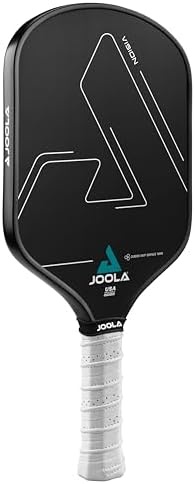 Visit on Amazon → JOOLA Vision |
Control, spin, and a forgiving sweet spot | Textured carbon grip surface, 16mm polypropylene honeycomb core | Visit on Amazon → |
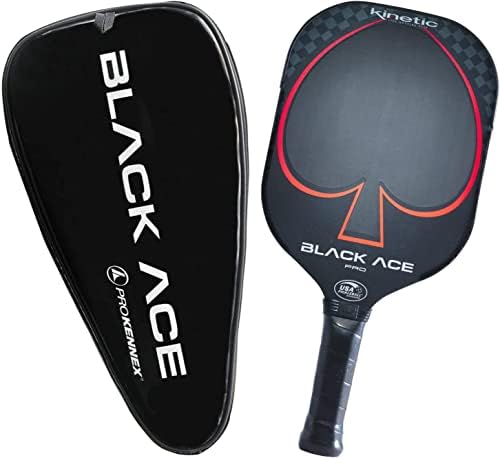 Visit on Amazon → ProKennex Black Ace Pro |
Experienced players who want a firm, crisp face | Toray 700 carbon fiber face, Comfort Pro Grip | Visit on Amazon → |
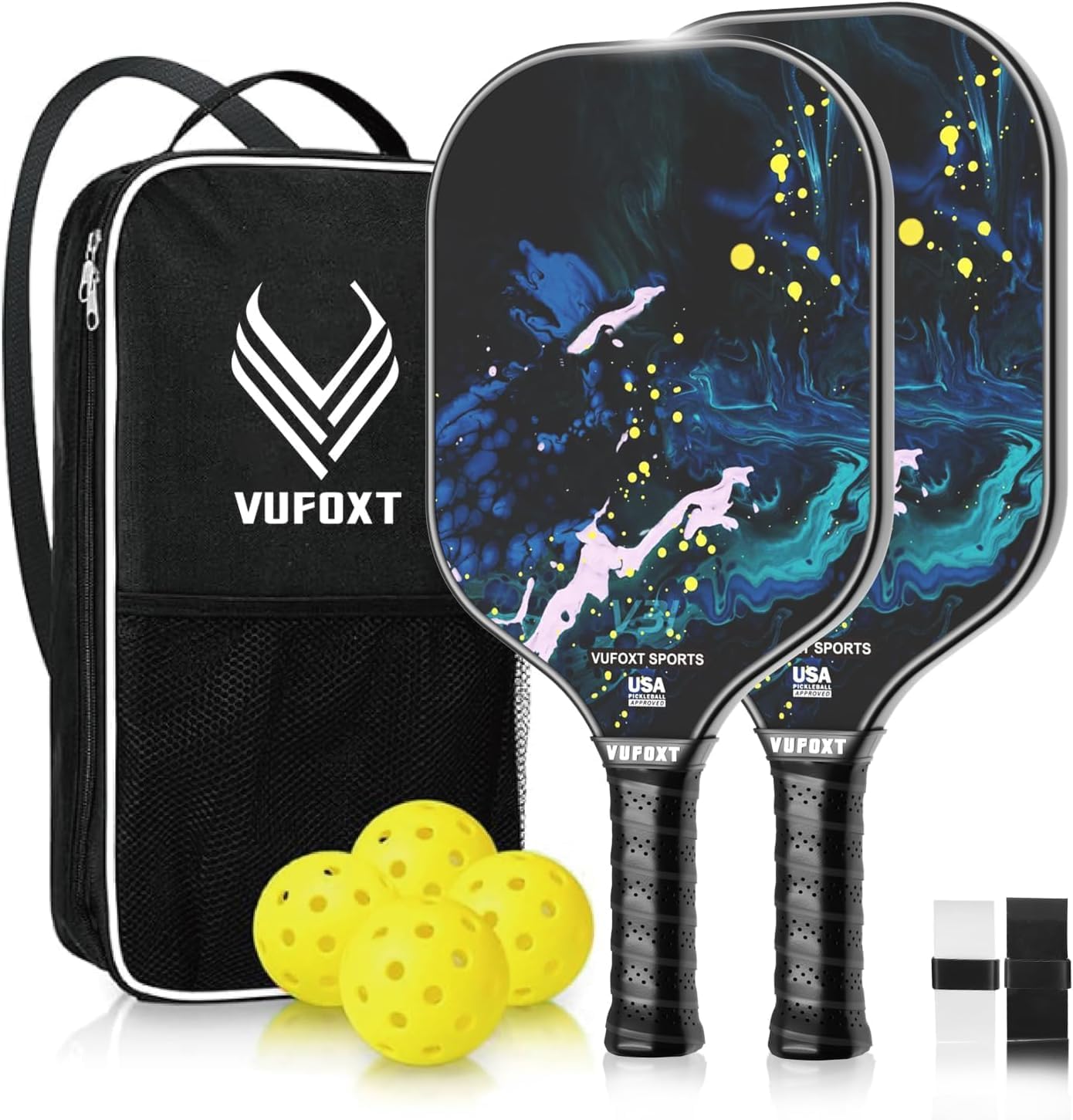 Visit on Amazon → Carbon fiber surface set with 14mm core |
Beginners and first time buyers | Carbon fiber surface, 14mm polypropylene honeycomb core, lightweight | Visit on Amazon → |
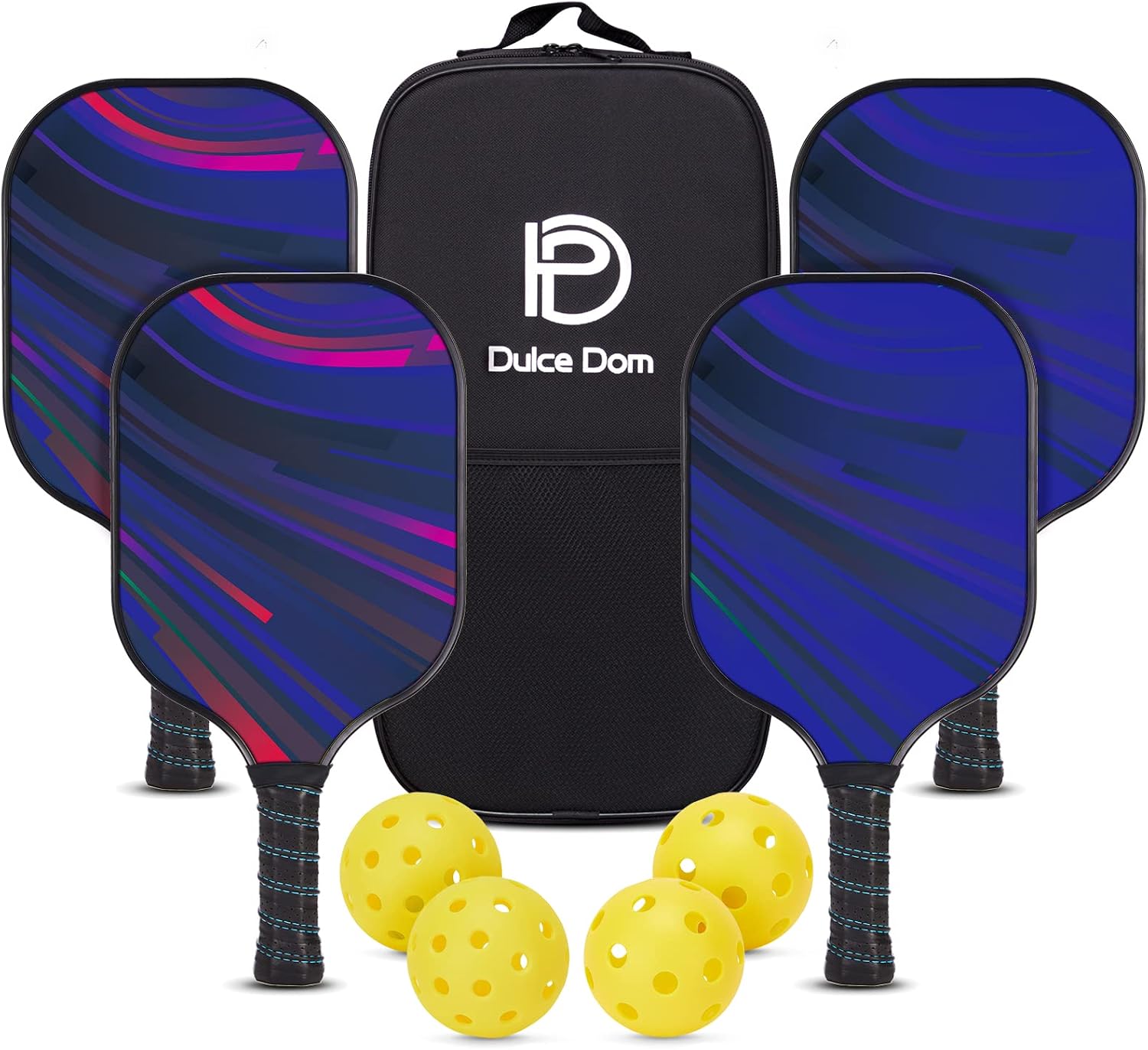 Visit on Amazon → DULCE DOM paddle set |
Families, schools, and club lending bins | USAPA approved set of two or four | Visit on Amazon → |
A word about thermoforming
Thermoforming is the only real technology story in this category over the last three years, and you will see it in listings that have nothing else to say. It is a manufacturing step, not a magic ingredient, and it does not automatically make a paddle better for you. My prediction is that it becomes standard at every price point within two years, and then the marketing moves on to core materials. Watch the used market. The hype paddles from two seasons ago selling at half price tell you which ones actually held up.
Should you buy the JOOLA Vision?
Yes, if control and spin matter more than power. The 16mm core gives you a wider sweet spot and softer contact, and the textured carbon grip surface is designed to grab the ball. If your third shot drop keeps floating, this is the profile you want. Clean the face, keep it out of a hot car, and expect the texture to mellow over a season like every textured face does.
Should you buy the ProKennex Black Ace Pro?
Yes, if you already have a repeatable swing and you want a stiff, crisp carbon face with a grip built for long sessions. The Toray 700 carbon fiber face and Comfort Pro Grip are the reasons to look at it. It is a single premium paddle, so if you are still learning where the ball goes off the face, start with a set instead and come back to this one in a year.
Should you buy the carbon fiber surface set with the 14mm core?
Yes, for beginners and for anyone buying for a family. A carbon fiber surface over a 14mm polypropylene honeycomb core is a legitimate first paddle, it is lightweight, and the set is USAPA approved for training and game play. Buy it, play six months, and then spend real money on the paddle that fits the game you actually built.
Should you buy the DULCE DOM paddle set?
Yes, if you need USAPA approved paddles in twos or fours for a household, a school, or a club lending bin. It answers the equipment question in one purchase so nobody sits out. It is not a tournament paddle, and it is not supposed to be. It is the paddle that gets four people on a court tonight.