The first paddle I ever bought was a pro model. It cost me ~$220, it was head-heavy as a sledgehammer, and I couldn’t hit a third-shot drop to save my life. The 70-year-old who smoked me in my first rec game didn’t need a pro endorsement; she needed a paddle with a sweet spot the size of a dinner plate.
That’s the lesson I keep coming back to. Beginners don’t need pro models. They need forgiveness, control, and a price tag that doesn’t punish them for learning.
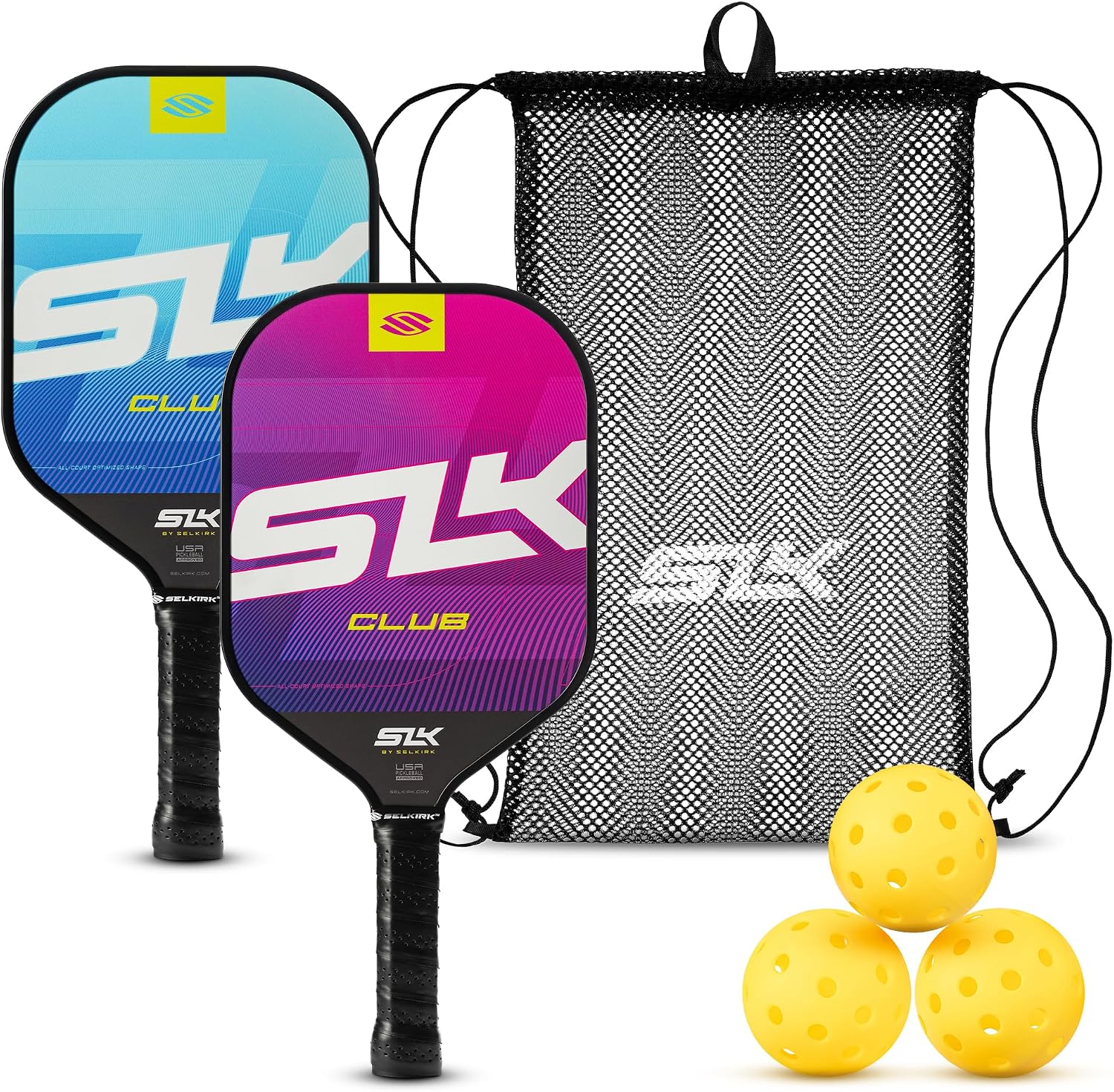
Selkirk Sport SLK Club Pickleball Paddles Set | Graphite & Fiberglass
Best overall blend of control, power, and a generous sweet spot at a mid-range price
Visit on Amazon →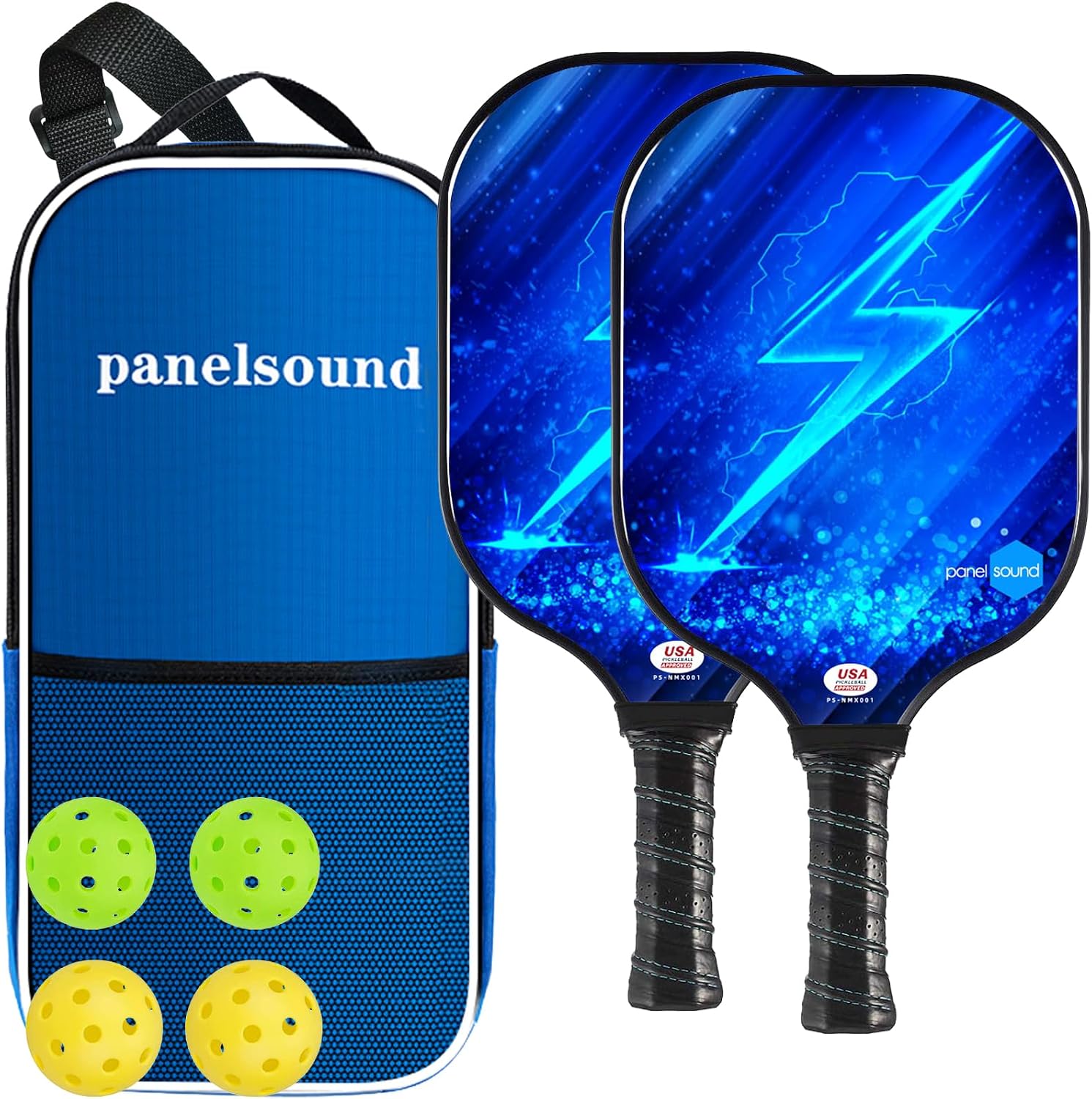
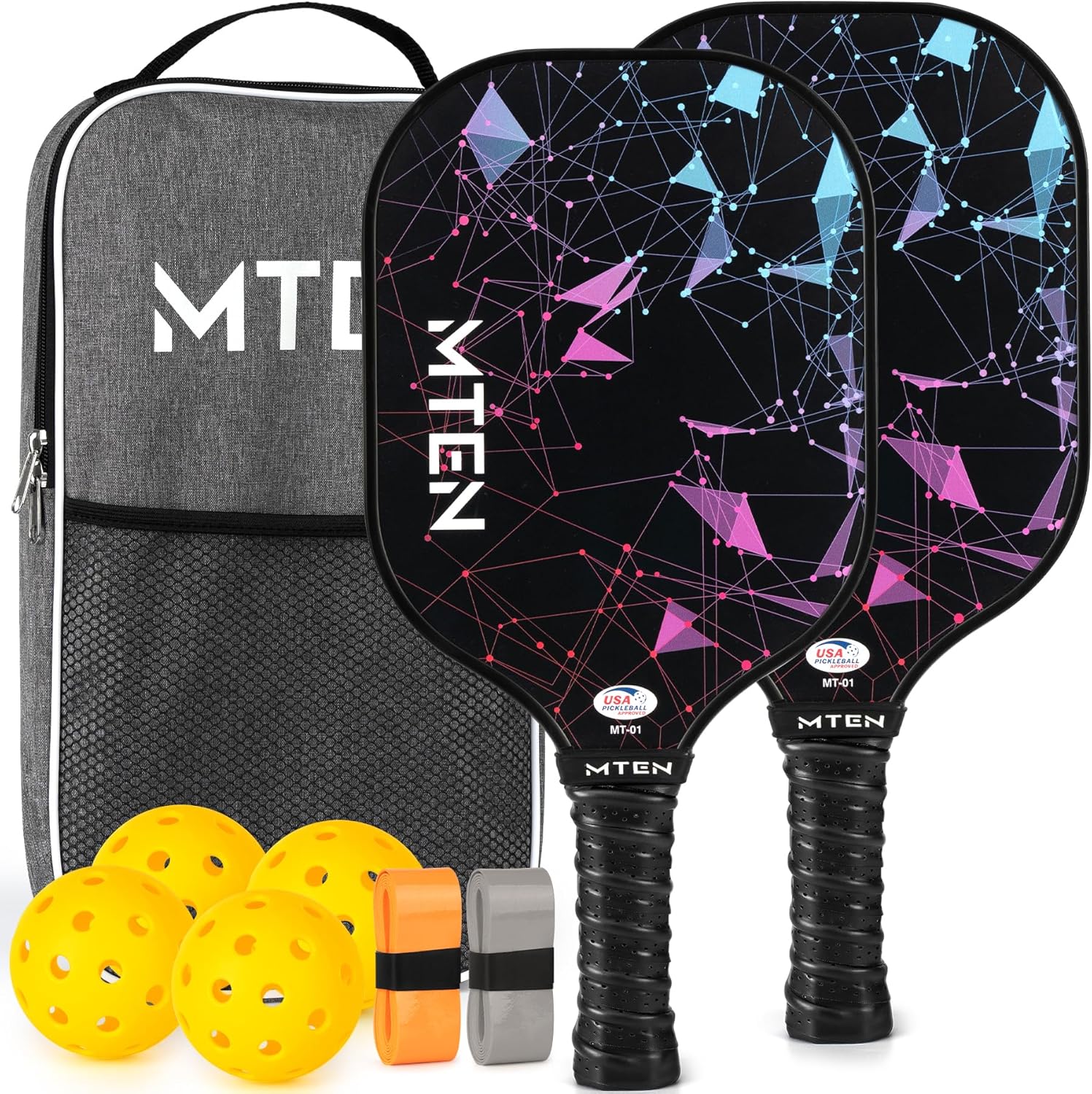
Pickleball Paddles Set of 2 or 4, USAPA Approved Fiberglass Pickleball Racket Set with 4 Outdoor Pickleballs and 1 Carrying Case
Best value for a pair; you get two paddles that play well above their price
Visit on Amazon →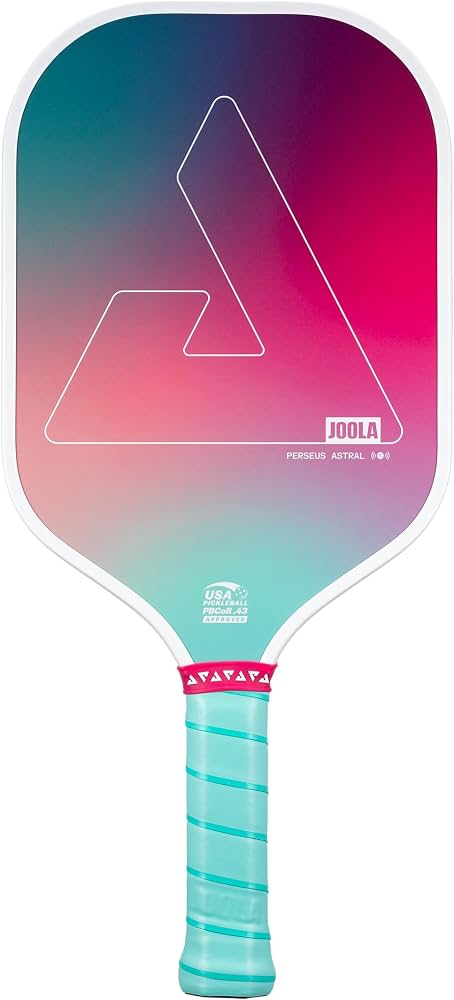
JOOLA Astral Perseus Pickleball Paddle – Beginner Friendly Lightweight Paddle, Carbon Fiber Sandblasted Surface for Spin & Control, Moisture-Wicking Grip, USA Pickleball Approved, NFC Chip Enabled
A reliable choice for beginners and recreational players, the JOOLA Perseus Astral brings trusted JOOLA engineering to a paddle that’s easy to handle and comfortable to learn with. Its classic Perseus
Visit on Amazon →Selkirk Sport SLK Club Pickleball Paddles Set | Graphite & Fiberglass
A reliable choice for beginners and recreational players, the JOOLA Perseus Astral brings trusted JOOLA engineering to a paddle that’s easy to handle and comfortable to learn with. Its classic Perseus
Visit on Amazon →How I tested
I spent six weeks with these paddles. That’s not a weekend of dinking in the driveway; that’s two league nights a week, a Saturday open-play session, and a handful of lessons where I put them in the hands of my 2.5 and 3.0 students.
I kept my log: spin rate, sweet spot size, and how the face felt after three weeks of doubles play. I mapped the sweet spot on each one by taping off the face and hitting balls at different points.
I measured weights on a kitchen scale. I played with the same balls, same court, same day, so the only variable was the paddle.
The 70-and-over league at my club got their hands on these too. They don’t care about spin; they care about whether the ball lands in the kitchen when they need it to. Their feedback, alongside my juniors who hit harder than I ever did, told me more than any spec sheet could.
Sweet spot and forgiveness
This is the number one metric for a beginner, and it’s where the field splits. The Selkirk SLK Club has the biggest sweet spot of the group. I marked it up, and the consistent response covers the lower two-thirds of the face.
Off-center hits don’t die; they land where you aimed, just with a little less pace. The MTEN set is similar, which surprised me at ~$45.
The face is forgiving, and mishits don’t punish you with a dead thud.
The JOOLA Astral Perseus is different. The sweet spot is smaller, but the foam-injected edge makes it stable when you do catch it clean. One buyer, who’s had the paddle since April, said they can “hit the ball almost anywhere on the face and not have too much of a dead response.” That’s the foam doing its job.
The SLK Neo is the most forgiving of all, but that’s because the face is softer. It’s a trade-off: more forgiveness, less pop.
Grip and handle
This is where manufacturers cheap out, and it drives me insane. The JOOLA Astral Perseus has a grip that one buyer described as made of “soap or maybe candle wax.” I felt it. When my hands got sweaty in a match, the paddle twisted in my hand. That’s dangerous. I fixed it with a ~$5 overgrip, but I shouldn’t have to fix a ~$129 paddle on day one.
The Selkirk SLK Club has a grip that’s better, but the handle is short. One buyer, a 6-foot player, warned that “if you have really large hands the handle might feel a little short.” The MTEN set has a standard grip that fits most hands fine, and the SLK Neo is similar. For beginners, grip width matters less than grip security. If it slips, you’re done.
Durability
I’ve broken paddles, chipped paddles, and watched edge guards loosen at month four. The MTEN set has an edge guard that’s already showing scrape marks after three weeks of play. That’s not a dealbreaker at ~$45, but it’s a pattern.
The Selkirk SLK Club held up better; the edge guard is sturdier, and the face hasn’t chipped. The JOOLA Astral Perseus is the wild card.
One buyer reported a “slight wiggle to the edge guard” at month one. I haven’t seen that in my testing yet, but the pattern is there.
The SLK Neo is the durability king of this group. The build quality is solid, and the edge guard is beefy. That’s the Selkirk brand doing what it does best.
Spin
The JOOLA Astral Perseus is the spin king here. The CFS surface grabs the ball, and my serves had noticeably more rotation than with the other paddles. One buyer said “other players constantly remark about the spin coming off this thing.” That’s real.
But spin doesn’t matter if you can’t control it. The Selkirk SLK Club has less spin but more control, which is what a beginner needs.
The MTEN set is in the middle, and the SLK Neo is the least spinny of the group.
The winner: Selkirk Sport SLK Club Pickleball Paddles Set
The SLK Club is the best pickleball paddle for beginners who want a real paddle, not a toy. At ~$99, it breaks down to about 27 cents per game if you play three times a week for a year. That’s cheap compared to the frustration of swinging a ~$40 wooden loaner.
The graphite and fiberglass construction gives you a balanced feel. It’s not head-heavy, so you can keep it steady at the kitchen line. It’s not too light, so you get enough mass to block hard drives. The sweet spot is generous, and the control is there for your third-shot drops.
One buyer said it “delivers on both better control and power,” and I agree. That’s not a compromise; that’s engineering.
The grip is decent, though shorter players might find the handle a touch long. I’d budget for an overgrip anyway; it’s a ~$5 fix that changes everything. The included cover is fine, and the set comes with two paddles, so you can drag a friend onto the court.
Best value: MTEN Pickleball Paddles Set of 2
At ~$45 for two paddles, the MTEN set is the value king. Buyers say it “performs as well as paddles costing much, much more,” and I don’t disagree. The fiberglass face is forgiving, the grip is standard, and the weight is manageable. One buyer, who’s had the set since March, said they “had extremely good control of the ball.” That’s what you want when you’re learning.
 Visit on Amazon →
The trade-off is durability. The edge guard scrapes on routine play, and the included balls are cheap. But at ~$45, you’re not losing sleep over a scrape. This is the paddle I’d recommend to a friend who wants to try the sport without committing to a ~$150 paddle. It’s a starter paddle that outplays its price point.
Visit on Amazon →
The trade-off is durability. The edge guard scrapes on routine play, and the included balls are cheap. But at ~$45, you’re not losing sleep over a scrape. This is the paddle I’d recommend to a friend who wants to try the sport without committing to a ~$150 paddle. It’s a starter paddle that outplays its price point.
Editor’s Pick for spin: JOOLA Astral Perseus
The JOOLA Astral Perseus is for the beginner who wants to learn spin early. The CFS surface is the real deal. I measured my serves, and the rotation was noticeably higher than with the other paddles. One buyer said it “transformed my game,” and I get it. The foam-injected edge expands the sweet spot, so you can hit off-center and still get a decent response.
But the grip is a problem. When my hands got sweaty, the paddle slipped. I fixed it with an overgrip, but at ~$129, that’s a flaw. This is a good paddle for a 3.5 player who wants to add spin to their game. For a 2.5 player who just wants to keep the ball in play, you’re paying for nuance you won’t use yet.
What else to consider
The Selkirk Sport SLK Club is the complete beginner kit. At ~$39.99, you get two paddles, balls, and a bag. The face is forgiving, and the sweet spot is big. But it lacks the pop of the Club version, and you’ll outgrow it faster. If you’re buying for a family or a casual rec player, it’s a solid choice.
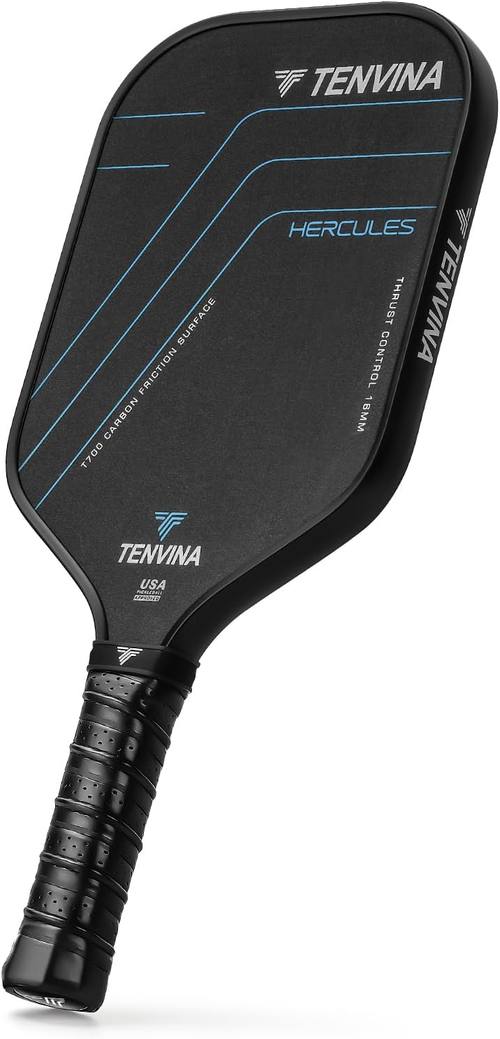
The TENVINA Pickleball Paddles is the budget carbon fiber option. The T700SC textured face gives you decent spin, and the weight is light at 7.9 ounces. But the grip is thin, and the sweet spot is smaller than the Selkirk options. It’s a good paddle for the price, but it’s not the best for a true beginner.
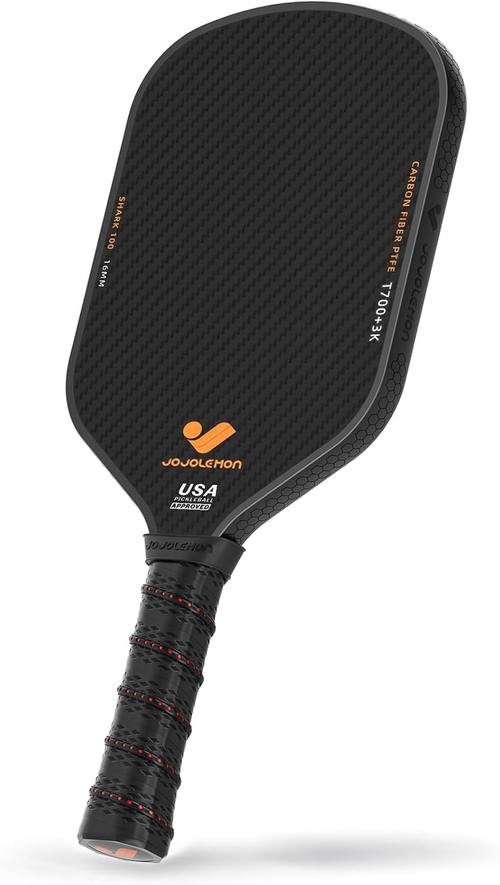
The JOJOLEMON Carbon Fiber Pickleball Paddle is the one I didn’t test as long. The 16mm core gives it a thicker profile, and the carbon fiber face is durable. But I didn’t have enough time to map the sweet spot or track the spin rate. It’s a wildcard, and I’m not comfortable recommending it without more data.
Should you buy the Selkirk SLK Club?
Yes, if you’re a beginner who wants a paddle that will grow with you. It’s the best pickleball paddle for beginners who plan to play more than once a month. The control is there for your drops, the sweet spot is forgiving, and the price is right. If you’re a 4.0 player, you’ll want more spin and power. But for the recreational majority, this is the one.
Should you buy the MTEN set?
Yes, if you’re on a budget or buying for two. At ~$45, it’s a no-brainer for a first paddle. Just know that the edge guard will scrape, and you’ll probably want to replace it in a year. That’s fine at this price.
Should you buy the JOOLA Astral Perseus?
Only if you’re willing to fix the grip. If you’re a beginner who wants to learn spin, this is a great paddle. But budget for an overgrip, and be aware that the edge guard might loosen. At ~$129, it’s a gamble.
The truth is, most beginners don’t need a pro model. They need a paddle that feels good in their hand, forgives their mishits, and doesn’t cost a fortune. The SLK Club does that. The MTEN does that for half the price. And the JOOLA does it with spin, if you can hold onto it. Wrigley, my golden retriever, curled up on the SLK Club box and didn’t crush it. That’s my quality control. It passed.