Related: Pickleball Paddle Core Thickness: 13mm vs 16mm, Explained
Most of the paddles that come out of a member's bag at my club in Naples were picked from an influencer video, not from a demo. I run a demo program for 400 members, and the pattern repeats every season: the player who spent the most money is rarely the player who improved the most.
Carbon fiber pickleball paddles have converged. Walk the courts and count the raw carbon faces. Three years ago that was a premium feature. Now it is close to the default at every level, which means the marketing has moved on to whatever is left to sell you: core materials, edge construction, and a pro's name on the throat. The material stopped being the story. What a brand does with it is the story.
Here is what I look at when a paddle lands in the demo bag, plus four carbon fiber options that cover the range from a first real upgrade to a club loaner set.
Best Overall: Selkirk Sport SLK Halo Pickleball Paddle
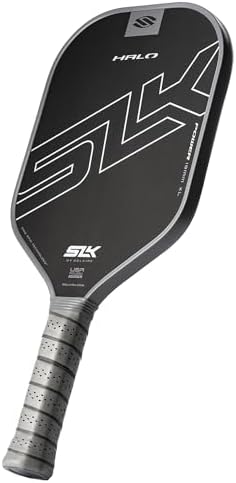
The SLK Halo is the safe answer in this group. It is a T700 raw carbon fiber paddle from the brand that most recreational players already recognize, and that matters more than people admit when they are standing in a pro shop trying to decide.
Raw means the carbon weave is left bare instead of buried under paint or a sprayed grit coat. The texture you feel is the weave itself. That is the difference between a face that plays the same in month three as it did in week one and a face that feels wonderful until the coating smooths out. Bite is what turns a flat drive into a ball that dips at the back line, and bite is the first thing a cheap face loses.
What the Halo is not is a power paddle. If you are chasing put away speed, this is not where you find it. What you get instead is a face that behaves predictably on the tenth point of a long rally, and a paddle with enough name recognition that it will still be worth something when you want to move on. Consistency is the entire pitch, and for most players at my club it is the correct one.
Best Value: DGYGQ T700 Raw Carbon Fiber Paddle
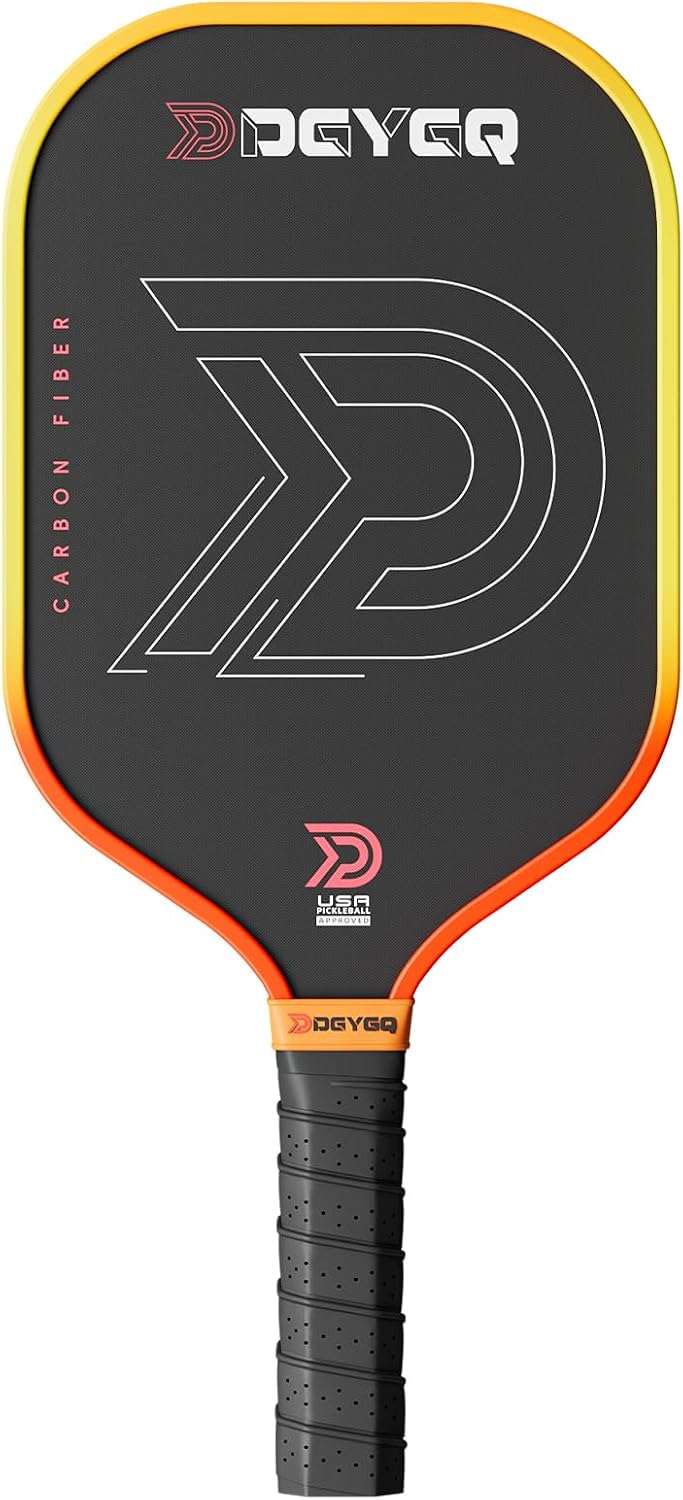
This is the paddle I point recreational players toward first. T700 raw carbon fiber surface, and a 16mm polypropylene honeycomb core.
Sixteen millimeters sits at the thicker end of the common core range, and thicker cores do a specific job. They give you more dwell time, a softer ball off the face, and a sweet spot that forgives you when you catch one near the edge. The listing claims a larger sweet spot for spin, control, and power, and the core thickness is the reason that claim is plausible instead of decorative.
The trade is honest. A thicker core means less free pop, so if your game is built on punching volleys at the kitchen line, you will feel the difference and you may not like it. For a 55 year old recreational player who wants to keep rallies alive and stop donating points on mishits, that trade is the right one. It is the most common recommendation I make, and it is the one members come back and thank me for.
How I sort paddles at the club
Core density numbers mean nothing without the same player swinging both paddles. So the demo program runs on one rule: same player, same ball, same partner, two paddles, alternating games. Then we swap back and do it again.
Four things get written down.
- Off center contact. Every paddle has a sweet spot. The real question is what happens when you miss it. A forgiving paddle keeps the ball on the court. A punishing one puts it in the net, and that difference decides more 3.0 and 3.5 matches than raw power ever does.
- Face texture after real play. Edges chip and faces peel. If the texture is sprayed on, it smooths out. I want to know what a face looks like after a Florida summer, not what it felt like in the store for five minutes.
- Edge construction. An edge guard that catches the ball on a reset is a design flaw, not a user error. Paddles that sit flush at the edge win my repeat recommendations.
- Grip and handle. Grip tape that disintegrates in humidity is a pet peeve of mine, and it is the cheapest thing for a brand to get right.
Nothing on that list is about power. That is deliberate. Sweet spot size beats raw power for nine out of ten players. You do not need power you cannot control, and the fastest way to lose a doubles match is to own a paddle that rewards a swing you do not have yet.
What the specs actually mean
Thermoformed versus non-thermoformed is the only real technology story of the last three years, and none of the four paddles here is sold on that label. That tells you where the marketing has gone: toward core materials and face textures, because that is what is left to differentiate.
T700 raw carbon fiber. T700 is a grade of carbon fiber, and raw means the weave is exposed. The upside is bite and durability. The downside is that a raw face is a little less forgiving of sloppy contact than a soft composite face, which is why beginners should not rush into one just because it sounds premium.
16mm polypropylene honeycomb core. Thicker, softer, more control. A sensible default for doubles.
Textured grit surface. Grit gives you spin. Grit also wears. Every grit face is a wear item, so judge it after a season of play, not after one session.
Aero throat. A tapered throat designed to cut drag through the air. It is a swing speed feature, and it matters most to players who generate their own pace rather than absorbing it.
USAP approved. This means the paddle appears on the approved list for tournament play. I have seen too many paddles advertised as approved that arrive without a listing for the exact model. Check the list before you enter an event, not at the check in table.
One more thing. Spin is about 30 percent paddle and 70 percent technique. I can put more spin on a rental paddle than most players get from the most expensive paddle in the demo bag. Buy for sweet spot and durability. Learn the spin.
Carbon fiber pickleball paddle comparison table
Four paddles, four different jobs. This is the table I keep in the demo binder, sorted by what each paddle is actually for.
| Paddle | Best for | Face | Core | Price |
|---|---|---|---|---|
 Visit on Amazon → DGYGQ T700 Raw Carbon Fiber Paddle |
Largest sweet spot for the money | T700 raw carbon fiber | 16mm polypropylene honeycomb | $49.98 |
 Visit on Amazon → Warping Point Ascent Pickleball Paddle |
Swing speed and hand battles | Textured grit over carbon fiber | Hexa polymer core | Visit on Amazon → |
| <img src="/images/products/B0CVR3725T.jpg" alt="Selkirk Sport SLK Halo Pickleball Paddles | T700 Raw Carbon Fiber Paddle" width="340" style="border-radius:8px;max-width:340px;width:340px;height:auto;max-height:420px;object-fit:contain"> Selkirk Sport SLK Halo Pickleball Paddle |
One upgrade, no regrets | T700 raw carbon fiber | Not specified by the listing |
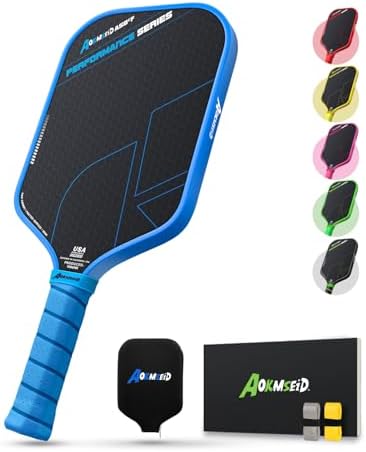 Visit on Amazon → Sport AKS Carbon Fiber Pickleball Paddle Set |
Households, loaners, club bins | Carbon fiber | Set of paddles, USAP approved | $49.99 |
The pattern in that table is the same one I see every season. The paddle that wins the most matches for the most people is rarely the fastest one. It is the one with the biggest usable hitting area and a face that still has texture in October.
Warping Point Ascent Pickleball Paddle
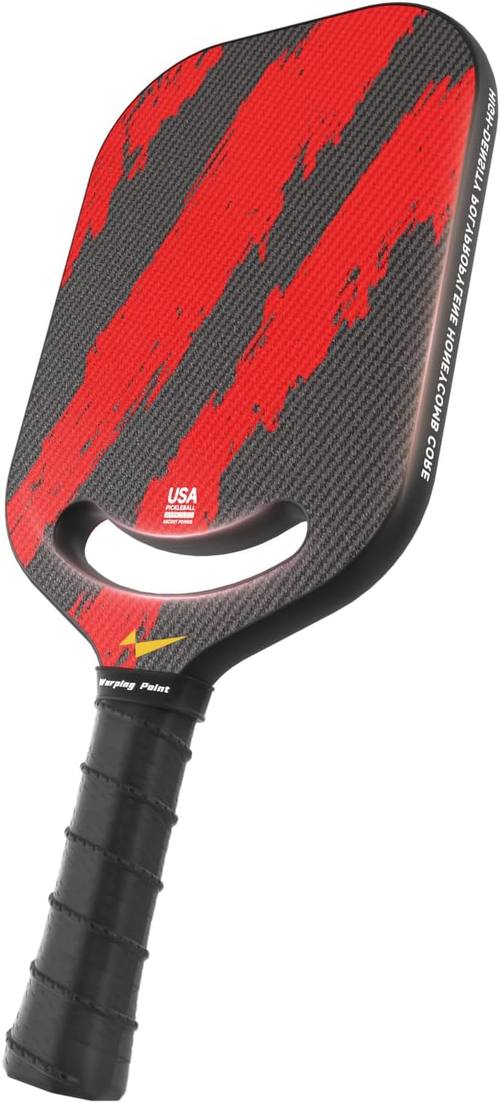
The Ascent is the speed paddle of this group. The aero throat, the textured grit surface, and the hexa polymer core all point at one goal: moving the paddle head through the air faster so you can generate swing speed and maneuver at the kitchen line.
The grit face is the part to watch. Grit bites the ball and helps you shape a dink or a third shot drop, but grit is a coating, and coatings wear. If you play four or five sessions a week outdoors, expect the face to feel different by the end of a season. That is not a knock on this paddle. It is how grit works, and it is exactly why the raw carbon faces in this group hold up differently.
Buy it if your game is hand speed and angles. Skip it if you want the biggest sweet spot for the least effort.
Sport AKS Carbon Fiber Pickleball Paddle Set
This is the only set here, and that changes who it is for. A USAP approved carbon fiber set makes sense for a household with two players, a coach who needs loaners, or a club building a beginner bin that will get handed to people who have never held a paddle.
Approval is the headline feature. If you play tournaments, the approved list is not a suggestion, it is the rule, and an unapproved paddle at check in is an afternoon you do not get back. Verify the listing for the exact model before you sign up.
A set will not outplay a single paddle at the same total spend, and it is not trying to. It is trying to put a carbon fiber face in more hands for less money and survive being passed around.
Should you buy the Selkirk Sport SLK Halo?
Yes, if you want the face material the rest of the market copies and you want it from a brand with a track record. T700 raw carbon fiber, woven rather than sprayed, so the bite is part of the face instead of a coating waiting to wear off. It is not a power paddle and it is not the budget pick. It is the upgrade I would hand a strong recreational player who wants to buy once and stop thinking about it.
Should you buy the DGYGQ T700 raw carbon fiber paddle?
Yes, if you want the largest sweet spot in this group for the least money. The 16mm polypropylene honeycomb core is the thicker, softer, more forgiving end of the market, and the raw carbon face means the spin is still there in month three. If you rely on hand speed at the net, look at the Ascent instead. If you want to stop losing points to off center contact, start here.
Should you buy the Warping Point Ascent?
Consider it if your game is built on swing speed and quick hands. The aero throat and the grit surface are real features aimed at a real player type, and the maneuverability is the point. Just go in knowing that grit is a wear item and you will be replacing the paddle or the face texture sooner than you would with a raw carbon weave.
Should you buy the Sport AKS carbon fiber set?
Yes for a household, a loaner bin, or a coach who needs spare paddles that will survive beginners. USAP approved, carbon fiber, and more than one paddle in the box. Check the approval listing for the exact model before tournament day, and treat it as what it is: a way to get more people playing with a decent face, not a tournament weapon.