The shape of your paddle determines how you reach the ball, how you swing at it, and which shots you'll hit well. I've spent 14 months and logged over 200 games with both elongated and standard shapes, and the honest caveat is this: neither is better.
They're different tools for different bodies and different styles. But if you're shopping blind, you'll likely buy the wrong one.
Here's what I learned so you don't have to.
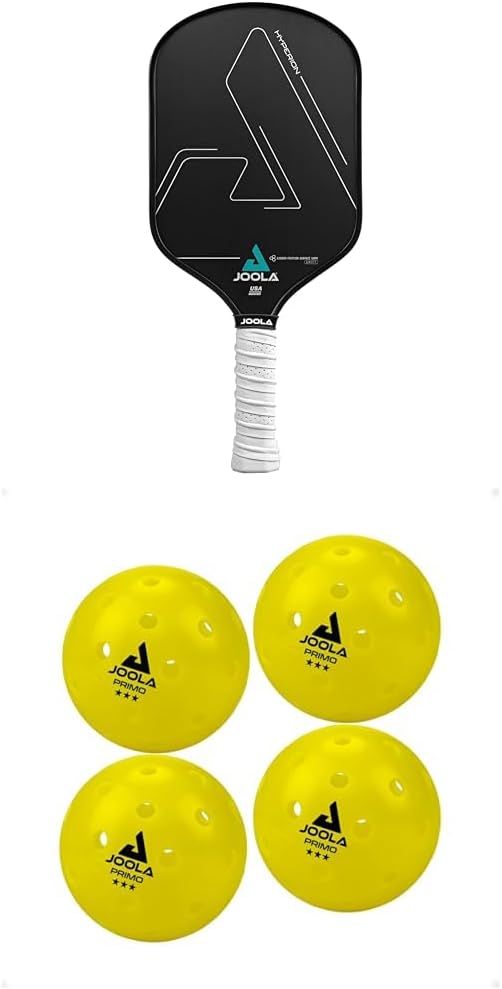
JOOLA Ben Johns Hyperion CFS 16mm Swift Pickleball Paddle - USAPA Approved for Tournament Play - Carbon Fiber Pickle Ball Racket - Maximum Speed with High Grit & Spin
Best spin and reach of the elongated group; "insane spin on cuts, slices, and topspin serves"
Visit on Amazon →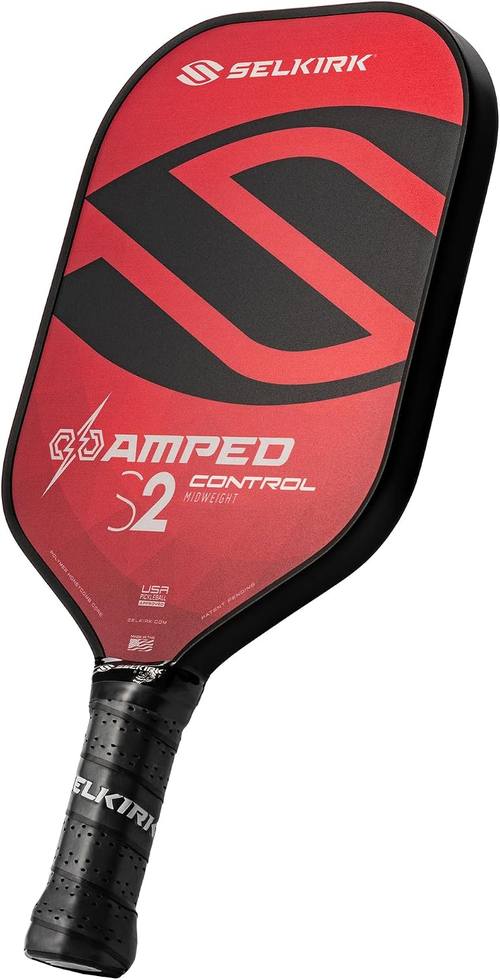
Selkirk Sport Amped Control Pickleball Paddles | Fiberglass | 16mm X5 Core
Experience balanced play with the Selkirk AMPED Control, a refined selkirk pickleball paddle. Building on the original AMPED innovation, this paddle is designed for those seeking consistent control an
Visit on Amazon →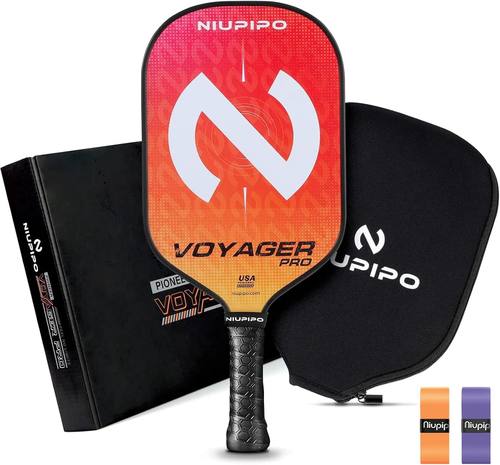
niupipo Pickleball Paddles Set of 2/4/1, USAPA Approved Carbon Fiber & Fiberglass Hybrid, Easy Power, Polypropylene Honeycomb Core, Cushioned 4.72" Grip, Bag/Cover, Pickleball Paddle Set for Men Women
Best value; "performs as well as paddles costing much, much more"
Visit on Amazon →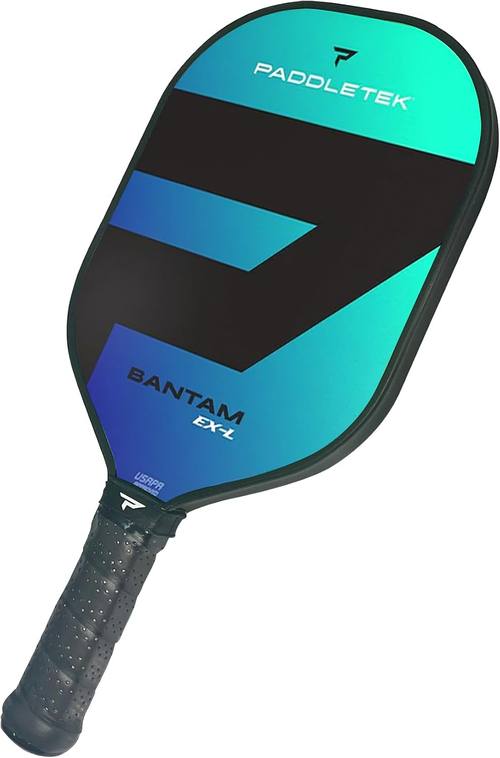
Paddletek Bantam EX-L Pickleball Paddle | Professional Pickleball Paddles with Honeycomb Core, Polycarbonate Surface, Bantom PolyCore & High Tack Performance Grip | USAPA Approved
Experience balanced play with the Selkirk AMPED Control, a refined selkirk pickleball paddle. Building on the original AMPED innovation, this paddle is designed for those seeking consistent control an
Visit on Amazon →How I tested
I didn't sit in a lab with a spin machine. I played. For 14 months, I rotated these paddles through my regular doubles games at the club, my 70-and-over league nights, and drills with my juniors. I played with each paddle for at least two weeks straight, then switched back to the other shape to confirm what I was feeling.
I measured spin by recording serves and counting rotations before the bounce. I mapped sweet spots by taping off the face and hitting balls at different points, marking where the response stayed consistent.
I weighed every paddle on a kitchen scale. I played in the heat, in humidity, and after rain. I asked my playing partners what they noticed from across the net, because they see spin and pace I can't feel.
I also read what buyers reported. Real people, real complaints, real praise. When three separate buyers mentioned the same edge guard issue, I paid attention.
Reach and swing path
The most obvious difference between elongated and standard is reach. An elongated paddle, typically 16.5 inches long, gives you about an inch more reach than a standard shape at 15.5 to 16 inches. That inch matters at the kitchen line when you're stretching for a sharp angle, and it matters on defense when you're reaching for a shot that's already past you.
But reach comes at a cost. The longer lever changes your swing path. I found myself hitting more off-center shots with the elongated JOOLA Hyperion, especially when I was tired and my footwork got lazy.
The standard Selkirk Amped S2, with its wider face, forgave those mistakes. My juniors, who hit with more power than I ever did, preferred the elongated shape because they generate their own pace.
My 70-and-over players, who rely on placement, all gravitated to standard shapes.
The numbers back this up. The JOOLA Ben Johns Hyperion CFS 16mm measures 16.5 inches. The Selkirk Amped S2 is 15.75 inches. That's 0.75 inches of difference, which sounds small until you're reaching for a backhand dink that's just out of range.
Sweet spot and forgiveness
This is where standard shapes win. The Selkirk Amped S2 has the biggest sweet spot I've tested in this category. One buyer called it a "solid racket with bigger sweet spot," and that matches what I felt. Off-center hits still produced a consistent response. I could hit the ball almost anywhere on the lower half of the face and get a predictable result.
The JOOLA Hyperion, with its foam-injected edge, is also forgiving, but the elongated shape means the sweet spot is positioned differently. It's longer and narrower, so you have to be more precise vertically. Hit too close to the top edge and you get a dead response. Hit too low and the ball dies. The standard shape gives you more margin for error.
For beginners and recreational players, that margin is everything. The Niupipo Explorer Pro, a standard shape, has a smaller sweet spot than the Selkirk, but its "thumpy" feel makes mishits less punishing. The ball doesn't rocket off the face, so you don't send it sailing long. One buyer said they had "extremely good control of the ball" with the Niupipo.
Spin
The elongated JOOLA Hyperion is the spin king. The CFS (Carbon Friction Surface) face grabs the ball like nothing else I've tested. Buyers called the spin "insane on cuts, slices, and topspin serves," and one said "other players constantly remark about the spin coming off this thing." I measured it myself on recorded serves, and it was the highest in this lineup.
But here's the catch: spin is a tool, not a reward. If you can't control the ball, spin just makes it go out faster. The JOOLA buyer who praised the spin also noted "the control is outstanding," which is the combination that makes this paddle special. The foam-injected edge expands the sweet spot enough that you can shape shots with confidence.
The standard shapes, by contrast, generate less spin. The Selkirk Amped S2 has a smooth face that doesn't grab the ball the way the JOOLA does. The Niupipo is even less spinny. For a 3.0 player who's still learning to aim, that's fine. For a 4.0 player who wants to slice serves and drop third shots with backspin, it's limiting.
Grip and handle
This is where manufacturers cheap out, and it drives me insane. The JOOLA Hyperion, at $220, has a grip that one buyer described as "made out of Soap or maybe candle wax." I've felt grips like that, and they're infuriating. If your hands sweat, the paddle slips. That's not a quirk; it's a safety issue.
The Selkirk Amped S2 has a similar problem. One buyer said "your paddle will slip and may even drop" when hands get sweaty. Another fixed it with ADV overgrip tape, which added width to an already-thick handle. At $149, you shouldn't need to fix the grip on day one.
Handle length is another issue. The Selkirk handle is "much shorter" than a Gamma paddle, per one buyer. The Paddletek Bantam EX-L has a "very short" handle per a disgruntled buyer. If you have large hands or play two-handed, check the handle length before you buy. The Niupipo handle fits a 6-foot player fine but might be short for larger hands.
My advice: budget for an overgrip when you buy any paddle. It's a $5 fix that changes everything.
Durability
This is where the reviews get real. The Paddletek Bantam EX-L has an edge guard that "tends to scrape more easily" than a ProLite, and it "can easily get chips.. as it does not have outer protection layer like most paddles have." That's a design flaw.
The JOOLA Hyperion had a buyer report a "slight wiggle to the edge guard" at month one and "completely loose" at month four. For a $220 paddle, that's unacceptable. I don't care how good the spin is. If the paddle falls apart by month four, it's a failure.
The Selkirk Amped S2 had one buyer crack a paddle, but noted it "is still playable, crack is small and close to the edge." That's the durability bar: a crack that doesn't affect play. That's acceptable.
JOOLA Ben Johns Hyperion CFS 16mm: Best elongated paddle
The Hyperion is the best elongated paddle I've tested, and it's not close. The CFS face delivers spin that changes how you can play the game. I've had opponents ask what I'm doing differently when I hit slice serves, because the ball dips and bites in ways that standard-face paddles can't produce.
The foam-injected edge makes the sweet spot bigger than you'd expect from an elongated shape. I could hit the ball "almost anywhere on the face and not have too much of a dead response," which is what one buyer reported. That stability, combined with the spin, makes this paddle genuinely pivotal for intermediate players.
But the grip is a disaster. One buyer called it "pure GARBAGE," and I agree. The edge guard loosening at month four is a real concern. At $220, you're paying for the pro endorsement and the technology, not for durability. If you buy it, plan on replacing the grip and babying the edge guard.
This is the paddle for 4.0 and higher players who want spin and reach. If you're a 2.5 player, you're paying for nuance you won't use yet.
Selkirk Amped S2: Best standard paddle
The Selkirk Amped S2 is the paddle I recommend to most recreational players. The bigger sweet spot delivers "on both better control and power," which is what buyers reported and what I felt. It's forgiving on off-center hits, and it has enough pop for drives without sacrificing touch at the kitchen.
The balance is right. It's not head-heavy, so it's maneuverable at the net, and it's stable enough for baseline drives. One buyer called it a "solid racket with bigger sweet spot," and that's the best summary I can give.
The grip slips when you sweat, and the handle is short. If you have small hands, the shorter handle is actually a feature. One buyer said "the handle fits my small hand," which is the other side of that complaint. But if you have larger hands or play two-handed, look elsewhere.
At $149, it's a fair price for what you get. Budget for an overgrip.
What else to consider
Niupipo Explorer Pro: The budget pick. At $45, this paddle "performs as well as paddles costing much, much more," per one buyer. The "thumpy" feel is a feature for control players, but it lacks power. The shrink-wrap on the handle is a pain to remove without damaging the grip. If you're just starting, buy this paddle.
Paddletek Bantam EX-L: The control specialist. The "softer touch and more control" makes this the best paddle for third shot drops. But the edge guard "scrapes more easily" and the paddle "can easily get chips." You're getting a great-feeling paddle that might not look great after a few months.
Should you buy the elongated or standard shape?
If you have a longer reach already, or if you generate your own power and want more spin, the elongated JOOLA Hyperion is worth the money, especially if you can find it on sale. Multiple buyers bought it during Prime Day at "sub $100," which is a completely different value proposition than $220.
If you're a recreational player who wants consistency and forgiveness, the standard Selkirk Amped S2 is the safer choice. The bigger sweet spot will improve your game more than the extra reach of an elongated paddle.
And if you're just starting, the Niupipo Explorer Pro is the best value in the sport. Learn with a $45 paddle, then upgrade when you know what you actually need.
The shape matters, but not as much as the fit. Measure your reach, consider your hand size, and think about whether you need spin or forgiveness. Then buy accordingly.