Related: Best Pickleball Paddles for Beginners
I have coached at a 400 member club in Naples since 2019, and the same scene plays out every month. A new member shows up with a paddle they bought because a video called it the fastest face on the market. Three weeks later the ball is still sailing long, the edge guard is chipped, and they want to know why the paddle "stopped working." Meanwhile the 70 and over doubles group on court four is beating everybody with gear that cost less than a family dinner.
That is why I keep a short list of affordable pickleball paddle sets for the beginners I coach, and it is why I want to walk through four of them here. All four are USAPA approved sets, all four cost less than a single pro model paddle, and each one fits a different kind of player. If you are buying your first set, or buying one for a spouse, a teenager, or the guest bin at the club, this is the price range where your money does the most work.
What a beginner set actually needs
The paddle market is 90 percent marketing and 10 percent graphite. In this price range you are not buying technology. You are buying a usable sweet spot, a face that still has texture in two months, and an edge guard that does not catch the ball on a low reset.
Here is what I tell every new player to check before they buy:
- Sweet spot size over raw power. Nine out of ten players do not need power they cannot control. A paddle that sends everything long is not a fast paddle, it is an unplayable one.
- Face material. Fiberglass is the standard starter choice because it is forgiving and inexpensive to make. Carbon fiber is a step up in feel and usually in cost.
- Core. Polypropylene honeycomb is the workhorse of this range. It keeps the paddle light enough to swing for a full match.
- Edge guard. A guard that sits flush with the face is the difference between a paddle that survives a season of doubles and one that looks like it lost a fight with a parking lot.
- What comes in the box. A set with balls and a bag gets a new player on court the same afternoon. A set with two bare paddles does not.
Best Overall: Selkirk Sport SLK Atlas Pickleball Paddles
If you are the player who is going to take this seriously, this is the one I point to. The SLK Atlas pairs a carbon fiber face with a honeycomb core, which is the combination most improving players end up wanting by the end of their first season. Carbon fiber tends to feel a little firmer and a little more predictable off the face than fiberglass, and once you are playing three or four times a week, that predictability matters more than any number on a spec sheet.
The other reason I recommend it is the company behind it. Selkirk is a pickleball company, not a general sporting goods label that added paddles to a catalog. When something goes wrong with a paddle from a brand that only makes paddles, you have a real path to a replacement. When something goes wrong with a no name set, you have a return window and then you have nothing.
It is the most expensive of the four here, and it is still cheaper than most of the paddles my intermediate players show up with. If you are shopping for one player who intends to play league nights, buy this one.
Best Set for a Family or a Loaner Bin: YC DGYCASI Pickleball Paddles Set of 2
This is the set I would buy for a house with two or three casual players, or for the bin of guest paddles that lives by the club door. It is a two paddle set, USAPA approved, and it is priced like an accessory rather than an investment, which is exactly what a spare set should be.
Two things make it useful beyond the price. First, two paddles means a guest can play immediately without borrowing yours and rearranging your grip. Second, USAPA approval matters even for casual play, because a lot of facilities and every sanctioned tournament require it. I have watched players buy a cheap set online, show up to an event, and discover the hard way that "approved" and "approved for tournament play" were not the same claim. A set that states the approval clearly saves you that morning.
The trade off is that this is a starter set in the truest sense. It is built for learning the game, not for grinding out three hour doubles sessions five days a week. If your family plays twice a month in the driveway, it is plenty.
Best Full Kit for a New Player: Fiberglass Set With Polypropylene Honeycomb Core
Somebody designed this set for the player who wants to show up fully equipped. You get a fiberglass face over a polypropylene honeycomb core, which is the classic recreational build, and you can order it as a set of two or a set of four. It also comes with four balls and a bag, so there is no second shopping trip before your first game.
The color and design choices here are clearly aimed at women players who are tired of every paddle looking like tactical equipment, and honestly, that is a real gap in this market. A paddle you like looking at is a paddle you will actually bring to the court. The honeycomb core keeps the weight manageable for players with slower swing speeds, which is most of the beginners I coach, and the fiberglass face is forgiving on off center contact.
If you are buying for a couple, the four paddle version is the better call. Keep two at home and leave two in the car for the days somebody forgets theirs.
Best Set With Outdoor Balls and a Case
This one is the practical choice for players whose home court is a park, a driveway, or a converted tennis court. It is a fiberglass paddle set, USAPA approved, and it ships as a set of two or four with four outdoor pickleballs and a carrying case.
The outdoor balls are the detail that matters most. Indoor and outdoor balls behave differently, and on asphalt or a sport court you want the harder outdoor ball with the larger holes. Buying a set that includes them means you are not guessing at a second listing and hoping you ordered the right thing. The case is basic, but a basic case is still better than a paddle rattling around in a trunk.
For the player who leaves the set in the car and plays wherever they find a court, this is the configuration that makes sense.
How I judge a paddle set
I do not score paddles on the numbers the brands print. I score them on what happens after a month of real doubles, because a paddle that feels amazing for one session and dead after six weeks is a failed product no matter how it plays fresh. Here is what I actually watch.
How the ball comes off the face at slow swing speeds. Most of my beginners swing slower than the reviewers on video. If a paddle only performs when you swing hard, it is the wrong paddle for a beginner, and the set with the larger usable sweet spot wins.
The face texture after a season. A grit face that wears smooth in a month turns a spin friendly paddle into a flat one. In Florida humidity, with sunscreen on your hands and a ball that picks up grit, this happens faster than the marketing suggests.
The edge guard. Edges chip. I have seen plenty of cheap paddles where the guard sits proud of the face and catches the ball on low resets, which is a miserable way to lose a point. A guard that sits flush is worth more than a fancy graphics package.
The grip. Grip tape that disintegrates in humidity is a standing complaint of mine. If the factory grip turns slick by week three, budget for a replacement wrap. It is a cheap fix and it changes the whole feel of the paddle.
USAPA approval. This is not a technicality. If the listing says the set is USAPA approved, keep the listing, because you may need it.
The reference table
This is the same table I keep for the demo paddles at my club. It is organized by who the set is for, not by price, because the right answer depends on the player.
| Set | Best for | Build and contents | Where to check |
|---|---|---|---|
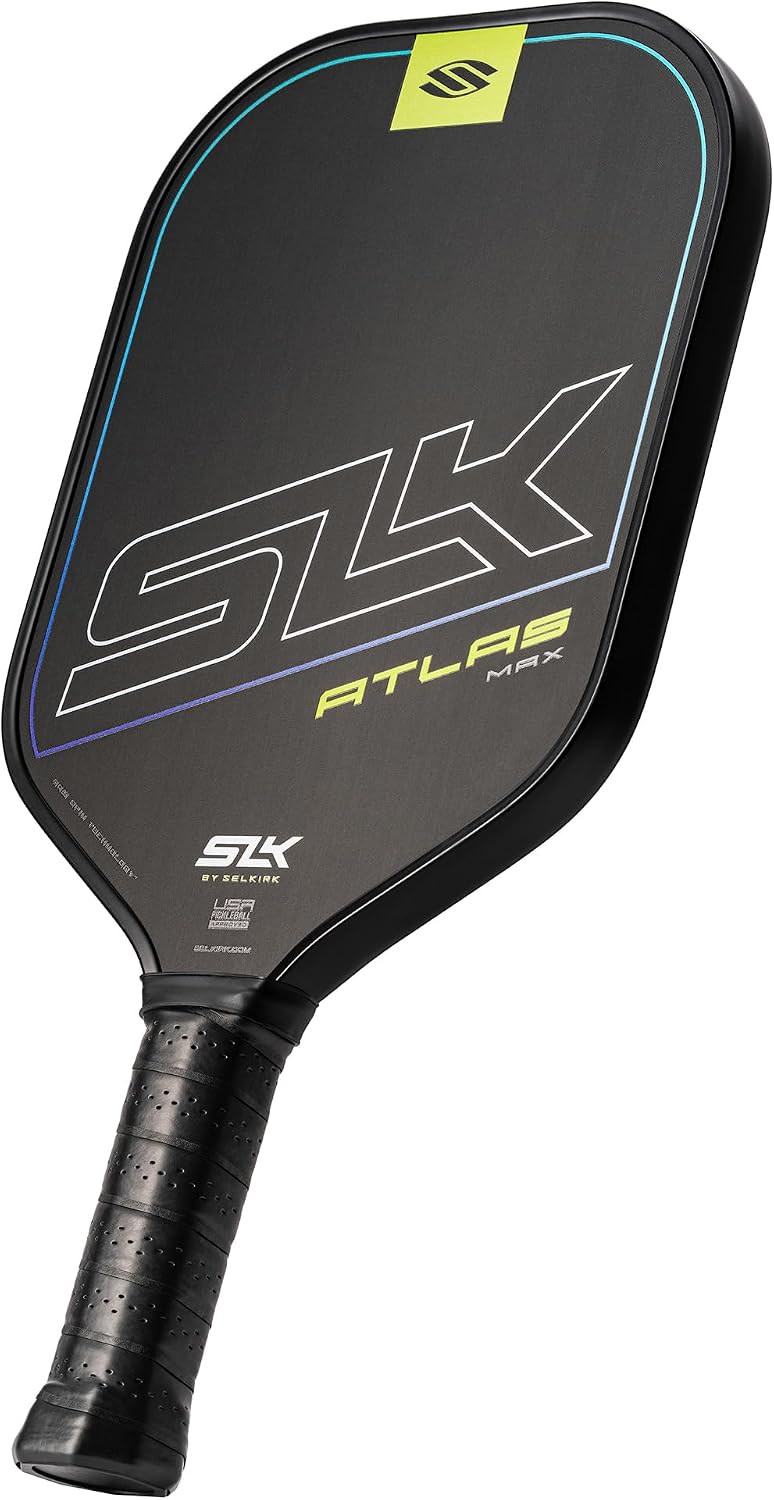 Visit on Amazon → Selkirk Sport SLK Atlas Pickleball Paddles, Carbon Fiber Honeycomb |
The player who will play league nights | Carbon fiber face, honeycomb core, brand support | Check current Amazon price |
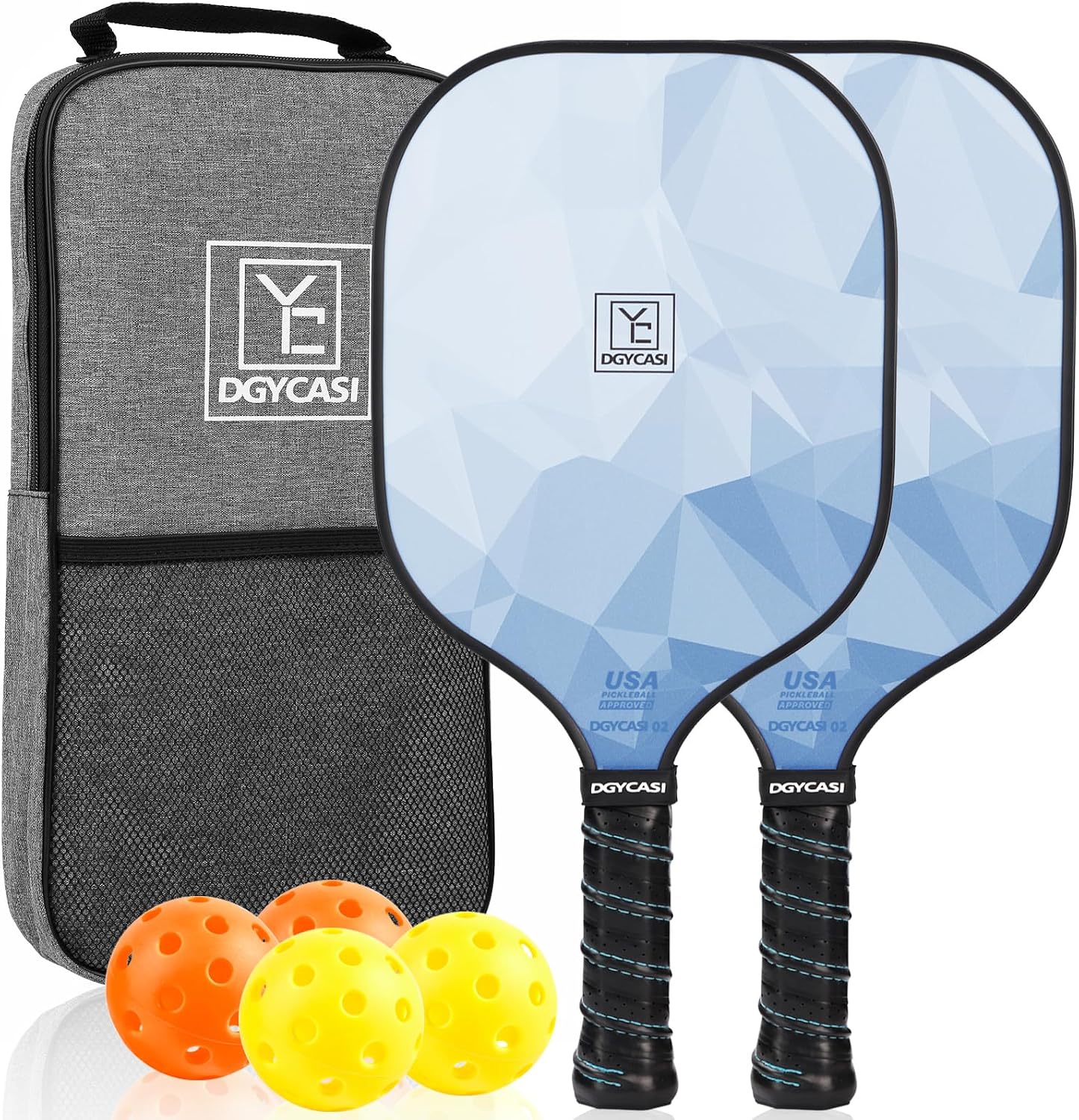 Visit on Amazon → YC DGYCASI Pickleball Paddles Set of 2 USAPA Approved Pickleball Set 2026 |
A family, a spare set, a club loaner bin | Two paddles, USAPA approved | Check current Amazon price |
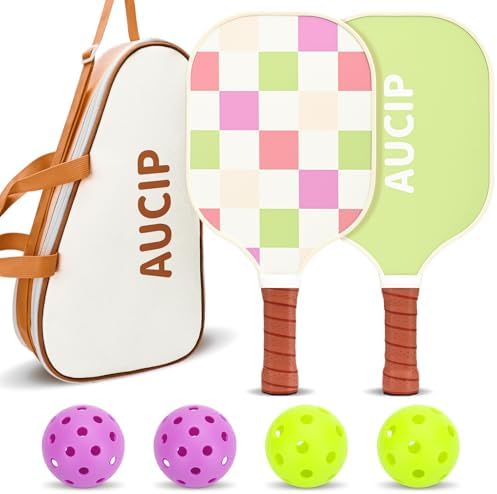 Visit on Amazon → USAPA Approved Cute Pickleball Paddles Set of 2 or 4, Polypropylene Honeycomb Core |
A brand new player who wants everything in one order | Two or four paddles, four balls, one bag | Check current Amazon price |
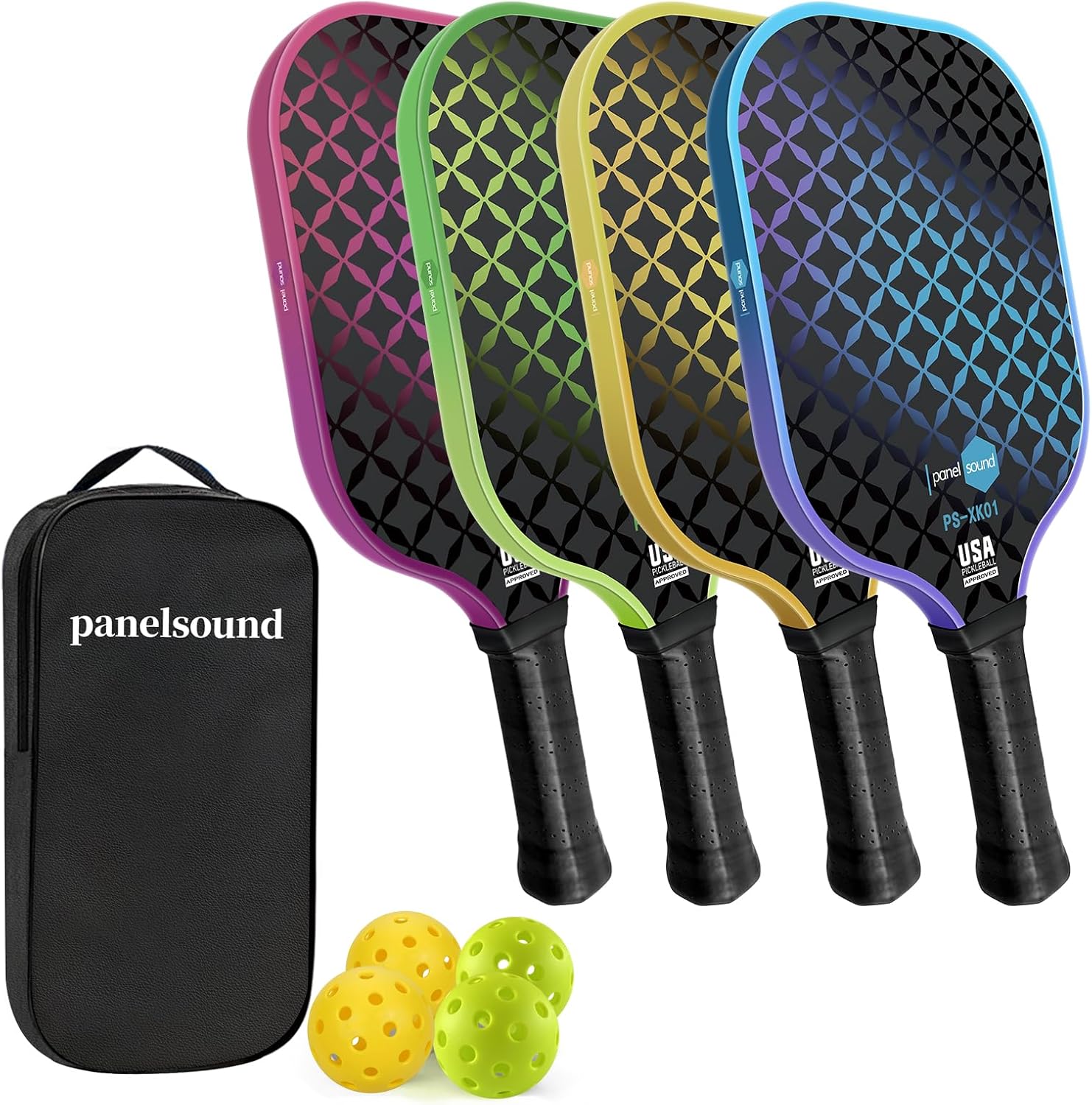 Visit on Amazon → Pickleball Paddles Set of 2 or 4, USAPA Approved Fiberglass Pickleball Racket Set with 4 Outdoor Pickleballs |
Park, driveway, and outdoor court players | Two or four paddles, four outdoor balls, carrying case | Check current Amazon price |
Analysis: what matters at this price and what does not
Thermoformed construction, where the core and the face are bonded under heat and pressure, is the only real technology story in paddles over the last three years. You will not find it at these prices, and that is fine. Thermoforming shows up in paddles that cost several times more, and its benefits matter most to players who already generate their own power. I expect it to become standard at every price point within two years, and when it does, the marketing will move on to core materials. Watch the used market for the 2025 hype paddles selling at half price. That tells you what actually held up.
What does not matter much: core density numbers quoted without the same player swinging both paddles, "pro model" naming, and the layer count printed on the face. Core density means nothing in isolation, and a pro's name on a paddle does not transfer the pro's hands to yours. The pro model markup is the worst deal in the sport right now.
What does matter: a weight you can swing for a full match, a grip size your hand can actually hold, a sweet spot big enough to forgive your off center hits, and a face that still has texture in September. Every set on this list clears those bars. The question is only which one clears them for you.
Should you buy the Selkirk Sport SLK Atlas?
Yes, if you are going to play three or four times a week. The carbon fiber face over a honeycomb core is the combination improving players end up wanting anyway, and the company behind it makes paddles and nothing else, which matters when you need a replacement. It is the most expensive set here and still cheaper than most paddles my intermediate players bring to league night.
Should you buy the YC DGYCASI set of 2?
Yes, if you need a second paddle for a spouse, a kid, or a guest. It is USAPA approved, it is priced like an accessory, and it gets a beginner on court without any further shopping. Just do not expect it to be the paddle you are still using in two years if you start playing four times a week.
Should you buy the cute fiberglass set?
Yes, if you want the whole kit in one order and you want a paddle you actually like the look of. The fiberglass face over a polypropylene honeycomb core is the right build for a beginner, the four ball and bag bundle removes the second shopping trip, and the design is a genuine alternative to the tactical gray everything else in this range.
Should you buy the fiberglass set with outdoor balls?
Yes, if your court is outdoors and you are tired of buying balls separately. Four outdoor pickleballs and a case turn the set into a complete outdoor kit, and the fiberglass build is forgiving for new players. This is the one I would put in the car.
The bottom line
None of these sets will turn a beginner into a 4.0 player, and no paddle will. What they will do is keep the ball in play while you learn, hold their face texture long enough to matter, and cost less than one lesson package. If you are one serious player, take the carbon fiber set. If you are buying for a household or a club bin, take one of the fiberglass sets and spend the difference on court time.