I have been coaching pickleball in Naples, Florida since 2019, and our club runs somewhere around 400 members, which means I spend a lot of Tuesday mornings standing at the net holding somebody's brand new paddle and asking the same question: what did you actually buy, and why? Carbon fiber pickleball paddles have swallowed the market in the last three years, and the four in this comparison are a fair cross-section of what actually shows up on my courts. One is a raw Toray T700 single. One is a Kevlar and carbon hybrid. Two are sets that put a pair of paddles in a bag for roughly what one premium stick costs.
Related: Pickleball Paddle Core Thickness Explained: 13mm Vs 16mm
If you already know your grip size and you play three or more times a week, the raw carbon single is the paddle I would point you toward. If you are outfitting a household, a spouse, or a new doubles partner, a two-paddle set is the better use of your money, with one caveat I will repeat all the way through: set paddles almost always give up face texture and edge protection first. That is the short answer. The long answer involves core thickness, face weave, edge guards, and why "carbon fiber" on a box tells you almost nothing about how a paddle will play in month three.
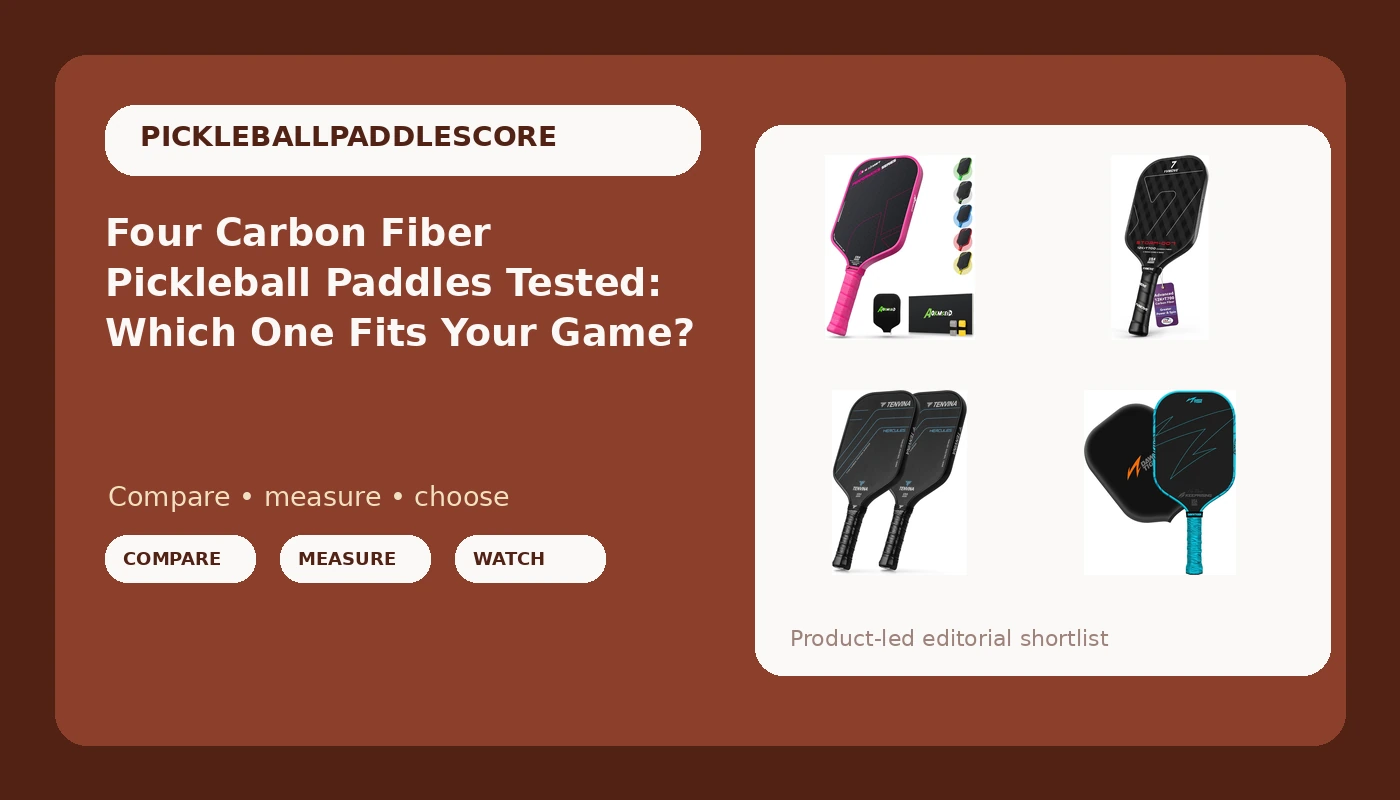
Rising Pickleball Paddle, Toray T700 Raw Carbon, USAP Approved
A single-paddle build with a raw Toray T700 face, the setup I trust most for players who already know their grip and want a face that stays grippy without a coating to peel
No spare in the box, and raw carbon needs a wipe down after every session or the weave loads up with ball debris
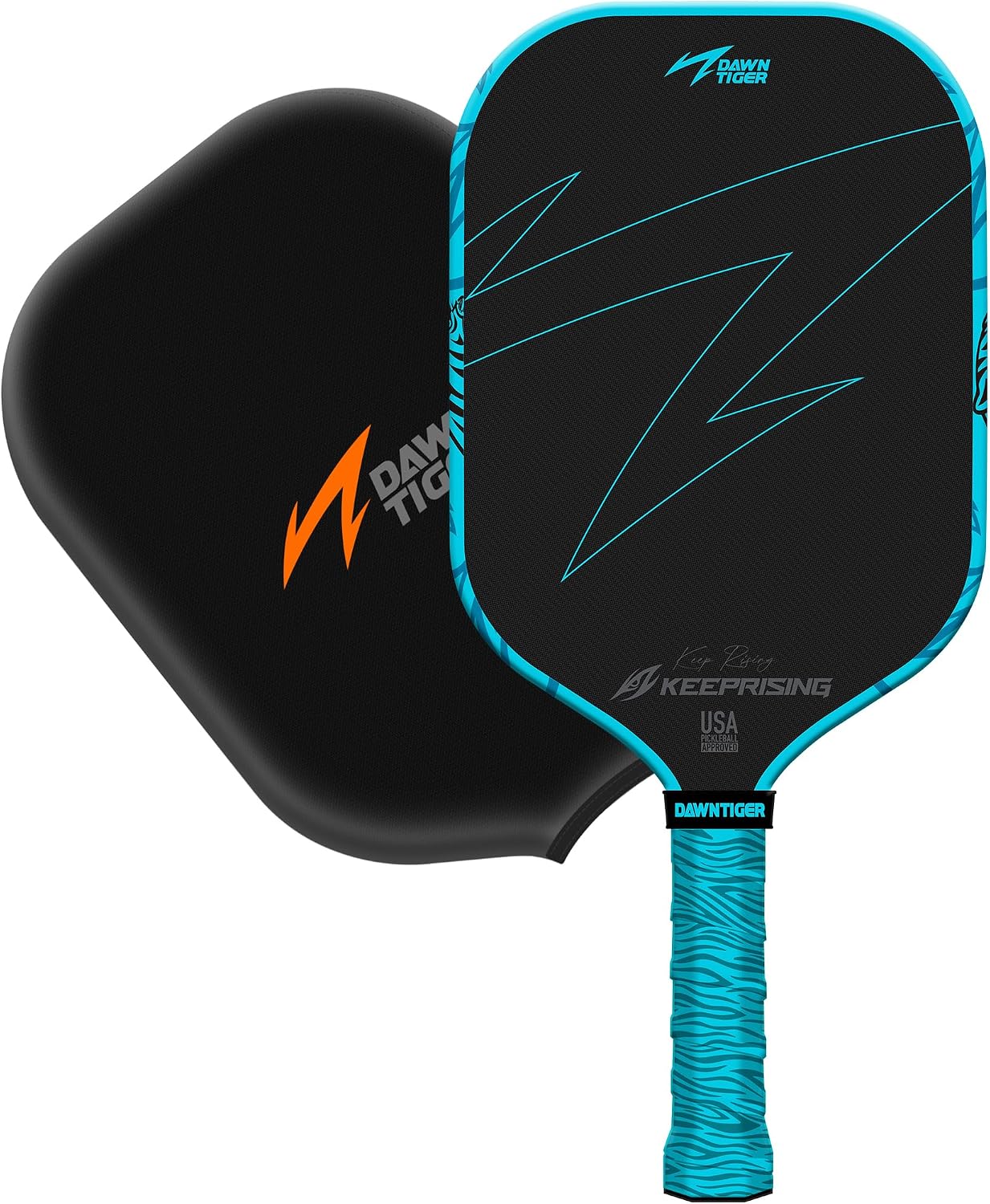
Sport AKS Carbon Fiber PickleballPaddle USAP Approved Paddles Set
The lowest entry point of the four, and it arrives as a set, so a brand new doubles pair can both walk on court the same day
At set pricing the face texture and edge guard are where the corners get cut, which is exactly where durability goes first
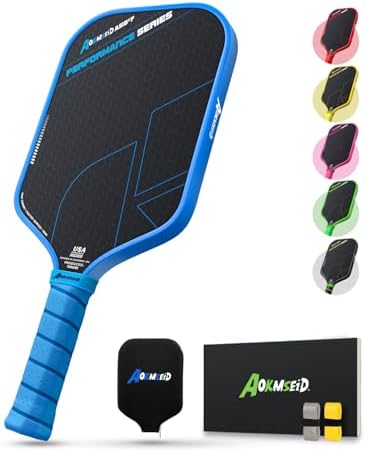
YVmove 16mm Kevlar T700 Carbon Fiber Pickleball Paddle, USAPA Approved
Kevlar paired with T700 carbon and a 16mm core, which is the profile I hand to control-first doubles players who want a quieter, softer face
One paddle only, and a hybrid face is the hardest kind to shop blind because the Kevlar layer changes the sound and feel more than the spec sheet suggests
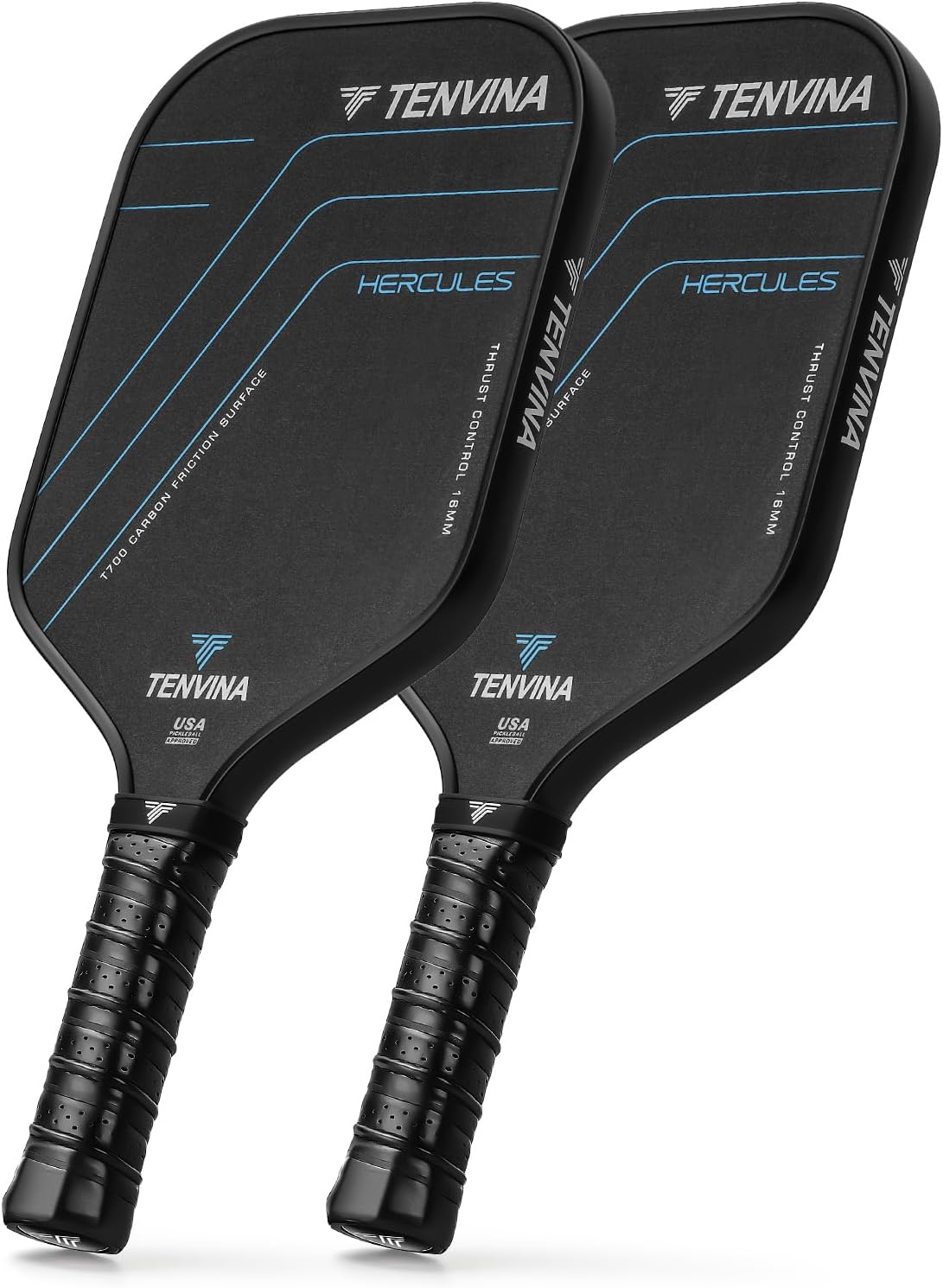
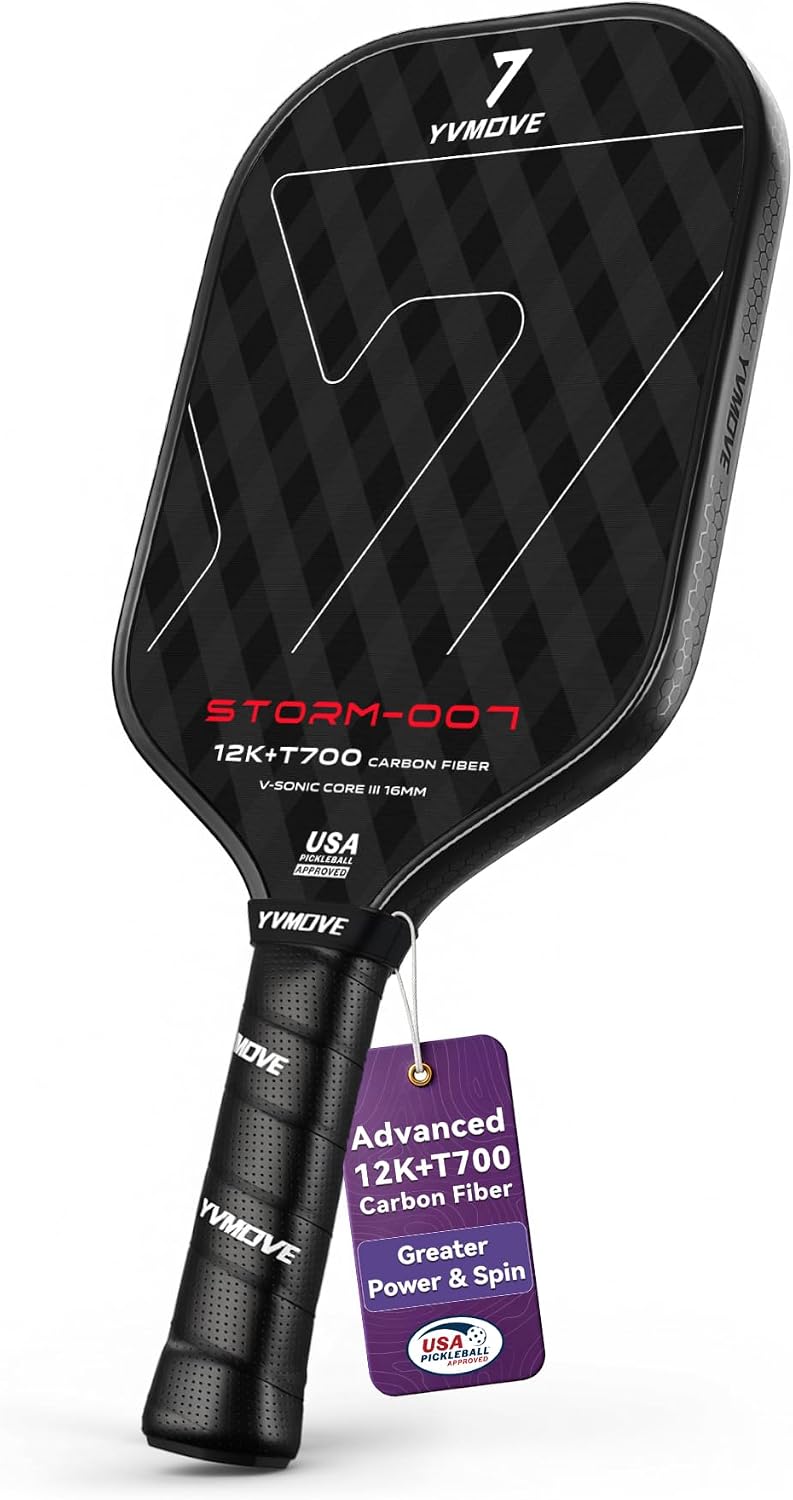
TENVINA Pickleball Paddles Set of 2, Multi-Layer T700SC Textured Carbon Fiber Pickleball Paddle, 16MM Thicknesses Pickle Ball Paddle, Strong Spin & Power Surface, USAPA Approved Pickle Racket
The most spec-heavy option here: two paddles, a multi-layer T700SC textured face, and a 16mm core, which is the combination I want a set to have
You are paying for two of everything, and textured faces are the first component to wear out on any paddle at this price
Prices and availability were captured from Amazon Creators API and may change.
What these four paddles actually are
Two of them are sets and two are singles, and that split matters more than any spec line on the box. A set is a household purchase. A single is a player purchase. Get that decision right before you get anything else right.
The Rising Pickleball Paddle is the single with the rawest face here. Toray T700 refers to the carbon cloth, and "raw" means the texture you feel is the weave itself, not a grit coating sprayed on top. That distinction matters to me more than any other face spec, because a painted grit face wears smooth in a few months and there is nothing you can do about it, while a raw weave can be wiped clean and keeps biting longer. The USAP approval language in the name is the one you want to see if you play sanctioned events. Visit on Amazon → to check the current listing details.
The Sport AKS set is the entry ticket. It is a two-paddle carbon fiber set at the bottom of this group's price band, and it is built for the person who has played four times and wants their own paddle instead of a loaner. Visit on Amazon →.
The YVmove paddle is the interesting one for me as a coach. Kevlar in a paddle face is not a spin story, it is a damping story. Kevlar absorbs vibration and softens the hit, and when it is layered with T700 carbon and wrapped around a 16mm core, you get a paddle that plays quiet and controlled. The USAPA approval claim in the name covers the other major governing body, so if your league runs under that umbrella, this is the listing that speaks to it. Visit on Amazon →.
The TENVINA set of two carries the longest spec sheet of the group: multi-layer T700SC textured carbon, 16mm thickness, two paddles, USAPA approval language. T700SC is a standard modulus carbon cloth, and "multi-layer" tells you the face is a laminate rather than a single sheet. Visit on Amazon →.
Core thickness and the sweet spot
Two of these paddles state a 16mm core. That number is the single most useful spec in the group, because core thickness drives sweet spot size more than any face material ever will.
A thicker core gives you a deeper, more forgiving hitting area and a softer feel on resets and dinks. A thinner core gives you a faster, stiffer face with more pop and less forgiveness. For the recreational player I coach, the thicker core wins almost every time, because a bigger sweet spot turns mishits into playable balls. You do not need power you cannot control, and I say that to 70-year-olds and 25-year-olds with equal conviction.
What I will not do is pretend a thickness number is a measurement of quality. Core density and cell structure vary wildly between suppliers, and two paddles both labeled 16mm can feel completely different depending on how the core is made and how the face is bonded to it. That is why the same-player demo matters. If you can borrow a 16mm paddle for one session before you buy, do it.
Thermoformed or not: the only real tech story
Here is where I have to be straight with you. None of these four listings makes a thermoformed claim, so I would go into any of them expecting standard construction: core, face layers, edge guard, handle, bonded and pressed. That is not an insult. Plenty of good paddles are not thermoformed.
But thermoforming, where the edge and face are heat bonded into a single unit rather than glued and taped, is the one genuine technology story of the last three years. It changes how a paddle feels at the perimeter and it changes how it survives a season of doubles. If a paddle at this price point were thermoformed, the brand would say so loudly on the box. It does not, so plan accordingly and judge these on face, core, and edge guard instead.
Sets versus singles: do the math on your household
A set of two is almost always the smarter buy for a beginner, and it has nothing to do with paddle quality. It has to do with the fact that pickleball is a doubles sport and beginners quit when they cannot find a partner with equipment.
If you are buying for yourself and one other person, the math is simple: two singles cost roughly twice what a set costs, and at the recreational level the set paddle will not hold you back for the first year. If you are buying for yourself alone and you already play three times a week, the set becomes dead weight. You will use one paddle, and the second one sits in the bag until a guest needs it.
The TENVINA set and the Sport AKS set both solve the partner problem. The Rising and the YVmove both solve the player problem. Pick which problem you actually have.
Face texture, edge guards, and Florida humidity
This is the section nobody wants to read and everybody should.
Face texture is a wear item. On a raw carbon face, the texture is structural, so it degrades slowly and predictably. On a textured coating or a sprayed grit layer, the texture is a finish, and finishes fail. When the face goes smooth, spin goes with it, and there is no re-grit product that brings a coated face back to new.
Edge guards are the second failure point. A guard that is too proud catches the ball on low resets, which is a skill problem you did not need to add to your game. A guard that is too thin chips on court scrapes. Either way, edges chip and faces peel, and the brands that solve it earn my repeat recommendations.
Then there is humidity. I coach in southwest Florida, where the air is wet enough that grip tape turns into a paste by August. Whatever paddle you buy, budget for a grip refresh, and do not judge a paddle by the wrap it shipped with.
Spin rate is a technique problem before it is a paddle problem
I will keep saying this until it stops being true. Spin is roughly 30 percent paddle and 70 percent technique. A raw carbon or textured face gives you a head start, and the Rising and the TENVINA both have faces that will reward good mechanics, but no face on earth will spin a ball for a player who hits flat with a stiff wrist.
If you are shopping because you want more spin, spend one lesson on your contact point first, then buy. You will make a better decision with a coach watching than with a spec sheet in front of you.
Who each paddle fits
The Sport AKS set fits the newest player, or the couple who want to try the sport without committing real money. Visit on Amazon →.
The YVmove fits the intermediate doubles player who wants a soft, controlled 16mm feel and does not mind a hybrid face. Visit on Amazon →.
The TENVINA set fits the household that wants two decent paddles with a real textured face and a 16mm core, and is willing to accept that set-grade edge guards come with the territory. Visit on Amazon →.
The Rising fits the committed player who wants a single, raw carbon paddle and will actually take care of the face. Visit on Amazon →.
What I tell members in the Buyer's Chair
Buy the paddle that matches the player you are now, not the player an influencer says you could be. If you play twice a week in a rec league, any of these four will do the job, and the set options give you a spare for a spouse or a guest. If you are chasing a rating, buy the single with the raw face and put the rest of your budget into lessons.
One last thing, and I mean this. Both USAP and USAPA publish approved paddle lists, and approvals do change. If you play sanctioned events, check the current list before you buy, because a listing that says approved is a claim, not a guarantee. I have watched members show up with unapproved paddles more than once, and it is a bad way to lose a Saturday.