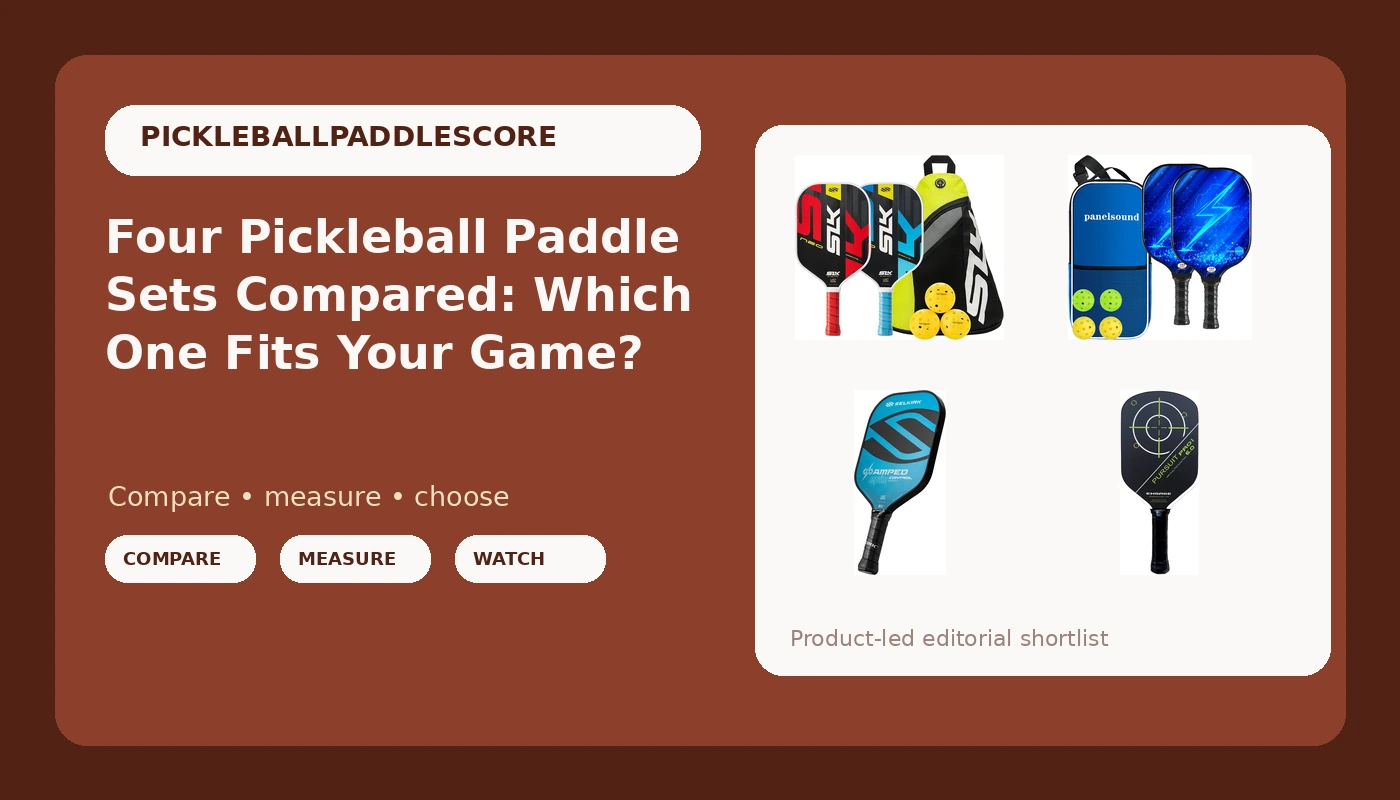
Most of the paddles that come back to my desk at the club come back for the same reason, and it is almost never the paddle itself. It is the fit. A 4.0 player with fast hands and a cheap paddle is frustrated because nothing they hit has any pop. A brand new player holding an aggressive power paddle is frustrated because the sweet spot is small and they cannot find it twice in a row. That is why I keep steering people toward pickleball paddle sets and mid-market singles instead of whatever the last video they watched told them to buy.
I have been coaching in Naples since 2019 at a club with 400 members, and I have demoed more than 60 paddles in that time. My log tracks three things: how much spin a face can actually hold, how big the sweet spot feels to a 3.0 player, and what the paddle looks like after three months of doubles. My juniors and my 70-and-over league give me feedback from both ends of the speed spectrum, which is the only way I know to separate a paddle that plays well in a hitting session from a paddle that plays well in month three.
Related: Paddle Core Thickness Explained: 13mm Vs 16mm Vs 20mm
For most recreational players, the Selkirk Sport SLK Neo two-paddle set is the smartest first purchase in this group, and the Selkirk Sport Amped Control with its 16mm core is the paddle I would hand a 3.0 to 3.5 player who is tired of losing points at the kitchen line. The Engage Pursuit Pro1 is a genuine weapon, but it is a weapon for a specific player, and that player is not a beginner.
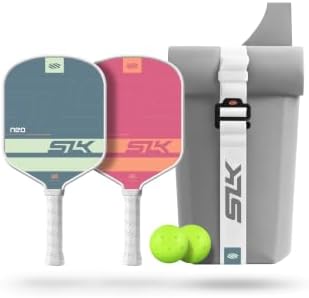
Selkirk Sport SLK Neo Pickleball Paddles Set of 2 + Pickleballs + Sling Bag
A complete two-player starter kit with balls and a sling bag, so nobody stands around waiting for a loaner
It is a starter paddle, and a player who improves past the 3.0 level will outgrow it
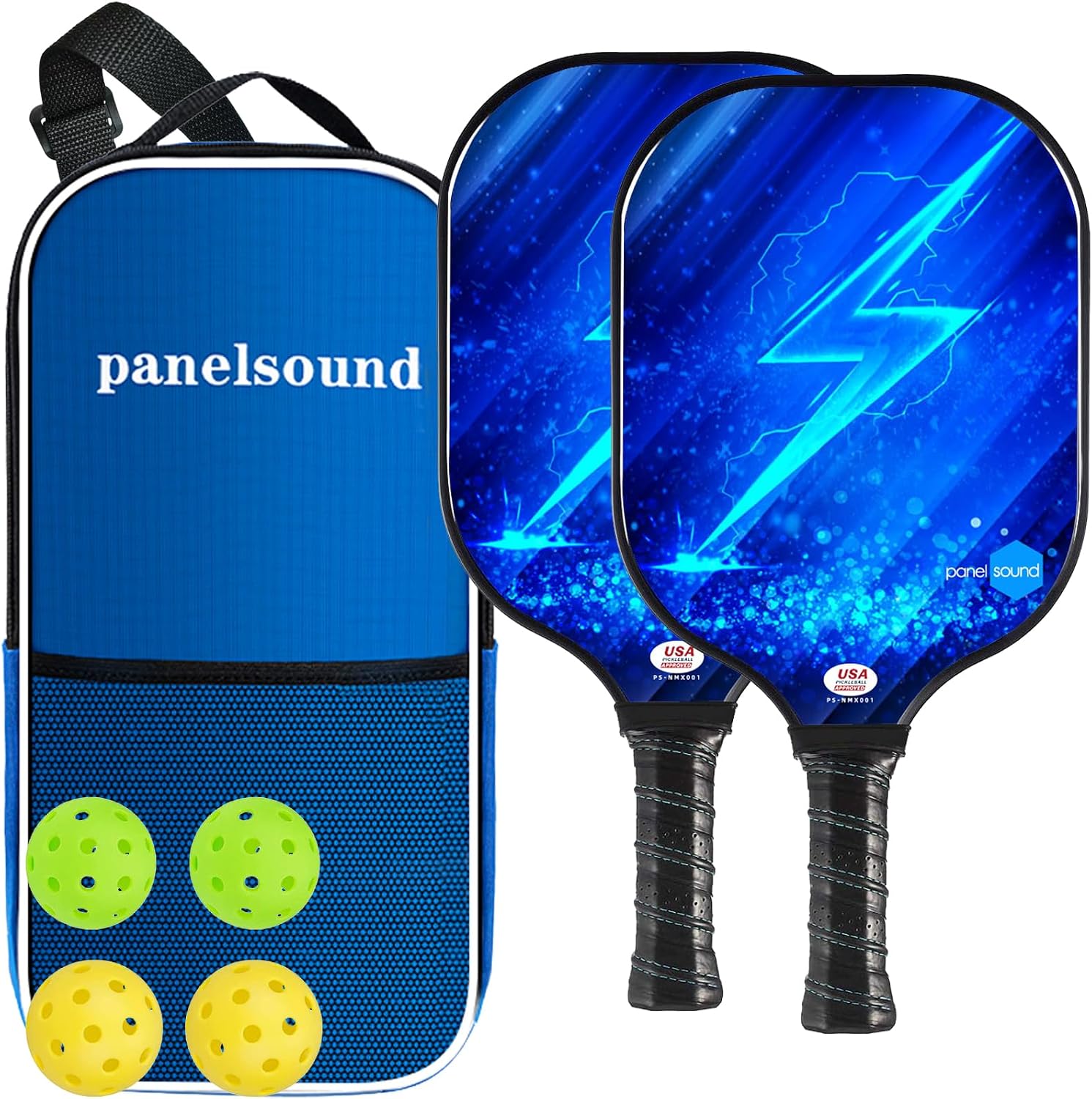
Pickleball Paddles Set of 2 or 4, USAPA Approved Fiberglass Pickleball Racket Set with 4 Outdoor Pickleballs and 1 Carrying Case
Fiberglass face, outdoor balls, and a case make this the lowest-risk way to get a family on court
The two or four paddle variant is confusing at checkout, and set paddles are built for casual play
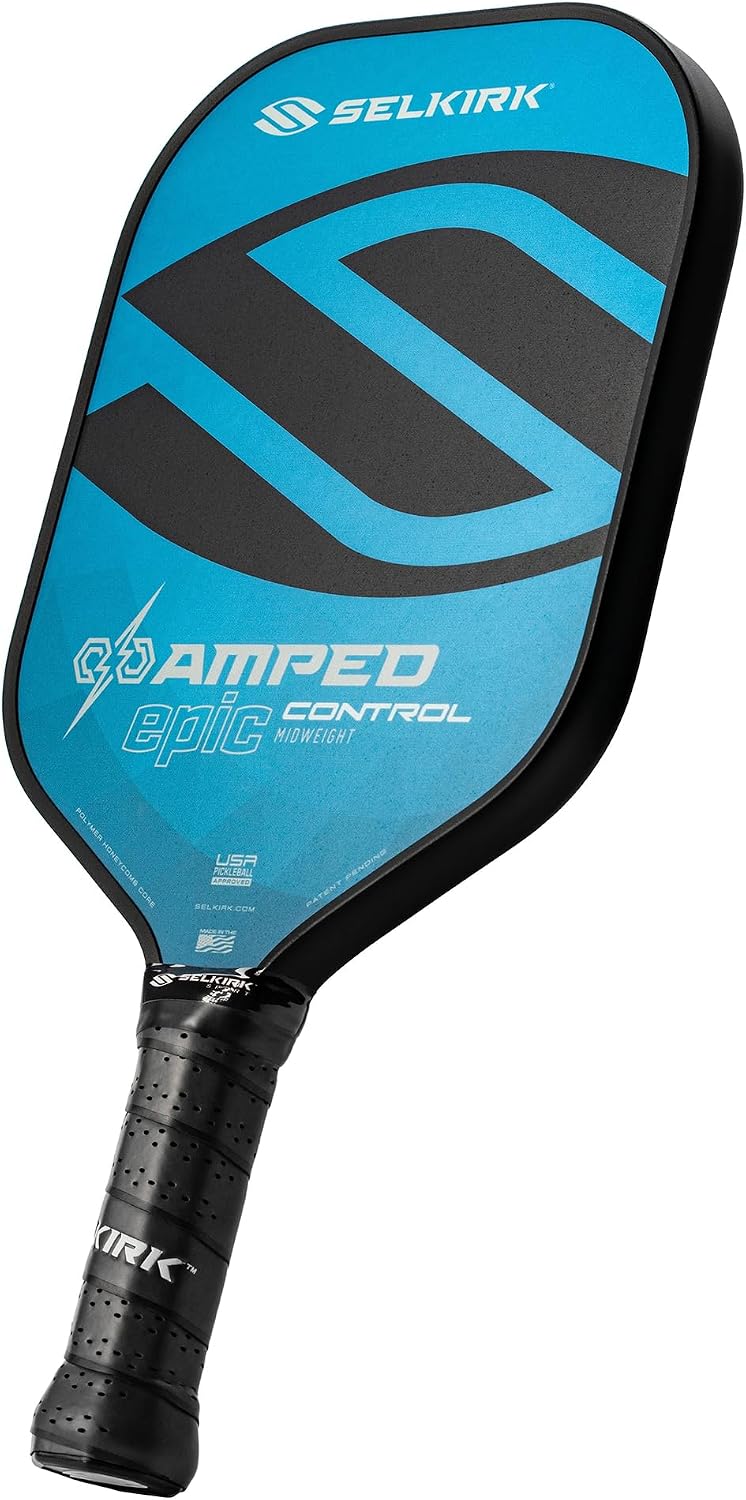
Selkirk Sport Amped Control Pickleball Paddles, Fiberglass, 16mm X5 Core
The 16mm core and fiberglass face make dinks, resets, and blocks noticeably easier to control
Less pop on drives than a thin-core paddle, and you are buying one paddle, not a set
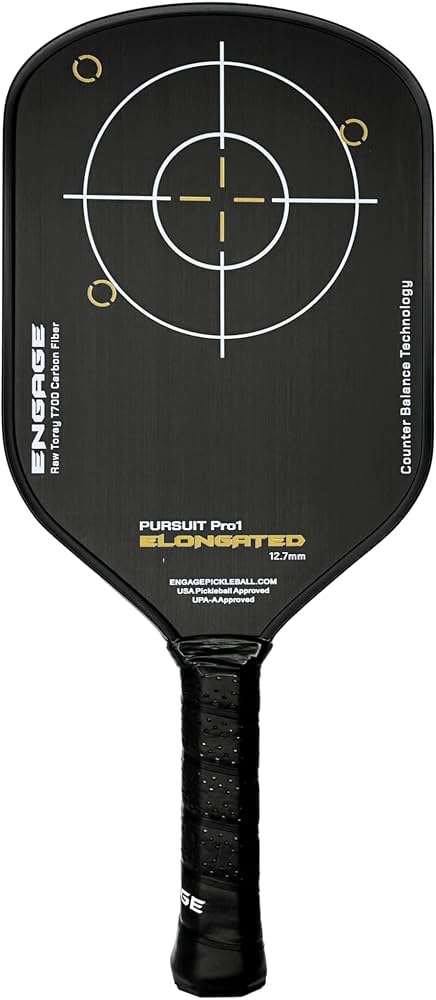
Engage Pursuit Pro1 Pickleball Paddle, Raw Carbon Fiber, 12.7mm (Fierce Red, Hybrid)
A raw carbon face plus a 12.7mm core gives aggressive players the power and spin they came for
Unforgiving on off-center contact, and the thin core asks for hands that are already quick
Prices and availability were captured from Amazon Creators API and may change.
What I check before the brand name
Four things decide whether a paddle stays in my demo bag. Sweet spot size, core thickness, face texture, and the edge guard. Everything else is packaging.
Sweet spot is the one that matters most, and it is the one no spec sheet tells you honestly. A paddle can list the same core thickness as another and still feel completely different because the construction, the shape, and the way the face is bonded to the core all change how much of the hitting surface behaves predictably. That is why I tell members to ignore core density numbers until they have swung both paddles themselves. A number is not a feel.
Core thickness is the closest thing we have to a real technology story. A thicker core, generally 16mm and up, gives you more dwell time, which is the fraction of a second the ball stays compressed against the face. More dwell means more control, softer hands at the net, and a friendlier feel on off-center hits. A thinner core, generally 13mm and under, gives you more pop and a faster ball off the face, at the cost of forgiveness. This is the trade you are making in every paddle purchase, and it is the trade that separates two of the paddles in this comparison.
Face texture is where spin comes from, and it is also where the marketing gets loudest. Raw carbon and grit faces do hold more spin than a smooth painted surface. But spin is roughly 30 percent paddle and 70 percent technique, and I can put more spin on a ball with a worn out club loaner than most players get from a brand new premium paddle. Buy texture for the last 10 percent of your game, not the first 50.
The edge guard is the detail nobody shops for and everybody eventually complains about. A guard that sits proud of the face will catch the ball on low resets, which is exactly the shot that keeps you in a point. A guard that is flush or trimmed back will not.
The two-paddle sets: the honest case for a bundle
Both budget options here are bundles, and I want to be straight about what a bundle is for. It is for getting two people on a court this weekend with balls and a bag and no arguments about whose turn it is. That is a real problem worth solving, and it is the problem the Selkirk Sport SLK Neo set solves. Two paddles, pickleballs, and a sling bag in one box. For a couple, a parent and a kid, or a pair of friends who tried the sport once and want to try it again properly, this is the cleanest path. Visit on Amazon →
The fiberglass set with four outdoor balls and a carrying case plays the same role with a different emphasis. It comes in a two paddle or four paddle configuration, and the listing states USAPA approval, which matters if you plan to play in a sanctioned tournament or a club league that checks the approved list. Here is the pet peeve: I have seen too many paddles advertised as approved that arrive and are not on the current list. Before you buy anything for league play, spend two minutes on the USA Pickleball approved paddle list and search the exact model. Approval gets updated, and older listings do not always keep up. Visit on Amazon →
One warning about the four paddle variant. A set of four is a great deal for a family or a workplace lunch league, but it is four of the same paddle. If the players in your group improve at different speeds, you have just bought four paddles that all become too soft at the same time. Buy the two paddle version, add singles later, and you will spend the same money more wisely.
The control pick: what a 16mm core buys you
The Selkirk Sport Amped Control is the paddle in this group I would hand to the recreational player who is stuck at 3.0 and cannot figure out why. It runs a 16mm X5 core behind a fiberglass face. That combination is not a power story. It is a control story. The thicker core gives you dwell time, and dwell time is what lets you absorb pace on a block, drop a third shot into the kitchen, and reset a hard drive instead of popping it up.
For nine out of ten players I coach, sweet spot size beats raw power. You do not need power you cannot control. The Amped Control fits that philosophy, and the name on the paddle happens to match what the spec sheet says, which is rarer than it should be.
Two notes. First, the listing title uses the plural, so check the variant selector carefully before checkout to confirm exactly what you are buying. Second, fiberglass faces are durable and forgiving but they do not hold spin the way raw carbon does, so if your game is built on heavy topspin drives, this is not your paddle. Visit on Amazon →
The power pick: raw carbon and a thin core
The Engage Pursuit Pro1 is the other end of the spectrum, and the listing is honest about it. Raw carbon fiber face, 12.7mm core, hybrid shape, and a description aimed squarely at aggressive power players. Raw carbon gives you a gritty surface that holds spin well, and a 12.7mm core gives you a fast ball off the face with less dwell than a 16mm paddle. The hybrid shape sits between a wide body and an elongated frame, which usually means a slightly longer reach with a sweet spot that is still usable.
Marketing language like extreme power, spin, and dwell time is worth translating. Dwell time is a function of how long the ball stays on the face, and a thin core gives you less of it, not more. So the honest read is this: you are buying pop and spin from the face, and you are giving up forgiveness to get it. That is a fine trade for a 4.0 player with quick hands who takes the ball early. It is a bad trade for a 2.5 player who is still learning where the ball is going to land.
If you are shopping this paddle, you probably already know your level. Be honest about it. The players I see most disappointed by thin-core power paddles are the ones who bought them two rating levels early. Visit on Amazon →
Sweet spot versus raw power, one more time
I say this at every clinic, so I will say it here. Most amateur points end because someone missed, not because someone hit a winner. The shot that wins you a point at 3.0 is the unattackable dink and the clean reset, not the drive that clips the baseline one time in five. A forgiving paddle with a large sweet spot helps you make the boring shot. A demanding paddle helps you hit the spectacular shot a little harder.
If you cannot yet hit ten third shot drops in a row in practice, buy the forgiving paddle. If you can, and you find yourself losing points because your opponents have time to set up, then the power paddle starts making sense.
Durability: edges chip, faces wear
Two failure modes show up in my log more than any other. Edge guards chip and crack on low contact, and textured faces wear smooth. Both happen faster in Florida, where heat and humidity are hard on grip tape and on whatever adhesive holds the face together.
The brands that fix edge guards win my repeat recommendations. When you are comparing two paddles that play similarly, look at the guard, look at the warranty language, and look at how the face is bonded. A paddle that feels amazing for one session and dead after six weeks is a failed product, no matter how it plays fresh. This is also why I tell members to be careful about buying into hype paddles in the first months after launch. Watch the used market for a year. What holds its value tells you what actually held up.
Grip tape is the cheap fix and the one people forget. If you live somewhere humid, buy a roll of overgrip and rewrap every few weeks. Fresh tape does more for your hands than a new paddle does.
Who should buy which
- Brand new player, or buying for two people: the Selkirk Sport SLK Neo set. Two paddles, balls, and a bag in one purchase, no guesswork.
- Family or group that needs four paddles and a case, possibly for league play: the fiberglass USAPA approved set, in the two paddle variant unless you genuinely need four.
- Recreational player stuck in the middle, wants more control and fewer errors: the Selkirk Sport Amped Control with the 16mm X5 core.
- Experienced player with fast hands who wants power and spin and accepts the forgiveness trade: the Engage Pursuit Pro1 in the 12.7mm hybrid build.
Questions I get at the net
Do I need a power paddle to compete at my club? No. Most club points are won by the player who keeps the ball in play and gets to the kitchen first. Power is the last thing to add, not the first.
Is a set paddle good enough to learn on? Yes, for the first six months. The point of a set is to get you playing. When you know whether you prefer control or pop, that is when a single paddle purchase becomes worth the money.
Should I buy a thick core or a thin core? Thick if you want control, forgiveness, and a friendlier feel. Thin if you already have soft hands and want a faster ball. If you are unsure, you are a thick core player. Almost everyone is until they are not.
The bottom line
The market is mostly marketing, and the gap between a mid-market paddle and a premium one is smaller than the price difference suggests. The Selkirk Sport SLK Neo set gets you and a partner on court this weekend for less than one serious paddle, the USAPA approved fiberglass set does the same with four balls and a case, the Selkirk Sport Amped Control is the control paddle I would put in a developing player's hands, and the Engage Pursuit Pro1 is the real thing for the player who has already earned it. Buy the one that matches your level this month, not the level you hope to reach by December.