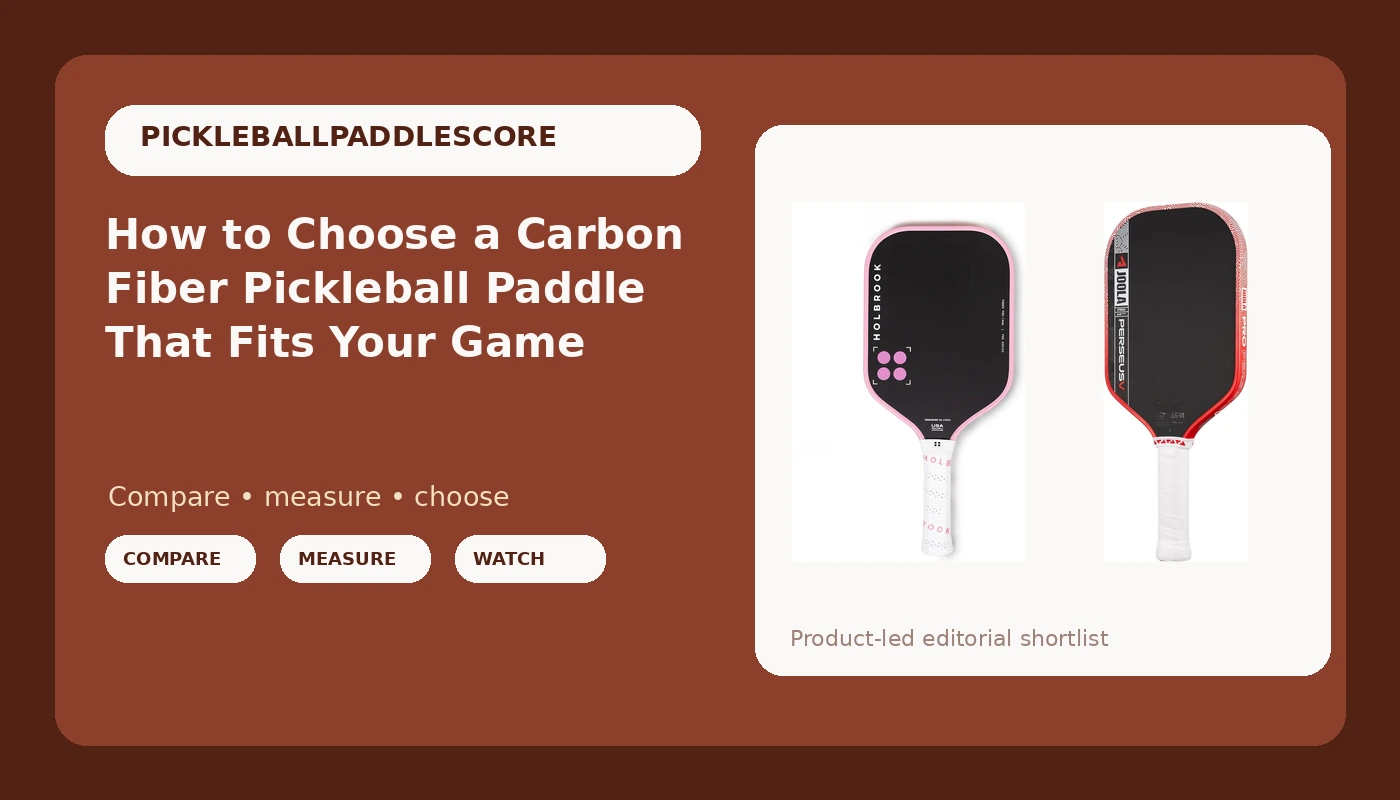
A carbon fiber pickleball paddle will not fix a swing that is late, and it will not add a hundred points to your rating. I have watched a few hundred club members buy one anyway, usually off a 30-second clip from someone playing at a level they will never reach.
Here is the order I tell them to work in: shape first, core second, face third, price last. Get those four in the right order and you end up with a paddle that still feels right in month six, not just on the day it arrives. Get them backwards and you own a very expensive piece of wall art.
The two paddles below are the ones I hand across the counter most often when a member asks me to narrow it down. Neither is a magic wand. Both are honest tools, and they sit at different points on the price ladder.
Why you should trust me
I played tennis through college, picked up pickleball in 2019, and now coach at a club in Naples, Florida with about 400 members. Over five years I have demoed more than 60 paddles, and I keep a written log on each one: how it swings, how big the sweet spot feels in my hand, and what it looks like after three months of doubles.
My feedback comes from both ends of the speed spectrum. The juniors I coach swing hard enough to punish a dead core, and the 70-and-over league tells me which edge guards catch the ball on a reset. When those two groups agree on a paddle, I pay attention.
I am not paid by any paddle brand. I buy, borrow, and demo, and I tell members when the paddle they are eyeing does nothing their current one does not already do.
How I picked and what I check
This is not a ranking of every paddle on the market. It is two paddles that cover the two decisions most recreational players actually face: do I want control, or do I want free power, and how much am I willing to pay for it.
I run the same checks on both, in this order:
- Shape and swing weight. Does it come through the air on time in a fast exchange at the kitchen line, or does it feel like swinging a book?
- Core thickness. A 16mm core feels softer and more forgiving. A 14mm core feels quicker and crisper. Neither is better. They suit different hands.
- Face texture. Raw carbon fiber gives you grit for spin, but grit is only as good as the technique behind it.
- Edge guard and durability. This is where cheap paddles fail first, and where Florida humidity is unkind to grip tape.
- Certification. If a paddle is not on the approved list, it does not go into a sanctioned tournament, and I have seen paddles advertised as approved arrive without the mark.
Spec sheet numbers mean nothing to me without the same player swinging both paddles in the same session. That is the only comparison that holds up.
The two paddles I hand across the counter
One is a premium control frame. One is a value power frame. If you cannot decide between them, that is information: it usually means you should demo both before you spend anything.
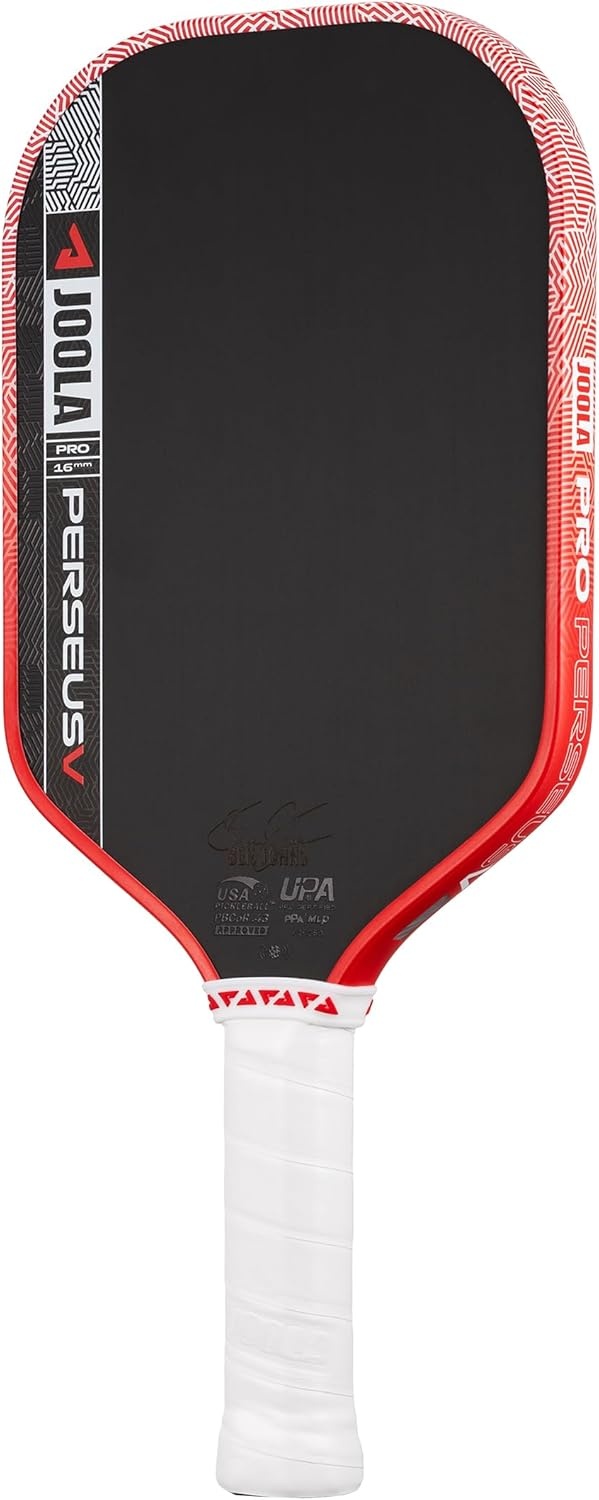
The control-first pick: JOOLA Pro V Pickleball Paddle - 14mm/16mm - Raw Carbon Fiber Textured Surface - Enhanced Frame & Propulsion Core, USAPA & UPA-A Certified, NFC Chip Enabled, Premium Control & Lightweight Performance
 Visit on Amazon →
This is the paddle I hand to the player who has figured out that the ball they lose is the one they hit long, not the one they hit soft. The raw carbon fiber textured surface gives you grit for spin without the trampoline feel that makes dinks pop up. The enhanced frame and propulsion core are aimed at the same idea: keep the ball on the face a beat longer so you can place it instead of just survive it.
The real decision inside this listing is the 14mm or 16mm core, and that choice matters more than anything printed on the box. Take the 16mm if you play a patient game, block a lot of drives, and want a softer, more forgiving feel on resets. Take the 14mm if you play hands battles at the net and want the paddle to come through faster. Same frame, two different players.
It is certified by both USAPA and UPA-A and carries an NFC chip, which is a nice touch if you like being able to verify what you bought. It sits at the premium end of the ladder, so it is the paddle I recommend when a member is already committed to the sport and playing three or four times a week.
Flaws but not dealbreakers: A control frame does not hand you power. If your drives are already short, this paddle will not fix that, and you will blame the paddle for a swing problem. Check current Amazon price before you commit.
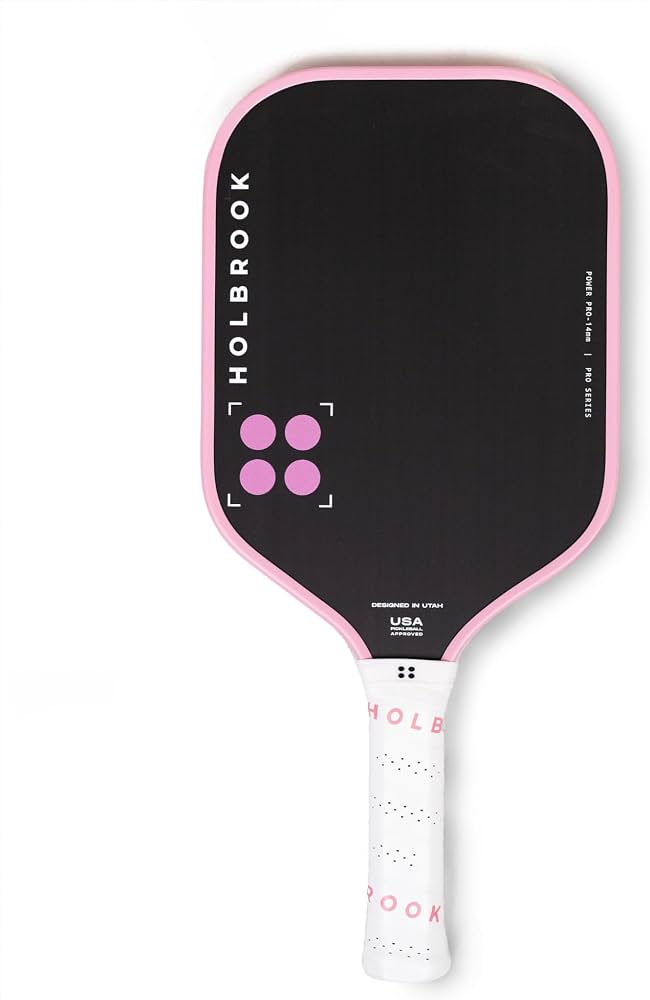
The value power pick: Holbrook Power Pro E Elongated Pickleball Paddle: USAPA Approved, Carbon Fiber Surface, Power, Control, Spin, Edgecraft Foam Polypropylene Honeycomb Core
 Visit on Amazon →
This is the one I hand to the player who wants more reach and a little more free pop without jumping to the top of the price ladder. The elongated shape gives you length at the baseline and a bit of extra leverage on serves and drives, and the carbon fiber surface keeps the spin story honest. The Edgecraft foam polypropylene honeycomb core is the durability part of the pitch, and durability is the thing I care about most, because a paddle that feels amazing for one session and dead after six weeks is a failed product no matter how it plays fresh.
It is USAPA approved, which matters if you play anything sanctioned. It is also the easier recommendation for a player moving up from a starter paddle, because the elongated shape rewards reach and does not demand the precise timing a 14mm control frame does.
Flaws but not dealbreakers: Elongated means the sweet spot sits lower on the face. Mishits up near the top feel dead, and if you hit high on the face you will notice it immediately. Check current Amazon price and demo it if you can.
The actual workflow for choosing your next paddle
Now the part you came for. This is the same order I walk members through in the Buyer's Chair, and it works whether you are spending at the value tier or the premium tier.
Step one: Write down what you actually lose points to. Be honest. If you lose points to balls sailing long, you need control. If you lose points because you cannot reach wide balls or your drives sit up short, you need reach and pop. Most players guess wrong here, which is why they buy the wrong paddle twice.
Step two: Pick your shape. Elongated gives you reach and leverage. A wider, standard shape gives you a bigger sweet spot and more forgiveness on off-center contact. There is no universally better answer, only a better answer for your miss pattern.
Step three: Pick your core thickness. 16mm for control, softer feel, and forgiveness on resets. 14mm for a quicker, crisper frame in fast exchanges. If you are between the two, go thicker. Sweet spot size beats raw power for nine out of ten players.
Step four: Decide how much the face matters to you. Raw carbon fiber textured faces are the current standard for spin. But spin is roughly 30% paddle and 70% technique. If you do not already generate spin with your hands, a textured face will not manufacture it.
Step five: Match the grip to your hand. Too small and you squeeze, which kills your wrist. Too big and you lose the whip. If you are between sizes, buy the smaller one and add an overgrip.
Step six: Verify the approval yourself. Do not trust the word "approved" in a product title. Look the model up on the approved list before you buy, especially if you play league or tournaments. I have seen too many paddles arrive unapproved after being sold as approved.
Step seven: Demo for two sessions, not one. A paddle that feels great in a 20-minute hit can feel sluggish in your third game of the night. Two sessions is the minimum before you commit.
Step eight: Then set your budget. Budget comes last on purpose. Once you know your shape, core, and face, the price tier is just a question of how much you want to spend on the same set of answers.
Where most buyers go wrong
The pro model markup is the worst deal in the sport right now. A touring pro's signature frame is usually the same construction with a different paint job and a number that assumes you will pay for the name. If you are not on a pro schedule, that money buys you nothing on the court.
The second mistake is chasing power. Players who cannot control what they have do not get better by adding more. They get better by finding a bigger sweet spot and learning to move their feet.
The third is ignoring durability. Ask what the edge guard looks like after three months of doubles, not how the paddle feels on day one. Edges chip and faces peel, and the brands that fix edge guards are the ones I recommend again.
The fourth is grip tape. Cheap tape disintegrates in Florida humidity, and a slipping grip changes your swing more than any core material ever will.
The competition and why it lost
The sub-entry-level paddles, the ones you find in a big box store for the price of a dinner, are not in this conversation. Their cores go dead, their faces smooth out, and their edge guards separate. They are fine for a first month of open play and a waste of money after that.
The ultra-light category is a separate argument. It feels fast in the store and gets pushed around by heavy drives at the net. I have yet to see a recreational player improve by going lighter than their swing can control.
And the "pro model" tier loses for the reason above: you pay a premium for a name, not for a better sweet spot. If you want to spend at that level, spend it on lessons. Two months of coaching will move your rating further than any paddle on this page.
What this all costs
I am not going to quote you a number, because prices move and I would rather you check them yourself. What I will tell you is how to think about the math.
A paddle you keep for two years, played three times a week, works out to a cost per session in the range of a cup of coffee, sometimes less. That is the right frame. A $40 paddle that dies in four months costs you more per session than a well-built frame that lasts two years, and it costs you the months of bad habits you build while compensating for a dead core.
The value tier is where most recreational players should live. It is the range where you get a real carbon fiber face, an honest core, and a warranty that means something, without paying for a sponsorship. The premium tier is for the player who is on the court four or five times a week, plays league, and will notice the difference in the first session.
If you are unsure, buy the value frame and put the difference toward a lesson package. That is the trade I recommend to almost every member who asks, and almost none of them regret it.
The short version
Write down what you lose points to. Pick the shape and core that answer it. Check the approved list. Demo for two sessions. Then decide what you are willing to pay for those answers, and buy the paddle that delivers them.
The gear arms race in this sport is exhausting, and most of it is marketing. Your paddle is a tool. Pick the one that matches the game you actually play, not the game in the highlight reel.