Most players buy a carbon fiber pickleball paddle the way they buy a phone case. A 45-second video, a discount code, a tap, and three weeks later the face is smooth, the edge guard is chipped, and the paddle feels like a plank. I have watched that loop run at my club for five years, and the fix is not a bigger budget. It is a fitting process.
A carbon fiber pickleball paddle is a material, not a promise. Raw carbon fiber, thermoformed carbon, T700SC, 18K weave: none of those words tell you whether the thing fits your swing. Sweet spot size, core thickness, face texture, grip circumference, and how the paddle behaves in month three of doubles are what actually decide it.
This is the same process I run with members at my club in Naples, Florida. It takes two sessions on court and one honest look at your own game.
Why you should trust me
I played tennis through college, picked up pickleball in 2019, and now coach at a club with 400 members. I have demoed more than 60 paddles in five years, and I keep a log on every one of them: spin rate on the same serve, sweet spot size from a chalk-and-ball drill, and a durability note at the three-month mark after league doubles in Florida heat and humidity. My juniors hit with the same frames as the 70-and-over league, and both ends of that speed spectrum tell me different things about the same paddle. I am not a paddle engineer. I am the guy who hands you three paddles and watches which one you stop thinking about.
How I picked and how I tested
A spec sheet cannot tell you whether a paddle fits you, because the variable is you. So every frame in this article went through the same routine with real players, not with me swinging alone in a corner.
The same-player A/B. Two paddles, one player, one drill session. Twenty cross-court dinks, twenty third-shot drops, twenty drives, then the sweet spot drill: ten balls on the center, ten a half inch off center, ten a full inch off. I count how many land in the kitchen. That count is worth more than any marketing number on a listing.
The texture drag test. I drag a fingertip across the face on day one and again at the three-month mark. A face that starts grippy and turns glassy in six weeks is a failed product, no matter how it plays fresh. Florida humidity is a brutal tester of both face texture and grip tape.
The edge guard check. I watch resets specifically. An edge guard that stands proud of the face catches the ball on low blocks and turns a routine reset into a pop-up.
The league-night log. A paddle that feels amazing for one session and dead after six weeks does not get a repeat recommendation from me. Every frame here was played in real doubles for at least three months.
Two paddles I hand out first
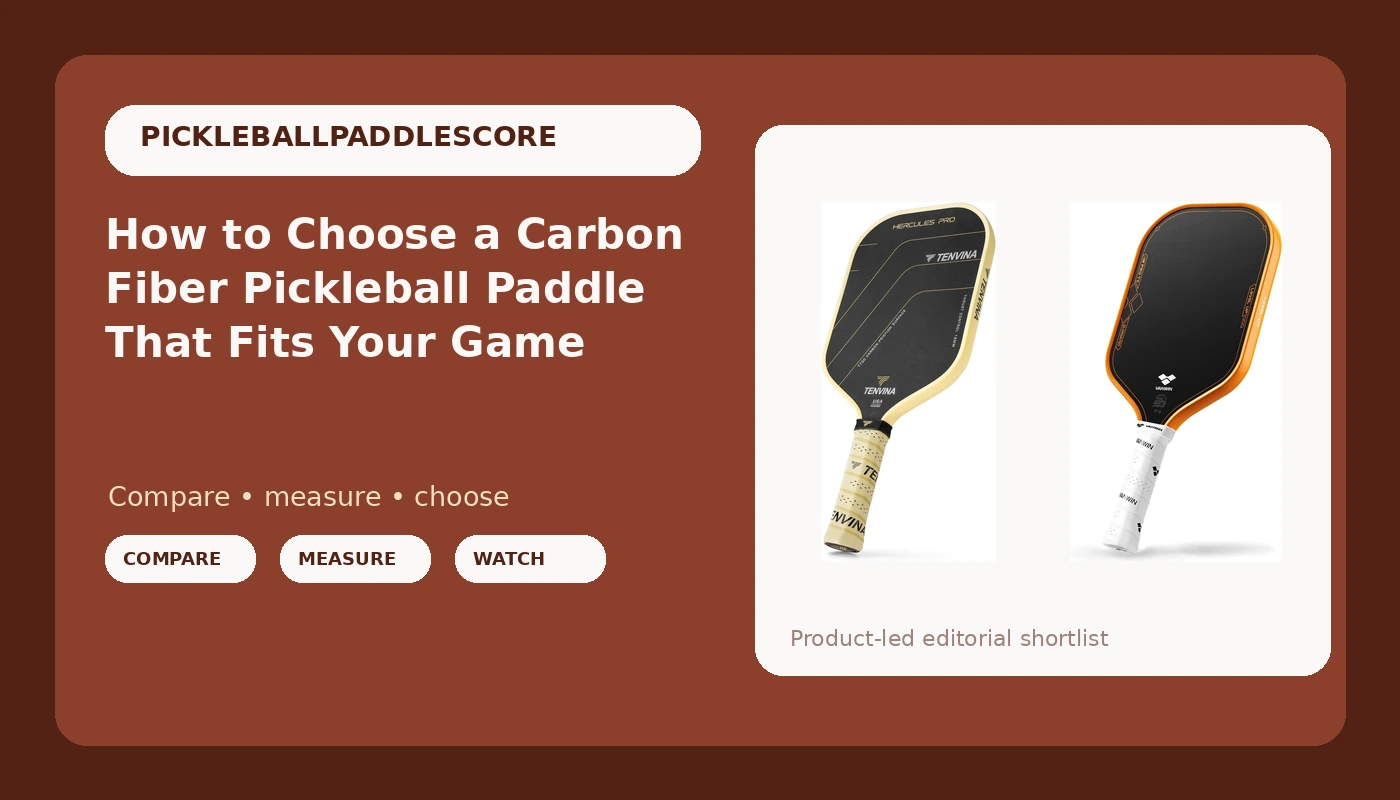
The two frames below cover the two honest paths in the mid-price range: a thermoformed carbon build for the player who wants more on the drive, and a raw carbon build aimed at the intermediate who is still building consistency.
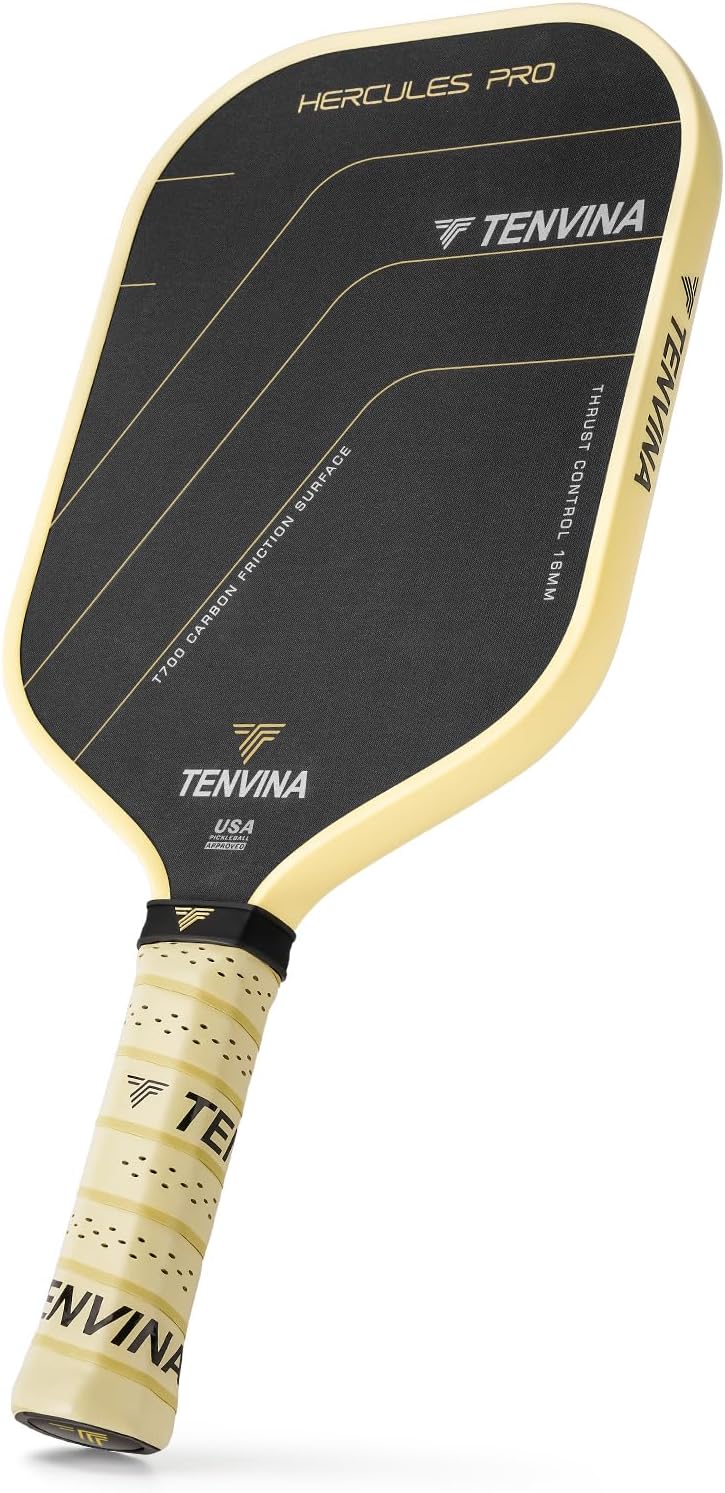
Thermoformed power pick: TENVINA Pickleball Paddles, Thermoformed T700SC Carbon Fiber Pickleball Paddle, Pickle Ball Paddle USAPA Approved, Dominant Power and Larger Sweet Spot
 Visit on Amazon →
This is the paddle I hand to the member who already has a reliable third-shot drop and wants more on the drive without jumping into pro-model pricing. Thermoforming is the one real technology story in paddles over the last three years: the core and the face are bonded under heat and pressure, which stiffens the perimeter and widens the effective sweet spot. This frame is listed as a thermoformed T700SC carbon fiber paddle with dominant power and a larger sweet spot, and it carries USAPA approval, which matters if you play sanctioned tournaments. Check current Amazon price.
Flaws but not dealbreakers: thermoformed frames feel stiffer and pass more vibration into your hand on off-center contact. If you have elbow or wrist history, demo it for a full session before you commit, and do not skip an overgrip.
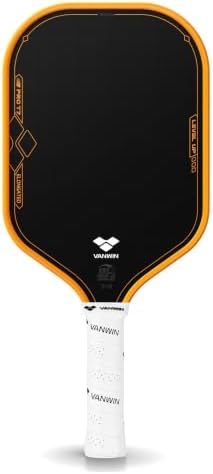
Intermediate control pick: Pickleball Paddles Raw Carbon Fiber USAPA Approved for Intermediate
 Visit on Amazon →
This is the frame I put in the hands of the 3.0 to 3.5 player who loses more points to inconsistency than to a lack of power. Raw carbon fiber face, USAPA approved, and pitched at intermediate players, which is exactly the group that benefits from a face that grabs the ball on dinks and resets instead of launching it. Check current Amazon price.
The honest note on raw carbon: those faces are texture-dependent. If you play three times a week outdoors, expect the grit to soften over a season. Clean the face with a damp microfiber, not a gritty eraser, and store it in a cover.
Flaws but not dealbreakers: a control-first frame will feel underpowered to a former tennis player who is used to driving through the ball. Give it three sessions before you decide.
The fitting workflow, step by step
Step one: Name the shot that costs you points. Before you look at a single paddle, write down the shot you lose with. If it is the third-shot drop into the net, you need forgiveness and touch, not power. If it is your drive getting eaten by the net player, you need pop. Nine out of ten recreational players I fit need sweet spot size first and power second.
Step two: Measure the sweet spot on the paddle you already own. Take chalk and mark the center of your current face. Have a partner feed you twenty balls and count how many you strike inside that mark without looking. If you cannot find the center, you already have your answer, and a bigger sweet spot will help you more than a faster face.
Step three: Decide thermoformed or not. Direct answer: for most intermediate doubles players, thermoformed is worth it, because the sweet spot is larger and the frame stays stable when you catch the ball off center. If you have arm sensitivity, a non-thermoformed frame with a thicker core usually feels softer, and softer beats stiffer when your elbow is the thing keeping you off the court.
Step four: Choose core thickness by role, not by hype. The thick-core class, 16 mm and up, tends to give you more dwell time, a higher launch on dinks, and a softer feel. Thin cores, 14 mm and under, tend to give you a flatter, faster ball with a smaller margin. A doubles player who dinks and resets should start thick. A singles player who lives on the drive can go thin.
Step five: Match the grip to your hand. Wrap a tape measure around your dominant hand just below the knuckles. If the handle feels like a baseball bat, add an overgrip, not a new paddle. In Florida humidity, cheap grip tape disintegrates in weeks, so budget for two or three overgrips a season.
Step six: Inspect the face texture and the edge guard. Look at the edge guard from the side. If it sits above the face plane, it will catch balls on low resets. Run your thumb across the face. If it feels smooth on a new paddle, send it back.
Step seven: Demo for at least two sessions, ideally three weeks. One session is a first date. Paddles that wow you fresh can go dead. Two sessions with a gap in between tells you about the core, not the honeymoon.
Step eight: Buy where you can return it, then log it. Use a seller with a real return window, keep the packaging for two weeks, and write down three things after every session: how the dink felt, how the drive felt, and where the ball went on mishits. After a month you will have a paddle profile, and you will never need an influencer video again.
Where most buyers go wrong
Chasing spin is the first mistake. Spin is about 30 percent paddle and 70 percent technique. I can put more spin on a rental paddle than most players get from a top-shelf frame, because the wrist and the contact point do the work.
The second mistake is buying the pro model. The pro-model markup is the worst deal in the sport right now. You are paying for a sponsorship, not a better sweet spot.
The third mistake is trusting the approval claim on the listing instead of checking the USA Pickleball approved paddle list yourself. Paddles that claim approval and arrive unapproved are a real problem, and the list is free to search.
The fourth mistake is judging a paddle in one session, and the fifth is ignoring your grip. A great frame with a slick, worn grip in July feels worse than a mid-range frame you can actually hold.
The competition and why it lost
Wood paddles are still fine for a first month, but they go soft and they do not hold face texture, so they do not belong in a fitting conversation.
Sub-budget composite paddles look tempting, and the cores go dead inside a season. That is the definition of a failed product, no matter how good it felt in week one.
Pro-model frames at the top of the market are excellent paddles, and they are also the wrong answer for a player who has not yet found the center of the face. If you cannot consistently hit the sweet spot on a forgiving frame, a stiffer one will just punish you faster.
The used market is its own trap. The hype paddles from the last big release cycle are already showing up at half price, and that tells you something about which ones held up. Buy used only if you can inspect the face texture and the edge guard in person.
What this all costs
Both frames in this guide sit in the middle of the market, which is where I tell every recreational member to shop. Below that band you get dead cores and grips that fail in humidity. Above it you pay for tour sponsorships and a paint job.
Do the cost-per-session math before you upgrade. A paddle you play three times a week for a year is roughly 150 sessions. Spread across that many sessions, a mid-price frame costs you pocket change per outing, and so does a premium one. The difference is that the mid-price frame leaves room in the budget for a lesson, and one lesson on your third-shot drop will move your rating faster than any face material.
If you are deciding between a new paddle and a coaching session, take the session. If you already have the technique and your frame is three years old with a smooth face, buy the paddle.
The short answer
Find the shot that costs you points. Measure your current sweet spot with a chalk drill. If you are an intermediate doubles player who wants forgiveness and pop, the thermoformed carbon frame above is the place to start. If you are still building consistency and you lose more points to errors than to a weak drive, the raw carbon intermediate frame is the better fit, and its texture will reward clean contact once you learn to use it.
Then demo for two sessions, buy from a seller with a return window, and log how it plays in month three. That is the whole method. The paddle market is mostly marketing, and the players who win their league are not the ones with the most expensive frame. They are the ones who stopped switching.