Most beginners buy their first paddle the way they buy a blender. They stand in the aisle, pick the box with the loudest claims, and hope for the best. Four months later they are playing three nights a week with a paddle that is too head heavy for their shoulder, too poppy for their kitchen game, and dead in the middle of the face where they actually hit the ball. Then they blame their hands.
Choosing a beginner pickleball paddle is a shortlist problem, not a gear problem. You do not need to read forty product pages. You need to answer four questions about how you play, then check three things on the paddle itself. That is the whole job, and it takes about ten minutes.
I do this with new club members every month. Two paddles in this article are the ones I hand to adults buying their first or second paddle: the JOOLA two-paddle set for households and couples, and the JOOLA Astral Perseus for the player who wants one control-first frame. Everything else here is the process for deciding whether either of them fits your game.
Why you should trust me
I played tennis through college, picked up pickleball in 2019, and now coach at a club with 400 members in Naples, Florida. I have demoed more than 60 paddles in five years, and I keep a log on each one: where the sweet spot actually sits on the face, how the grip holds up in Florida humidity, and what the edge guard looks like after three months of doubles.
The juniors I coach and the 70-and-over league give me feedback from both ends of the speed spectrum. That is how I learned to stop recommending paddles based on how they feel in the first ten minutes.
Three beliefs shape every recommendation I make. The paddle market is 90% marketing and 10% graphite. Sweet spot size beats raw power for nine out of ten players, because you do not need power you cannot control. And a paddle that feels amazing for one session and dead after six weeks is a failed product, no matter how good it plays fresh.
How I evaluate a paddle for a beginner
I run the same short protocol on every beginner paddle that crosses my hands.
First, the same player swings both paddles in the same session. Core density numbers and spin claims mean nothing unless one player hits with both frames back to back. A paddle that feels fast next to a brick feels slow next to a feather.
Second, I watch where the ball actually comes off the face during drills, not during warm-up rallies. Cross-court dinking, third-shot drops, and resets tell you whether the sweet spot is where a beginner actually makes contact, which is lower and closer to the handle than most marketing photos suggest.
Third, I check the grip and the edge guard, because those are the two parts that fail first. A grip that turns slick in July heat costs you more points than a missing power layer ever will. An edge guard that stands proud of the face catches the ball on low resets, which is the single most annoying way to lose a rally.
Fourth, I look at durability over three months of league doubles, not three days of drills. Edges chip, faces peel, and sandblasted textures smooth out. That is normal wear. What matters is whether the paddle is still playable when it happens.
I do not chase raw spin numbers. Spin is 30% paddle and 70% technique. I can put more spin on a club loaner than most players get from a frame that costs three times as much.
Two paddles that fit this method
Both of these are USA Pickleball approved, and both sit in the price bracket where I tell recreational adults to shop. Which one you pick depends on whether you are buying for a household or for yourself.
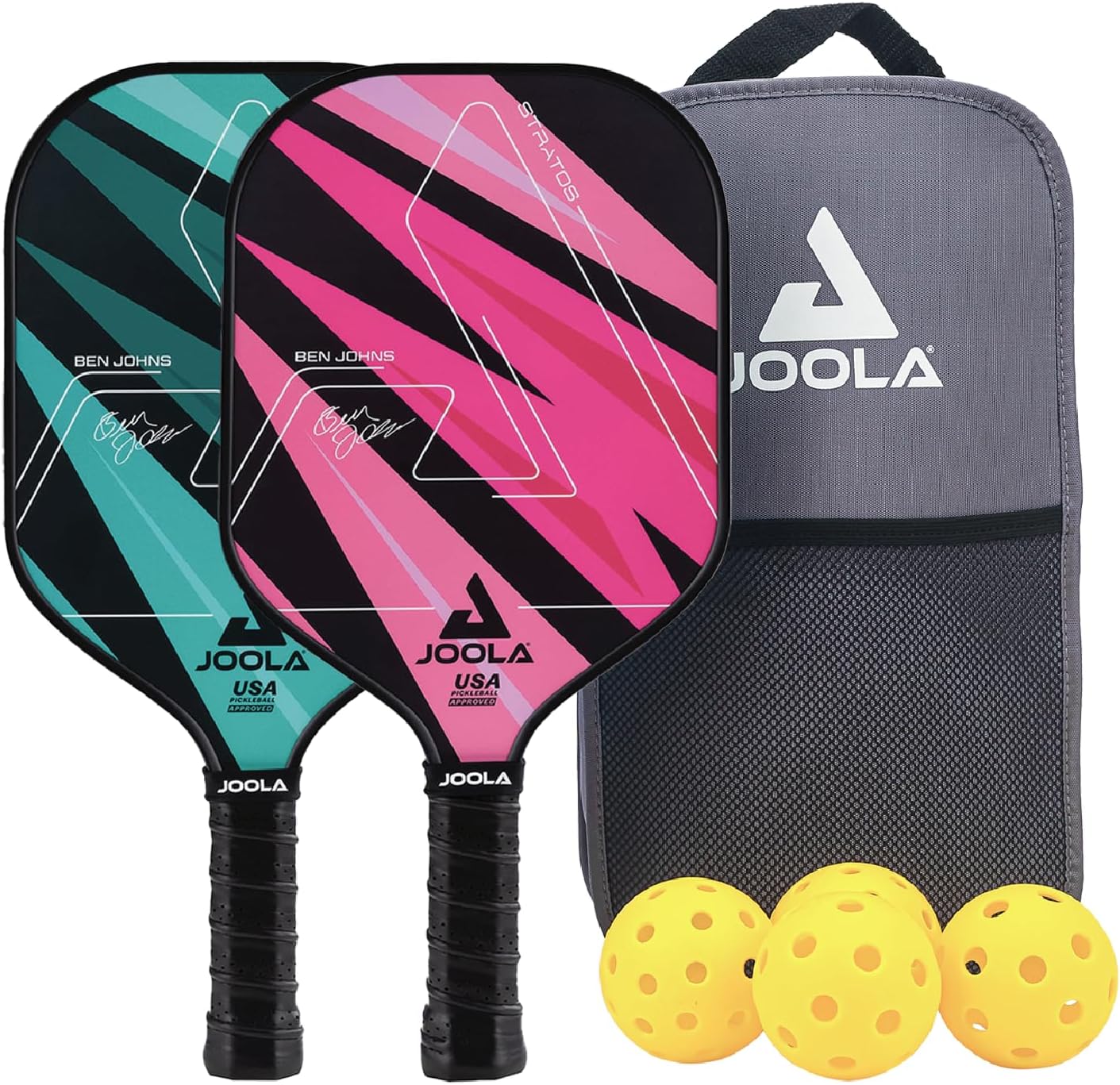
Best for households and couples: JOOLA Pickleball Paddles Set of 2, Multiple Colors - Reinforced Fiberglass Surface, Lightweight, Durable, Beginner-Friendly Racket Design, Set Includes Balls & Bag, USAP Approved
 Visit on Amazon →
This is the set I tell couples and families to buy when nobody owns a paddle yet. You get two paddles in matching colors, plus balls and a bag, which means you can walk onto a court the day the box arrives instead of ordering three separate things. The reinforced fiberglass surface gives a beginner a little free pop without turning every dink into a pop-up, and the lightweight build keeps the paddle from dragging on late-session resets.
The honest caveat: a set means both players get the same specs. If you are six foot three with big hands and your partner is five foot two, the shared grip size is a compromise for one of you. Order a roll of grip tape with it and wrap the handle to fit whoever needs it.
Flaws but not dealbreakers: Fiberglass faces are the least durable face material in the sport, and a shared set gets twice the abuse. Expect visible wear at the sweet spot by the end of a hard season. That is the trade you make for the price bracket.
Anyone outfitting a driveway, a condo, or a two-person household should start here.
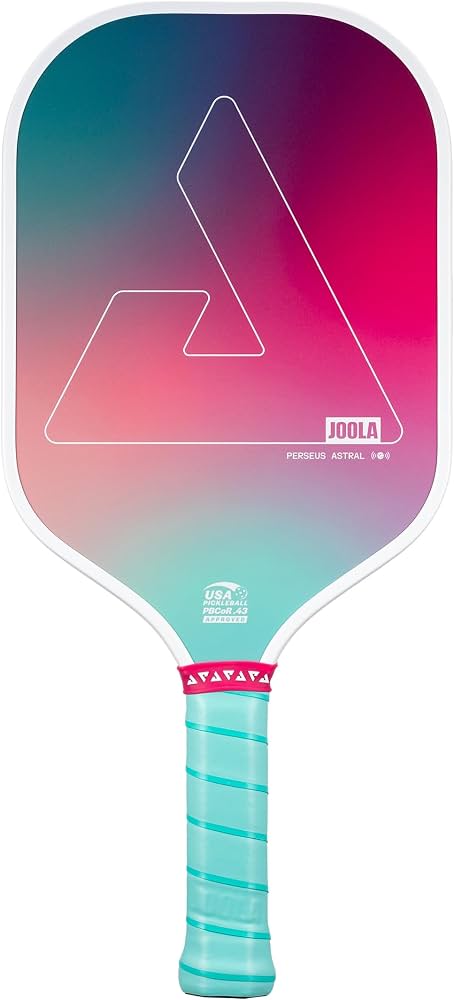
Best for the player buying one paddle for themselves: JOOLA Astral Perseus Pickleball Paddle, Beginner Friendly Lightweight Paddle, Carbon Fiber Sandblasted Surface for Spin & Control, Moisture-Wicking Grip, USA Pickleball Approved, NFC Chip Enabled
 Visit on Amazon →
If you are buying for one person and you want a paddle that rewards control before power, this is the one I point at. The carbon fiber sandblasted face gives you grip on the ball for spin without the trampoline feel of a power-first frame, which matters when you are learning third-shot drops and dinks. It is built light enough for a beginner to move at the kitchen line, and the moisture-wicking grip is not a marketing line in a Florida summer. A slick handle is the fastest way to lose your backhand.
It is also USA Pickleball approved, which I verify myself before recommending anything, and it carries an NFC chip for registration.
Flaws but not dealbreakers: Sandblasted carbon faces wear smooth over time. Every grit face does, at every price. You will notice less bite after a few months of hard play, and no paddle at this level escapes that.
Anyone who wants a single paddle with a control-first feel and a handle that survives humidity should look here first.
The buying process, step by step
Here is the sequence I walk new members through. It works whether you buy one of the paddles above or something else entirely.
Step one: Decide how many players you are outfitting. A set of two is the right answer for a couple, a family, or two friends who will always play together. If two players have very different hand sizes or very different strength levels, buy two single paddles instead. Sharing a set is a convenience, not a fit.
Step two: Set a weight range, not a weight. Beginners should live in the middle. Light enough to react at the net, heavy enough that a hard drive does not knock the paddle around in your hand. Paddles at the extremes hide your mistakes: ultra light frames teach you to arm the ball, and heavy frames teach you to swing late.
Step three: Match the face to the skill you are building. If you are still learning to keep the ball in the court, a fiberglass face with a bit of pop is forgiving and cheap to replace. If you already control your dinks and want to add spin, a sandblasted carbon face gives you more bite on cut shots. Neither is better in the abstract.
Step four: Check the grip, then plan to replace it. Grip size is personal, and factory grips are the first thing to fail in heat. Budget for a roll of overgrip and re-wrap when the handle starts feeling slick, not when it starts looking dirty.
Step five: Verify the approval claim yourself. My biggest pet peeve in this sport is a paddle that advertises approval and arrives without it. Look up the model on the USA Pickleball approved list before you buy, not after. A tournament director will not care what the box said.
Step six: Inspect the edge guard in your hand. Run a thumb along the edge. If the guard stands proud of the face, it will catch balls on low resets. If it sits flush, you are fine. This is a two-second check that saves months of frustration.
Step seven: Cap your budget and stop shopping. The $80 to $150 range is where recreational adults should live. Below it you get dead cores and grips that disintegrate. Above it you pay for pro sponsorships and paint.
What to skip
Pro model markup. The "pro model" is the worst deal in the sport right now. You are paying for a paint job and a sponsorship, not for technology that helps a 3.0 player.
Influencer codes. A code that adds twenty dollars to the same paddle is not a discount. Search the model name and buy it wherever it is cheapest.
Thermoformed hype at the beginner level. Thermoformed construction is the only real technology story of the last three years, and it will be standard at every price point within two years. You do not need it for your first paddle. You need a sweet spot you can find and a grip you can hold.
Power paddles. If you cannot yet control a soft game, a power frame just gets you to the net faster so you can lose the point there.
Anything that claims approval without proof. Covered above, but it is worth repeating.
What this all costs
Both paddles in this article sit in the same bracket, which is the bracket I recommend for adults who play once or twice a week. I am not going to quote you a number, because prices move and the only number that matters is the one on the page the day you buy. Check current Amazon price on each listing before you commit.
Do the cost-per-day math on a paddle you keep for two years. A set of two, split across a couple who plays weekly, costs pennies per session. The real mistake is buying cheap, hating the feel, and buying again in three months. That is how a budget paddle becomes an expensive one.
And keep this in perspective: a paddle will not fix a third-shot drop. Four lessons will do more for your rating than any frame on this page. Buy a paddle that fits your hand and your level, spend the difference on coaching, and replace the grip when it gets slick. That is the whole game.