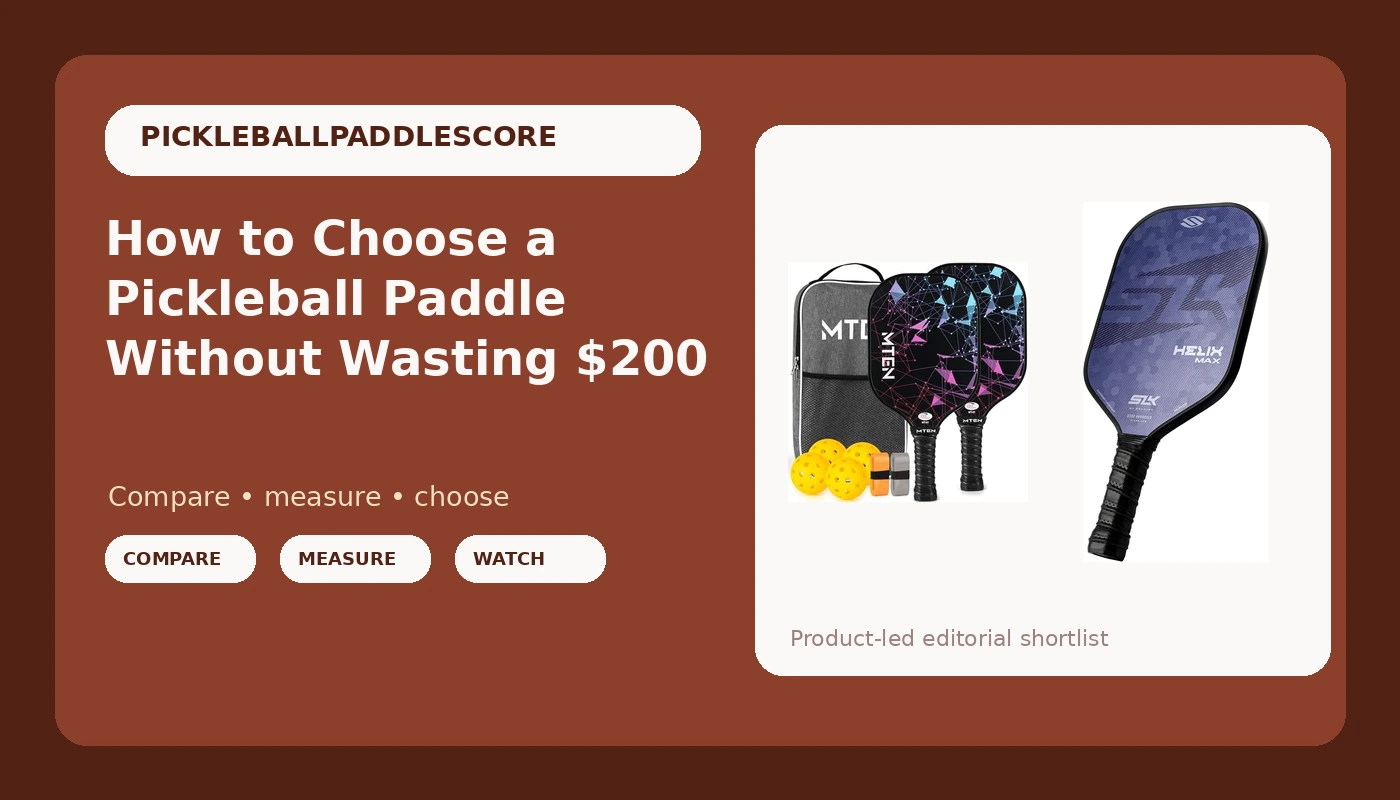
Most players learn how to choose a pickleball paddle the expensive way. They buy one off a highlight reel, play three sessions, and figure out the paddle was built for somebody else's game. I have watched that happen at my club a couple hundred times in five years. The good news is that the fix is boring. Match the paddle to how you actually play, not to how you wish you played.
I coach at a 400 member club in Naples, Florida, and I run the demo program. That means players hand me their new paddle after a month and tell me the truth about it, good or bad. What follows is the process I walk them through, plus the two paddles that stay in my demo bag because they cover the two ends of the market.
Why you should trust me
I played tennis through college and picked up pickleball in 2019. Since then I have demoed more than 60 paddles and kept a log on every one: how much spin the face actually produces, how big the sweet spot feels in live doubles, and what the edge guard and the face look like after three months of league play. My club juniors hit harder than I do, and the 70 and over league hits softer and more precisely than I do, so I get feedback from both ends of the speed spectrum.
That log is why I am cynical about paddle marketing. It is also why I can tell you that a paddle which feels incredible in a demo session and dead after six weeks is a failed product, no matter how it plays fresh.
How I picked and how I tested
This is a process article, not a ranking. Still, you need something concrete to hold, so I keep two paddles in the bag that sit at opposite ends of the market: a fiberglass set built for new players and families, and a carbon fiber and fiberglass model for the player who is already past the beginner stage.
My testing method is the same every time. Same player, same session, both paddles. Twenty minutes of dinks, drives, third shot drops, and resets. I watch four things: where the sweet spot starts to fall off, whether the edge guard catches the ball on a low reset, how the grip survives Florida humidity, and whether the face texture is still doing anything after a month.
What I do not trust is a core density number on a spec sheet. It means nothing unless the same player swings both paddles back to back.
The two paddles I hand out most
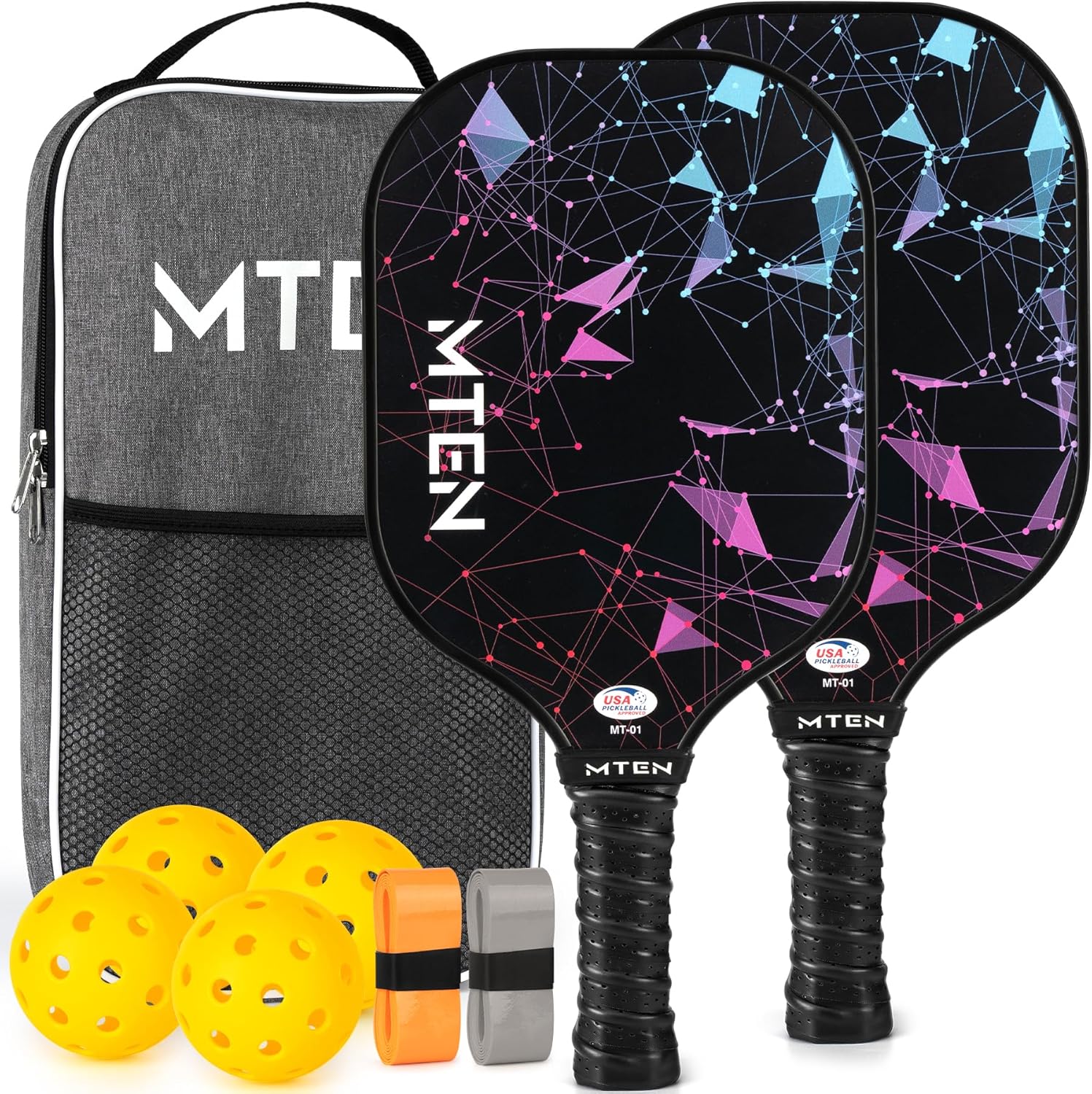
Best for a new player or a family set: MTEN Pickleball Paddles Set of 2/4/1, USAPA Approved Fiberglass Rackets
 Visit on Amazon →
This is the set I hand to a family that shows up on a Saturday with two kids and no idea what a dink is. The fiberglass face gives you a little pop without needing a full swing, and the wide body gives a beginner a forgiving sweet spot. The USAPA approval claim matters here, because I have had players buy paddles that arrived unapproved and get turned away at a tournament desk. Verify it on the listing before you buy, then check the current approval list yourself.
For a set, the practical win is that nobody has to share. Two paddles, one bag, and enough balls to get through a first session. The grip runs small, so adults with bigger hands should plan on overgrip from day one.
Flaws but not dealbreakers: Fiberglass faces go soft faster than carbon, and a set built to a price will not have the edge guard of a club level paddle. If you play four times a week, expect to replace it inside a year, and that is a fair trade at this price.
This is for the beginner, the casual rec player, and the family that needs two paddles tonight.
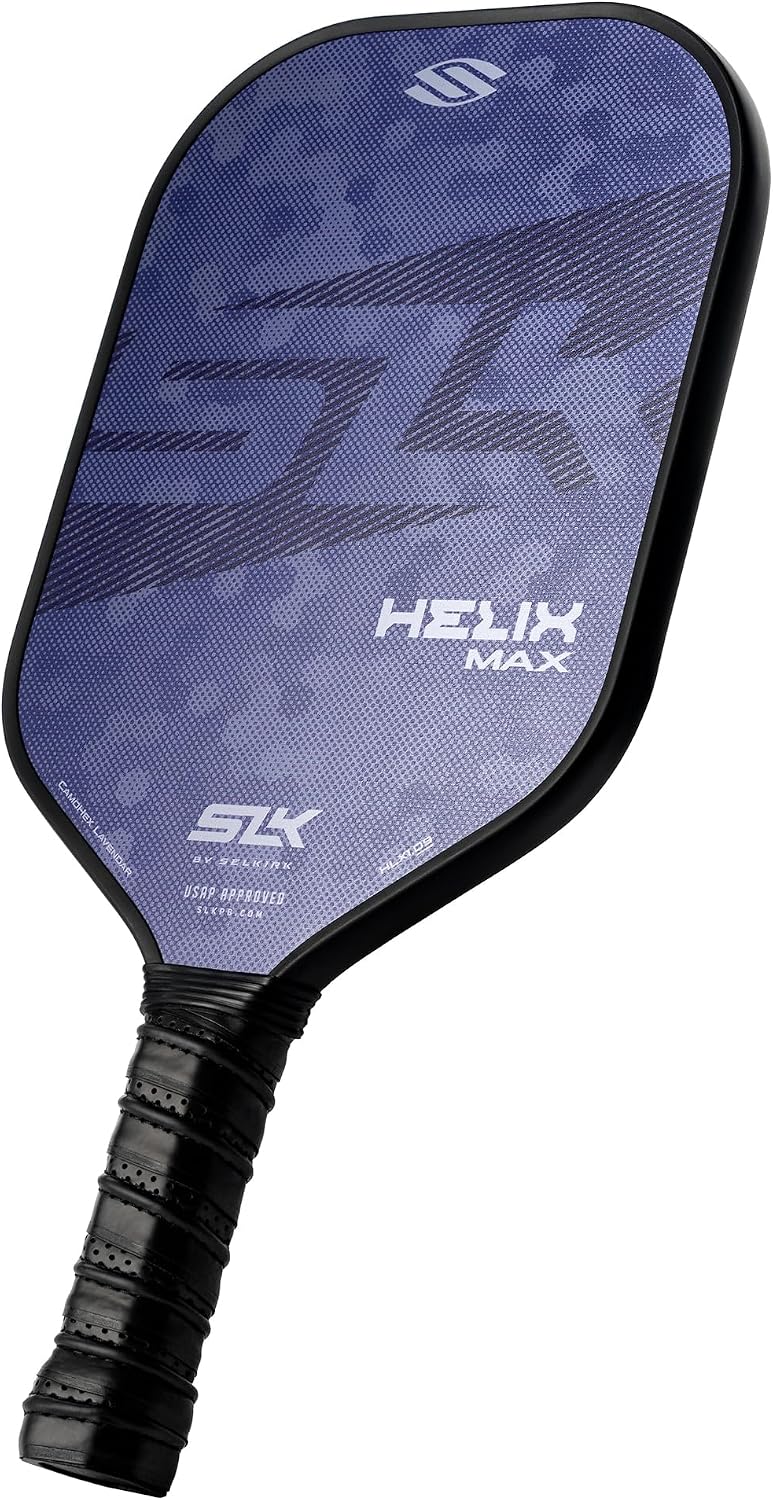
Best step up for the improving player: Selkirk Sport SLK Helix Pro Pickleball Paddles | Carbon Fiber & Fiberglass
 Visit on Amazon →
This is the paddle I hand a player who has been at the club for six months and is starting to lose points because of the paddle instead of the technique. The carbon fiber and fiberglass construction gives you a face that holds texture longer and a feel that is more predictable on resets. Predictable is the word. When you are learning to block hard drives at the kitchen line, you want the ball to come off the same way every single time.
The weight sits in a range most adults can handle for a full two hour session without arm fatigue, and the handle length gives you a little more reach if you are developing a two handed backhand.
Flaws but not dealbreakers: It costs more than a set of two beginner paddles, and the difference only shows up once you can hit the same shot ten times in a row. If you are still learning the rules, save the money and buy the set.
This is for the 3.0 to 3.5 player who plays twice a week or more and wants one paddle to last a couple of seasons.
How to choose a paddle in 20 minutes
Here is the walkthrough I give club members. Do it in order and do not skip to the end.
Step one: Count your sessions. If you play once a week or less, buy cheap, durable, and forgiving. If you play three or more times a week, the paddle becomes a tool, and spending more on it makes sense.
Step two: Pick your weight. Lighter paddles are quicker at the net and easier on shoulders. Heavier paddles give you more plow through on drives and blocks. If you have any elbow or shoulder history, start light and stay there.
Step three: Match grip size to your hand. Hold the handle and see whether your index finger fits between your palm and your fingertips. If it barely fits, go up a size. If there is a lot of space, go down. A grip that is too small makes you squeeze, and squeezing is what wrecks elbows.
Step four: Understand core thickness. A thicker core gives you a bigger sweet spot and more control. A thinner core gives you more pop on serves and drives. For most recreational players, thicker is the better trade. You can add power with technique. You cannot add a bigger sweet spot.
Step five: Choose your face material. Fiberglass is cheaper, has a bit more pop, and wears faster. Carbon fiber costs more, feels more muted, and holds texture longer. Neither is better in the abstract. Fiberglass fits the player who wants help generating pace. Carbon fits the player who wants the paddle to get out of the way.
Step six: Check the edge guard. Run your thumb along the edge. If it is raised enough to catch a ball on a low reset, it will cost you points. This is a real difference between cheap and mid price paddles, and it is one of my pet peeves for a reason.
Step seven: Hit both paddles back to back. Same partner, same ball, same ten minutes. Dinks first, then drives, then resets. Whichever paddle makes the boring shots easier is your paddle. That is the entire test.
Step eight: Buy one, not three. Play with it for a month before you decide anything. The first session is not data, it is adrenaline.
Where players get it wrong
The biggest mistake is buying power. Nine out of ten players I coach do not need more power. They need a bigger sweet spot and a paddle they can control when a hard ball arrives at their hip.
The second mistake is the pro model markup. A signature paint job and an endorsement do not change the physics. If you want to pay double for a name, that is your choice, but do not tell yourself it is performance.
The third mistake is trusting spin claims. Spin is roughly 30 percent paddle and 70 percent technique. I can put more spin on a rental paddle than most club players get from a paddle that costs more than their shoes. If you want spin, spend the money on a lesson and a fresh overgrip.
The fourth mistake is buying a paddle that claims approval and arrives unapproved. Check the listing, then check the current approved list before you enter a tournament.
The fifth mistake is buying off an influencer code. That code usually adds twenty dollars to the same paddle you can find without it.
What this all costs
Check current Amazon price on both paddles before you decide, because the gap between them is smaller than the gap between a mid price paddle and a pro model. The set is the cheapest way to get two people on the court. The carbon model is the cheapest way to stop blaming your equipment.
If you want my honest math, the paddle is the smallest part of the spend. Balls, court time, and lessons cost more over a year than either paddle in this article. Buy the one that fits your game, then stop shopping and go drill.
The bottom line
Buy the set if you are new, playing with family, or still learning the rules. Buy the carbon fiber model if you play twice a week, can hit the same shot ten times in a row, and want a paddle that will still feel alive next season. Either way, demo before you commit if your club has a program, and if it does not, start one. That is how you stop buying paddles off highlight reels.