Most players would improve more from six lessons than from a $250 paddle, and I say that as someone who sells neither. So when a club member asks me how to choose a carbon fiber pickleball paddle, I hand them a one-page checklist and tell them to ignore the rest of the internet for an afternoon.
I coach at a club in Naples, Florida with roughly 400 members, which means I hear the same story four times a week. Someone watches a thirty-second clip, buys the paddle with the loudest spin claim, plays two good sessions, and then spends the next three months blaming their third shot drop. The paddle was never the problem, and in most cases the paddle they bought was not even the wrong paddle. They just had no process for choosing it.
Here is the process, plus the two paddles I put in members' hands before they spend anything.
Why you should trust me
I have demoed more than 60 paddles in five years of coaching, and I keep a log on every one of them with three columns: spin rate on the same serve, sweet spot size measured by where the ball dies on off-center contact, and how the face and edge guard look after three months of league doubles.
That third column is the one nobody on YouTube keeps. A paddle that feels incredible for one session and dead by week six is a failed product, no matter how it played fresh out of the box.
My juniors and my 70-and-over doubles league give me feedback from both ends of the speed spectrum, which matters because a paddle that feels plush to a 72-year-old with a short swing can feel like a brick to a 19-year-old who swings through the ball. I do not take brand money and I do not run discount codes. If a paddle is overhyped, I say so in the same sentence I say it is popular.
How I sort paddles before I recommend one
The market is about 90% marketing and 10% graphite, so my filter is simple. I look at what a paddle is built from, then I ask what kind of player it was built for, then I ask what it costs to keep playing with it after the honeymoon.
The first question is always the same: who is this for? A 16mm control paddle with a big sweet spot is the right answer for a 55-year-old recreational player who plays three times a week. It is the wrong answer for a 4.5 player who wins points at the kitchen line with hand speed.
The second question is durability. Edges chip, faces peel, and grit wears smooth. In Florida humidity I have watched grip tape turn to paste in a month. The brands that fix edge guards and ship grip that survives a summer are the ones that get my repeat recommendations.
The third question is price honesty. The $80 to $150 range is where the real value sits. Below that you are often buying a dead core, and above that you are frequently paying for a pro sponsorship and a signature on the throat.
The four specs that actually decide whether you like a paddle
Core thickness. This is the first number to look at and the one that changes your game most. A 16mm core gives you a longer dwell time, a bigger sweet spot, and softer resets. A 13mm core gives you a faster exit off the face and more pop on drives, with a smaller sweet spot and less forgiveness. If you are still losing points to unforced errors, buy the 16mm and stop apologizing for it. You do not need power you cannot control.
Face material and texture. Carbon fiber faces with a friction texture generate spin, but spin is about 30% paddle and 70% technique. I can put more spin on a rental paddle than most players get from a $250 one. What the face does give you is consistency, and what it takes away over time is that texture as the grit wears down. Ask how the face is finished, not how many RPMs the box claims.
Construction: thermoformed or not. This is the only real technology story in the last three years. Thermoforming bonds the face to the core under heat and pressure, which typically firms up the perimeter and cuts the dead zone around the edges. Foam injection into the walls does something similar, adding stability and muting vibration. Both are legitimate. Neither guarantees a good paddle, and both are now printed on boxes at every price point, so treat the word as a starting point and not a verdict.
Edge and shape. Edgeless paddles swing faster and feel cleaner in the air, but they protect the core less. Edged paddles survive more abuse, though a thick edge guard that sits proud of the face will catch the ball on low resets, which is one of my least favorite ways to lose a point. Wide body for forgiveness, elongated for reach, standard for the middle ground.
Two paddles I hand members before they buy anything
Both of these are carbon fiber, both are built with the modern construction story, and both sit in the range where I actually recommend people spend money. I picked them for two different players, so read the roles before you pick.
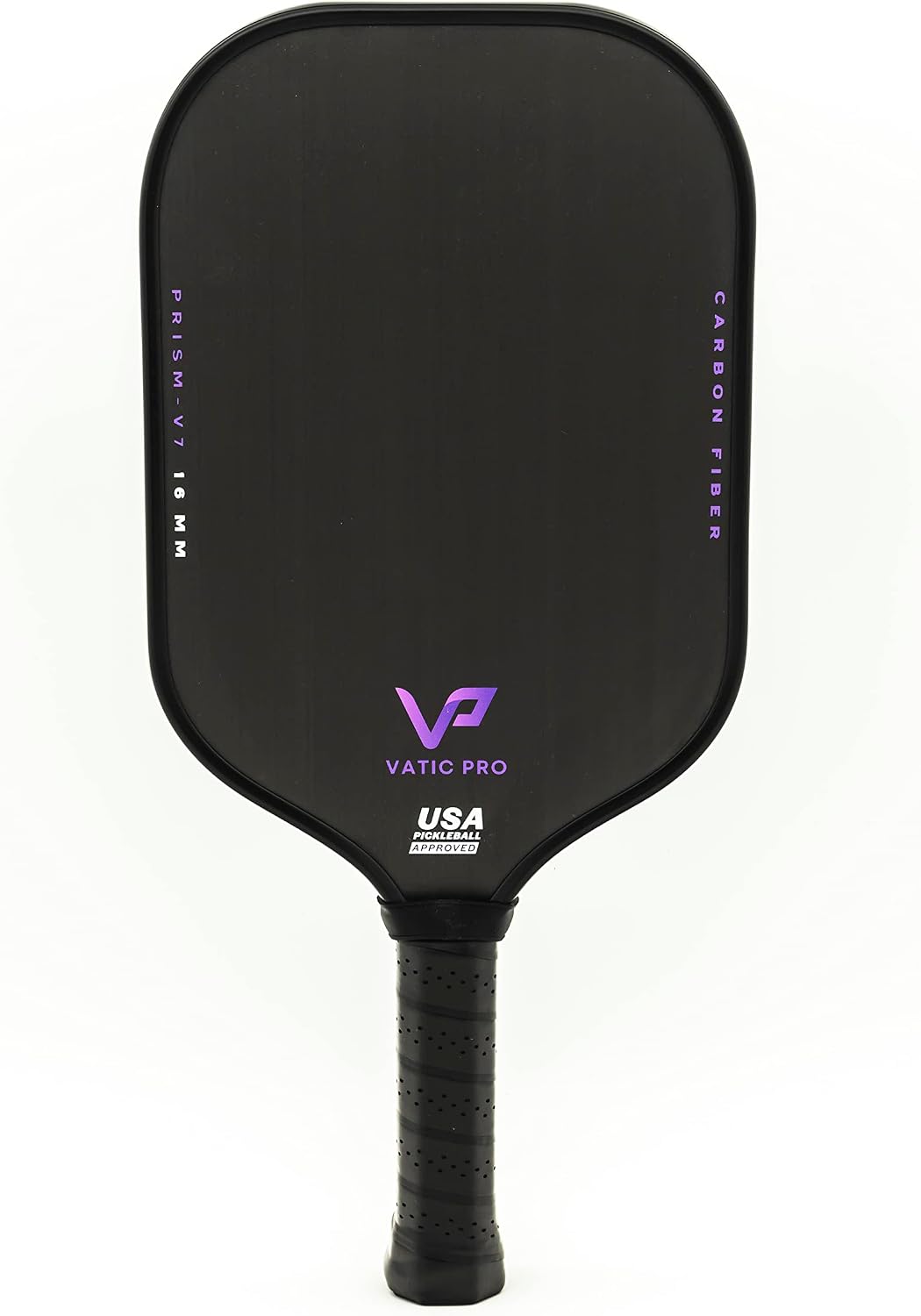
The control pick: Vatic Pro Prism Carbon Fiber 16mm - Foam Injected Walls - Includes Paddle Cover
 Visit on Amazon →
This is the one I put in the hands of the member who says some version of "I keep popping the ball up." The 16mm core is the control-first choice, and the foam injected walls are the part that matters after the first month. Foam in the perimeter adds stability and takes the harsh vibration out of off-center hits, which is exactly the contact point where recreational players live.
The paddle cover included in the listing is a small thing that I still count as a real thing. A paddle that rides loose in a bag gets its edge guard chipped, and a chipped edge guard is the beginning of the end for a lot of otherwise fine paddles.
Flaws but not dealbreakers: A 16mm control frame is not going to win you a hands battle against a banger at the kitchen line. If your game is built on speed-ups and counters, this is the wrong role for you and you should read the next entry.
Who it suits: The 55-year-old recreational player, three sessions a week, who wants a big sweet spot, soft resets, and a paddle that still feels alive in the spring. If that is you, this is where I would start.
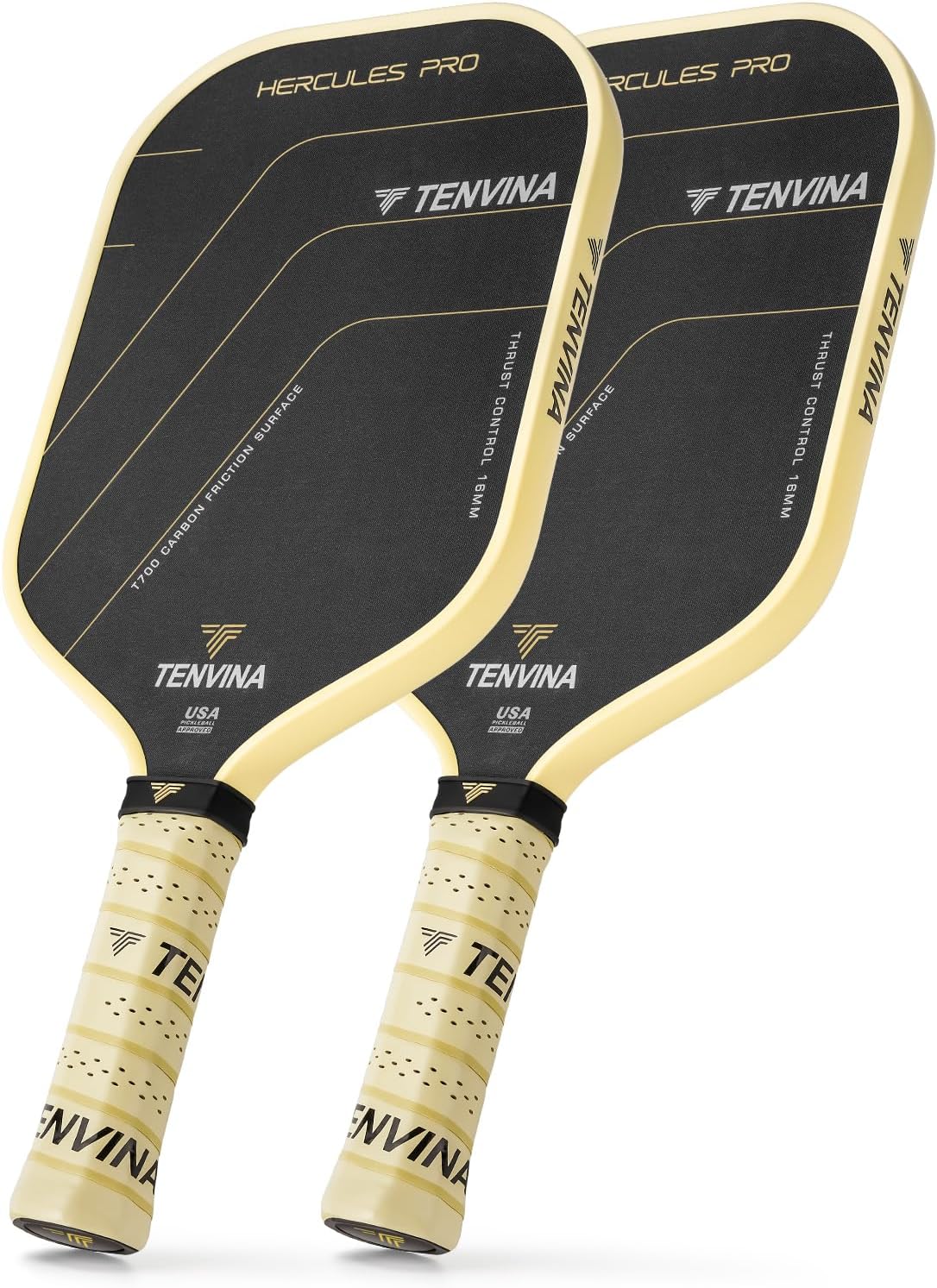
The value pick: TENVINA Pickleball Paddles Set of 2, Thermoforming 4-Layer T700SC Friction Carbon Fiber Pickleball Paddle, Professional USAPA Approved Pick Ball Paddle Providing Strong Power and Spin
 Visit on Amazon →
This is the pair I point at when a couple joins the club together, or when someone wants a spare in the bag for a guest without buying two separate paddles. The listing describes thermoformed construction with a four-layer T700SC carbon fiber face and a friction finish, which is the modern recipe: a firmer, more stable frame with a textured hitting surface. The listing also states the paddles are USAPA approved.
Flaws but not dealbreakers: Two-paddle sets can be inconsistent from unit to unit, so check both paddles when the box arrives instead of assuming they match. And verify the approval yourself on the USA Pickleball approved paddle list before you rely on it for tournament play. I have watched too many players show up to a sanctioned event with a paddle that claimed approval and was never on the list. The claim is normal; the verification is your job.
Who it suits: Newer players and couples who want one purchase that covers two people, plus anyone who wants a thermoformed carbon face without stepping into pro-model pricing.
The step-by-step: how to pick your paddle in twenty minutes
Step one: write down how you actually play. Not how you want to play. Three sessions a week at the 3.0 level is a different paddle than five sessions a week at 4.0. This one sentence eliminates half the market.
Step two: choose core thickness first. Control and consistency: 16mm. Hands speed and pop: 13mm. If you are between the two, take the thicker core. You can add power with your legs. You cannot add a sweet spot with your wrist.
Step three: decide on face and construction. Carbon fiber with a friction finish for spin and durability. Then decide whether you want thermoformed or foam injected construction, and remember that either one is a means to stability, not a promise of it.
Step four: check the edge. If you take low balls out of the air, look for a guard that does not sit proud of the hitting surface. If you are hard on gear, favor an edged paddle over an edgeless one.
Step five: match the grip to your hand. A grip that is too small makes you squeeze, and squeezing kills your dinking touch. Most recreational players are between a 4 1/4 and a 4 3/8 grip, and most paddles ship in that window.
Step six: confirm approval if you play tournaments. Look the paddle up on the approved list. Do this before the return window closes, not the night before your first sanctioned match.
Step seven: demo before you buy if you can. My club's demo program exists because members kept buying off videos. One session with two paddles side by side tells you more than a month of reading. If you have no demo option, buy from a seller with a real return policy.
Step eight: log your own results. After six weeks, note whether the face still grips and whether the edge guard has taken damage. That log is how you learn your own preferences instead of borrowing mine.
Caveats before you click buy
The "pro model" markup is the worst deal in the sport right now. You are usually paying for a paint job and a sponsorship, and the stock version of the same frame often plays identically.
Influencer codes add cost as often as they cut it. If a code is attached to a paddle, check whether the same paddle is discounted without it.
Face texture wears off. Any friction surface is a wear item, and a paddle you play four times a week will feel different at month three than it did at week one. Budget for that instead of being surprised by it.
Grip tape in Florida humidity is a genuine failure point. If the stock grip turns slick in a month, that is not a reason to throw out the paddle, but it is a reason to keep a spare grip in your bag.
What I left off this list
I did not include anything in the $250 pro-signature tier, because the extra money goes to marketing far more often than it goes to performance. I did not include the sub-$40 boxed sets, because the cores in that tier tend to go flat and the faces tend to slick over inside a season. And I did not include the heavy "maximum power" frames, because the players who ask me this question are losing points to errors, not to a lack of power.
What this all costs
The two paddles above sit in the range where I think money is well spent, and you can see the current numbers on the listings rather than taking my word for them.
Run the math per session. A paddle you play three times a week for two years is roughly 300 sessions. Even at the top of the $80 to $150 sweet spot, that is under 50 cents a session, and it drops every week you keep playing. Compare that to the cost of the paddle you buy twice because the first one died in six weeks.
The twenty minutes you spend deciding is the cheapest part of the whole process. Do it once, write your specs down, and stop buying paddles off thirty-second videos. That is the job. Your game has enough problems without your gear being one of them.