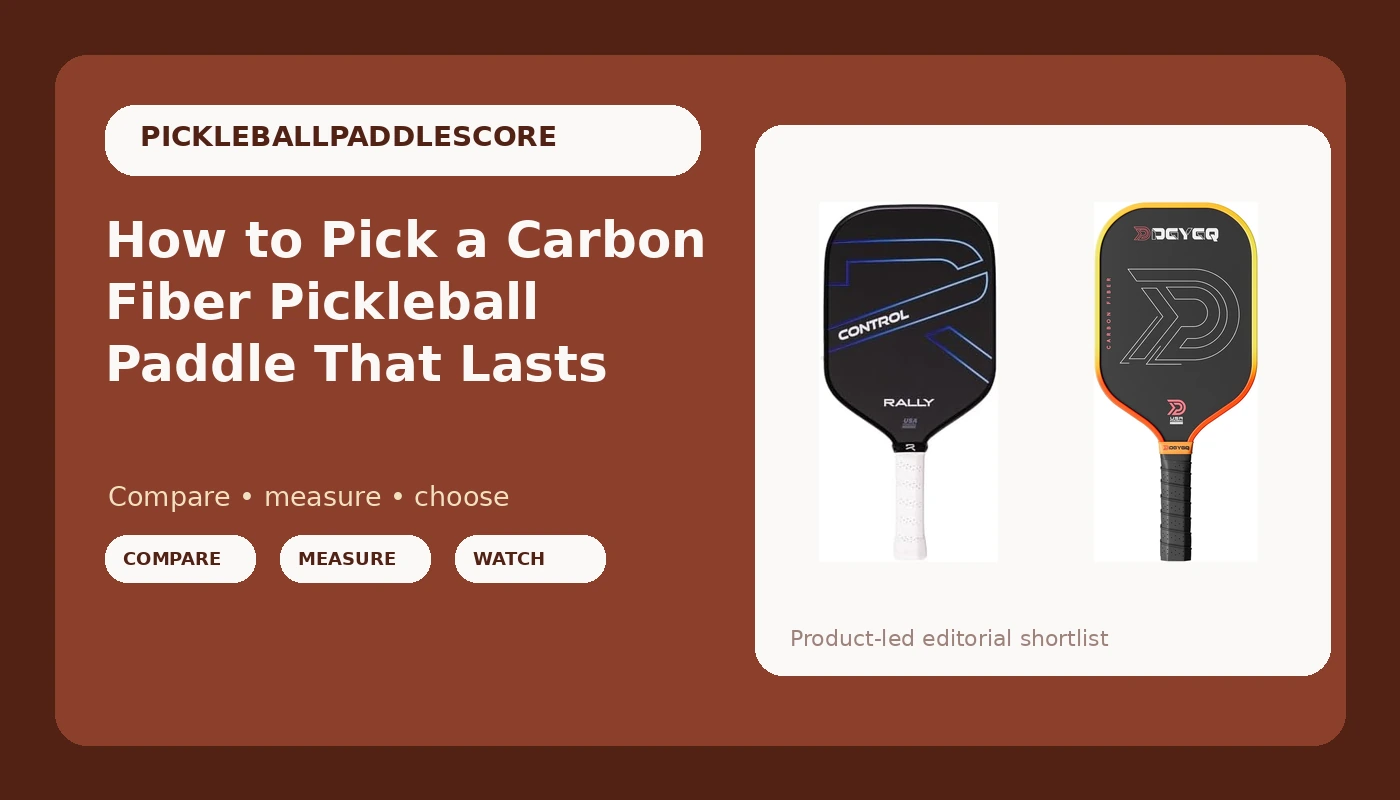
Most paddles at my club get bought in a parking lot, five minutes after somebody loses a game. I coach at a 400 member club in Naples, Florida, and I have watched the same cycle repeat for six years. A player gets beaten by someone with a new paddle, orders one that night, and three months later the face is smooth, the edge guard is chipped, and the paddle lives in the trunk.
Choosing a carbon fiber pickleball paddle is not about finding the most powerful one on the shelf. It is about matching a face material and a core to the way you actually swing, then picking a build that survives a Florida summer. That is the whole job, and everything below is the process I walk members through, including the two paddles I put in a newer player's hands first.
Why you should trust me
I played tennis through college and picked up pickleball in 2019. Since then I have demoed more than 60 paddles and kept a log on each one: spin rate off the bounce, how large the sweet spot feels on off center hits, and how the face and edge guard hold up after three months of doubles. My club's juniors and the 70 and over league give me feedback from both ends of the speed spectrum, which tells me more than any spec sheet.
I do not compare paddles to tennis rackets, because the physics are different, and I do not predict what the pro tour will do next. I coach amateurs.
What actually matters, and what is noise
Four things decide whether you will still like a paddle in month three.
Sweet spot size. For nine out of ten players, a bigger sweet spot beats raw power. You do not need power you cannot control, and a paddle that punishes every off center hit makes you play smaller, safer shots. This is the most underrated spec in the sport.
Core thickness. A 16mm core gives you a softer, more forgiving face and a larger effective sweet spot. A 13mm core gives you a stiffer face and more pop, but it demands cleaner contact. If you are still learning a consistent third shot drop, thicker is friendlier.
Face material and texture. Raw carbon fiber gives you grit for spin. The catch is that grit wears. Spin is roughly 30 percent paddle and 70 percent technique, but a face that goes smooth in six weeks takes even that 30 percent away from you.
Construction. Thermoformed versus non thermoformed is the only real technology story of the last three years. Thermoforming bonds the core to the face under heat and pressure, which usually means a stiffer, more powerful paddle. It is not automatically better for everyone, and it is not a reason to pay double.
What is noise: the words "pro model," "tournament grade," and any number printed on a box without a player attached to it. Core density figures mean nothing unless the same player swings both paddles back to back.
Match the paddle to your game first
Before you open a single product page, answer four questions.
- How fast are your hands at the kitchen line? If you get beat in firefights, a lighter, faster paddle helps more than a heavier one.
- Any elbow, wrist, or shoulder history? A thicker core and a softer face absorb more vibration.
- Are you playing mostly doubles? Most club players are, and doubles rewards control and reset ability over drive power.
- What is your actual level? A beginner buying a paddle built for 4.5 players loses more points to mishits than they gain from power.
Write those answers down. Then filter.
The two paddles I hand to players first
Both of these are carbon fiber, both are aimed at players who want control before they chase power, and neither one asks you to pay for a sponsorship you will never see.
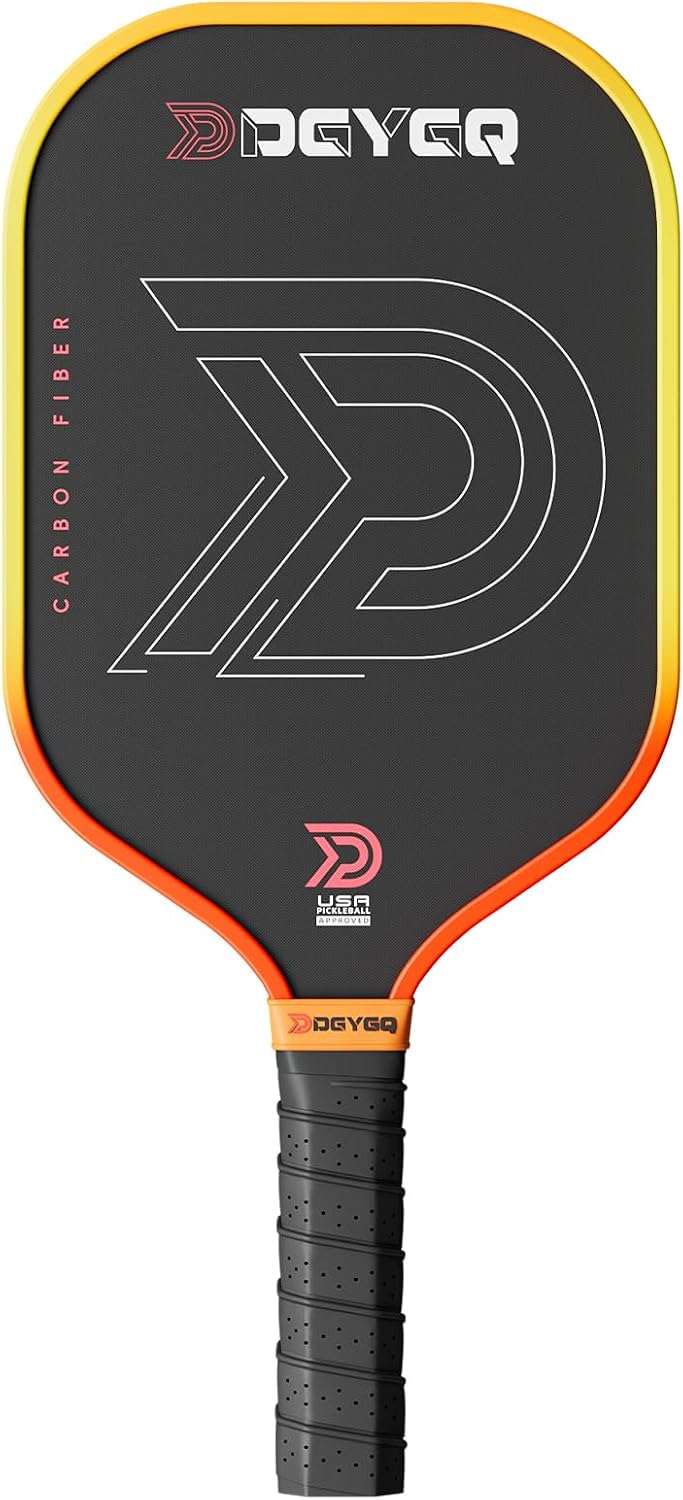
Best all around starting point: DGYGQ Pickleball Paddles, T700 Raw Carbon Fiber Surface, 16mm Polypropylene Honeycomb Core for All Skill Levels - Larger Sweet Spot for Max Spin, Control & Power
 Visit on Amazon →
On paper this is the shape I want a developing player to start with. The T700 raw carbon fiber surface is the grit face that produces spin without a coating that peels, and the 16mm polypropylene honeycomb core sits at the thicker end of the range, which is exactly what produces the larger sweet spot the listing promises. It is marketed for all skill levels, and the spec mix backs that up: thick core for control, raw carbon for spin, and enough pop that you are not giving up your drives to get the first two.
Check current Amazon price before you commit, and check the current approved paddle list if you play sanctioned events. An approval claim on a listing is not the same as a paddle being on the list, and I have watched members show up to a tournament with a paddle that never made it.
Flaws but not dealbreakers: A 16mm core will feel slow to anyone coming from a 13mm power paddle. Give it two weeks of drilling before you judge it. Raw carbon faces also need cleaning, because the grit holds dust and dead skin and stops grabbing the ball.
This is the paddle I would hand a 3.0 to 3.5 doubles player who wants to stop losing points to mishits.
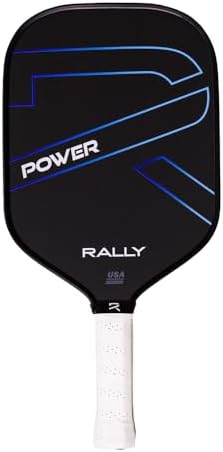
Best value carbon option: Rally Carbon Fiber Pickleball Paddles
 Visit on Amazon →
This is the carbon fiber option I point people toward when the budget is the hard limit and they still want a real carbon face rather than a painted fiberglass one. Check current Amazon price on the listing, because value paddles move around more than the premium ones do.
The reason I keep a value carbon paddle in the demo bag is simple. The jump from a cheap composite paddle to a carbon face is the biggest single improvement most beginners will feel. The jump from a $100 carbon paddle to a $250 carbon paddle is much smaller, and most of what you pay for at the top is endorsements.
Flaws but not dealbreakers: In this price band, the edge guard and the grip are usually the first things to go. Budget for a fresh overgrip and a roll of edge tape in the same order. If the face texture fades faster than you expect, that is the trade you made, not a defective product.
Buy this if you are new, playing two or three times a week, and you want to learn what a carbon face feels like before you spend real money.
How to test a paddle in 20 minutes
Most players decide in the first ten hits, which is exactly the wrong window. Here is the sequence I run with members. It takes about 20 minutes on an open court.
Step one: Dink for five minutes. Cross court dinks only. You are checking touch and whether the paddle feels dead or alive on soft shots. A thick core should feel controllable here, not mushy.
Step two: Third shot drops for five minutes. This is where sweet spot size shows up. Count how many drops you leave in the net or float high. A forgiving paddle will not fix bad technique, but it will stop punishing you for a two inch miss.
Step three: Drives for three minutes. Now check power. If you have to swing out of your shoes to get depth, the paddle is too soft for you. If every drive sails long, it is too hot.
Step four: Resets and defensive blocks for four minutes. Have a partner drive at you. Watch whether the edge guard catches the ball on a late block. That is a real problem on some paddles and it costs points in a way no spec sheet mentions.
Step five: Serves and returns for three minutes. Boring, but serves and returns are a third of your points.
Step six: Play one full game, then switch back. Pick up your old paddle and play a game with it. The difference you feel after switching back is the honest answer.
Two caveats. First, a paddle that feels amazing for one session and dead after six weeks is a failed product, no matter how it plays fresh. Ask what the face and edge guard look like at month three. Second, demo before you buy whenever your club or a local shop allows it. One session on a real court beats twenty minutes of video.
How to make whatever you buy last
The paddle is the easy part. Keeping it alive in Southwest Florida is harder.
Tape the edge guard before you play. A strip of edge guard tape costs almost nothing and absorbs the abuse that would otherwise crack the guard.
Replace the grip on a schedule, not on feel. Grip tape that disintegrates in Florida humidity is my most common complaint from members. Once a month in summer is not excessive if you play four times a week. A slick grip makes you squeeze, and squeezing wrecks your wrist and your dinks.
Clean the face. Warm water, a soft cloth, no solvents. Raw carbon grit grabs dust, and a dusty face is a spinless face.
Do not leave it in the car. Heat is what delaminates a face and softens a core. A paddle that lives in a Naples trunk in August will not live long.
Rotate two paddles if you play a lot. They age half as fast, and you get a comparison point when one starts to feel off.
Mistakes that cost my members money
Buying through an influencer code. The same paddle usually costs more with the code than without it. I have watched members pay a premium for a discount.
Paying for the pro model. The pro model markup is the worst deal in the sport. You are funding sponsorships, not performance.
Assuming heavier means more power. Heavier means slower hands and more arm fatigue. In doubles, that trade usually loses.
Buying two identical paddles at once. Your game changes in six months. Buy one, learn it, then decide.
Ignoring grip size. Too small and you squeeze. Too big and you lose wrist snap on serves.
What this all costs
The $80 to $150 range is the sweet spot in this sport. Below it you tend to get dead cores and faces that quit early. Above it you are mostly paying for marketing. Both paddles above sit in or below that band, and both are carbon fiber, which is the material that actually changes how the ball behaves off your paddle.
Run the math on cost per day. A paddle you use three times a week for two years is roughly 150 sessions. At $100, that is under 70 cents a session. If it cost $250 and the face dies at month four, you paid more per session than the player next to you who bought the cheaper paddle and put the difference into a lesson.
That is the honest summary. Most players would improve more from four lessons than from a $250 paddle. Buy the sweet spot, the thick core, and the real carbon face, then spend what you saved on court time.
That's the job. Now go drill.