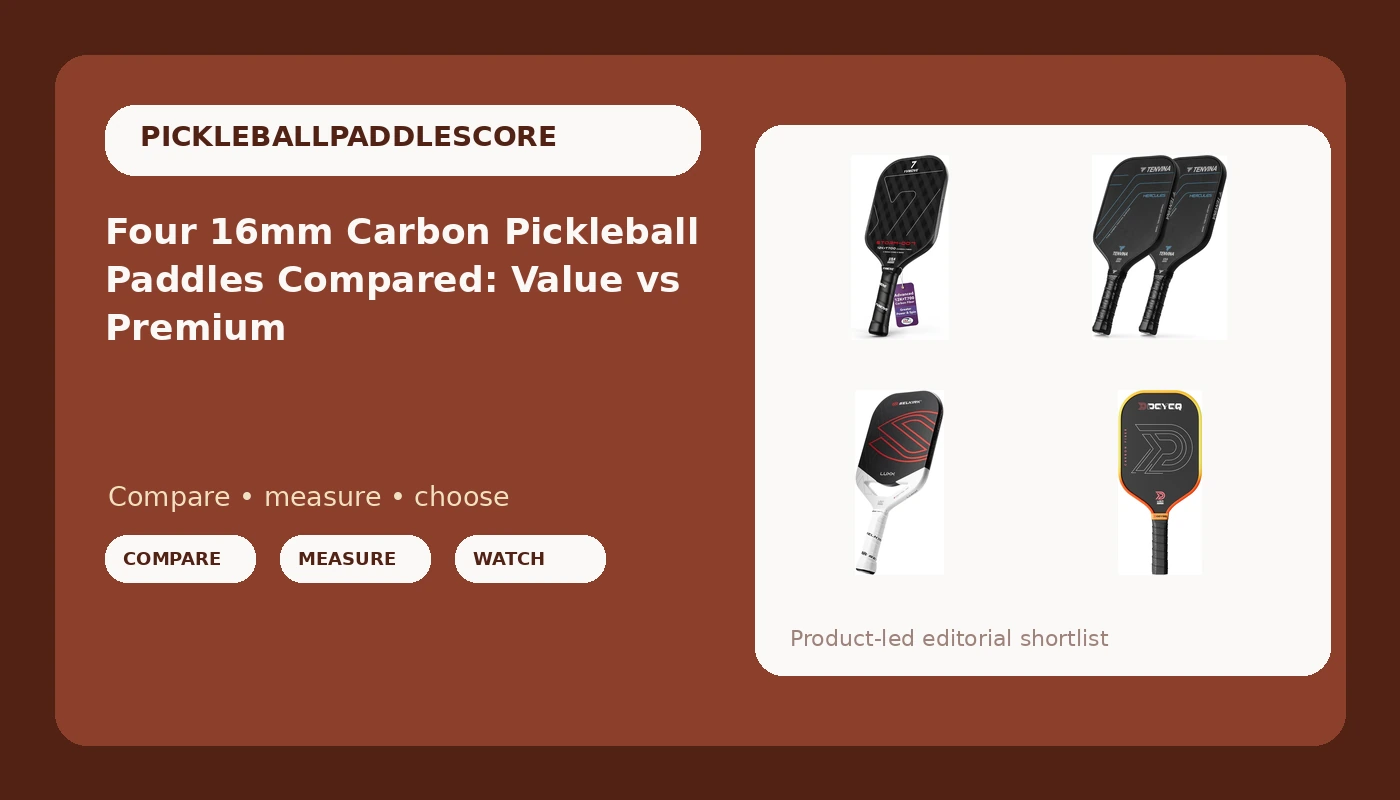
I have handed a lot of paddles to a lot of players. Five years of coaching at a 400 member club in Naples, plus a demo bag that never stays full for long, means I hear the same question every week: can a cheap paddle really keep up with an expensive one? This comparison of four 16mm carbon fiber pickleball paddles is my attempt to answer that without the marketing fog. All four sit in the same design lane, a 16mm core with a carbon fiber hitting surface, and they spread from the entry end of the market to the premium shelf.
Short answer before the details. The DGYGQ T700 raw carbon paddle is the best value of this group for most recreational players, the Selkirk Sport LUXX Control is the best control paddle if budget is not a factor, and the TENVINA set of two is the smartest buy if you are outfitting a household or a regular doubles partner. The rest of this article covers why, and the handful of places where the cheaper paddles give something up.
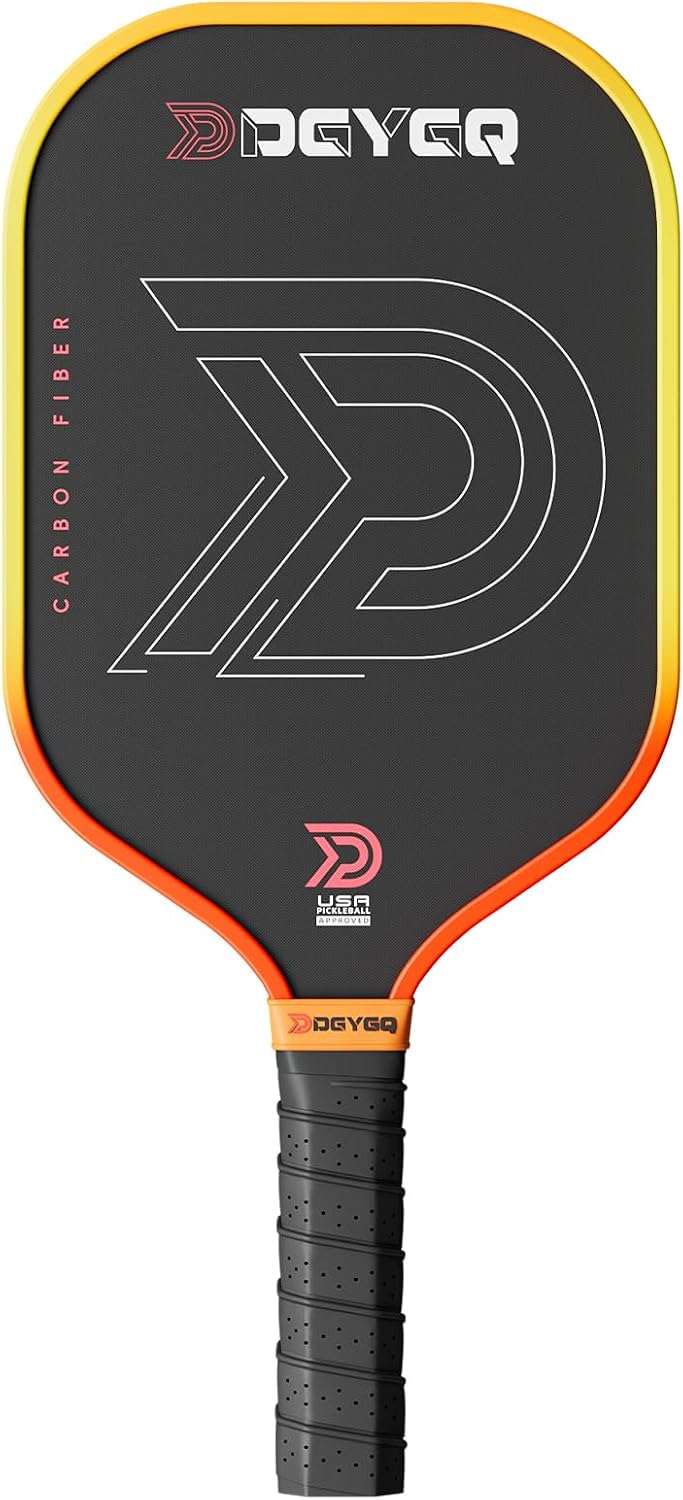
DGYGQ T700 Raw Carbon Fiber Paddle
Raw carbon face and a 16mm polypropylene honeycomb core at the entry price, with a listing that targets all skill levels and a larger sweet spot
No USAPA approval claim in the product name, and budget builds are where grip tape and edge guards fail first in Florida humidity
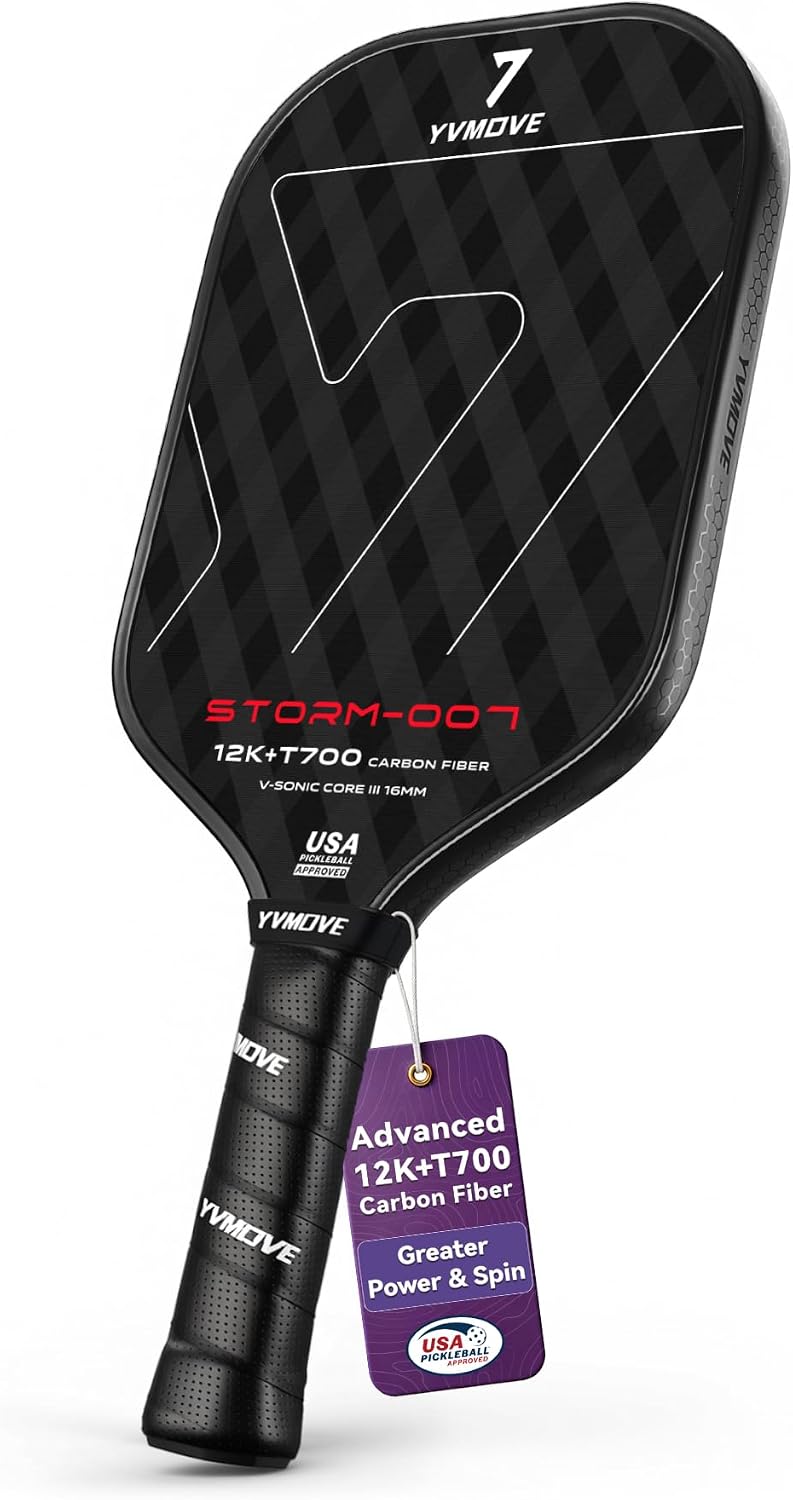
YVmove 16mm Kevlar T700 Carbon Fiber Paddle
Kevlar blended with T700 carbon in a 16mm frame, and the listing carries USAPA approval, which matters if you play sanctioned events
One paddle only, and a Kevlar face feels firmer and less forgiving than plain raw carbon
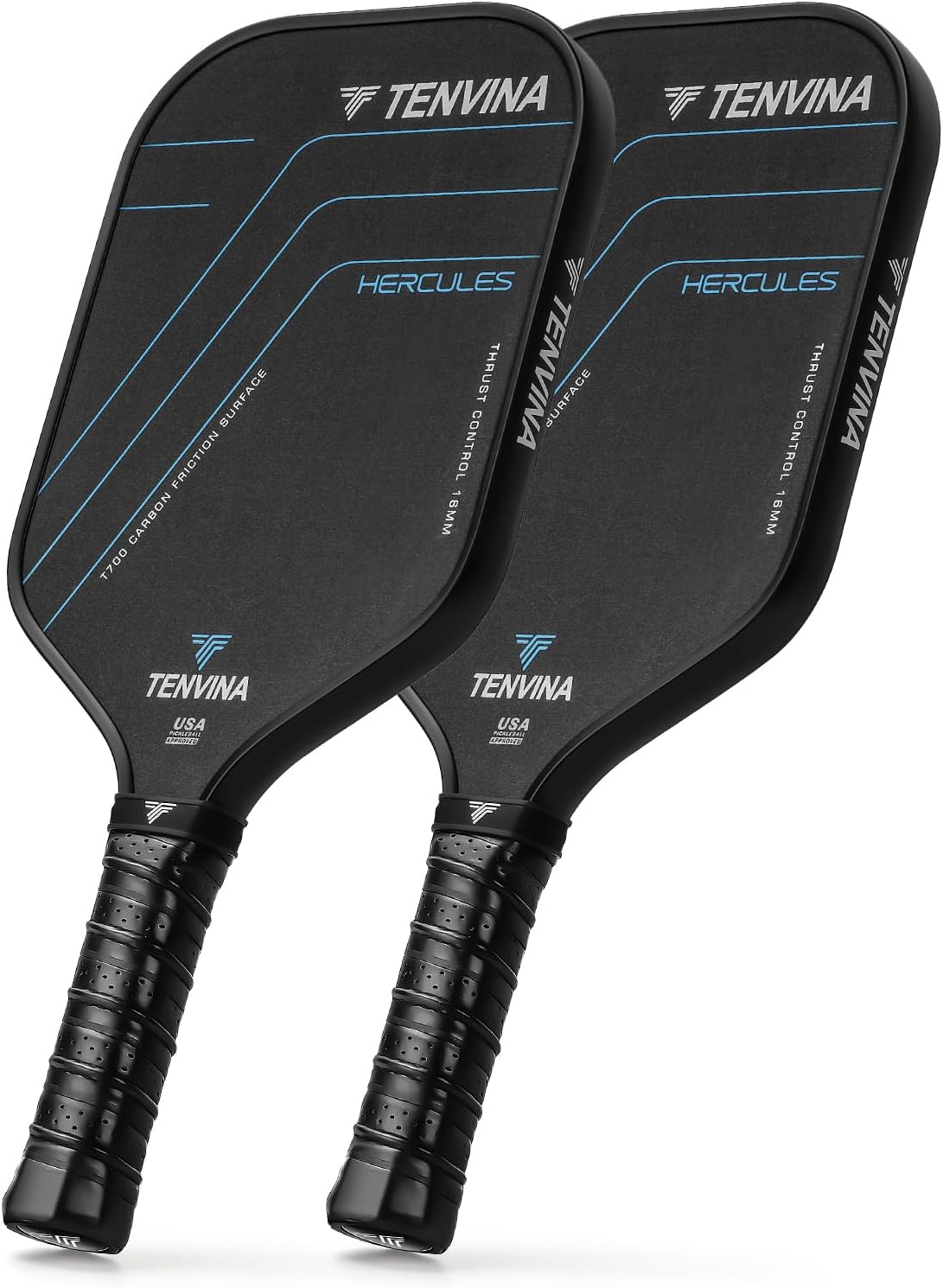
TENVINA Pickleball Paddles Set of 2
Two USAPA approved 16mm paddles with a multi-layer T700SC textured carbon face, which is the lowest cost per paddle here
You pay for the second paddle whether you need it or not, and matched sets usually share one grip size and one weight
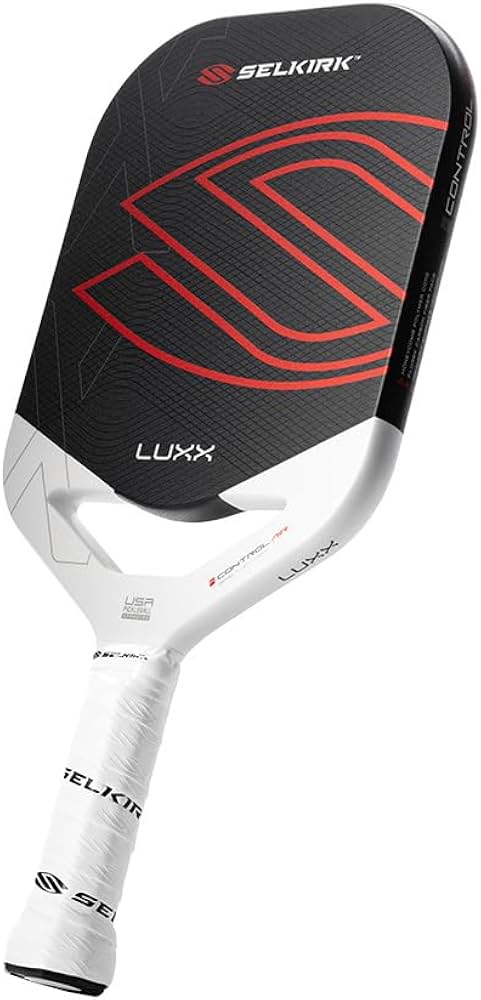
Selkirk Sport LUXX Control
A carbon fiber InfiniGrit face built around control, plus the support and consistency that come with a name brand
The most expensive paddle in this comparison, and a control-first face asks you to supply your own power
Prices and availability were captured from Amazon Creators API and may change.
What a 16mm core and a carbon face actually change
Core thickness is the number that does the real work in a paddle, and 16mm sits at the thick, forgiving end of the range. A thicker core compresses more at contact, which spreads the sweet spot outward and softens the pop. That is why every paddle in this comparison is described as a control-friendly option somewhere in its listing. The cost is hand speed. At the net, in a fast exchange, a thick core can feel a beat slower than a 13mm or 14mm paddle, and that is a real trade for players who live in hand battles.
The face material is the second half of the story. Raw carbon, which is what the DGYGQ, YVmove and TENVINA listings all point to, is a peel-ply texture that grips the ball without a painted coating. Painted grit is the version that wears smooth in a month or two of hard play, and once it goes, the spin goes with it. Raw carbon holds texture longer, though nothing holds forever, and how you clean it and where you store it matters more than most players admit.
One construction detail worth asking a seller about directly is thermoforming. It is the only genuine technology story in paddles over the last three years, and it changes how the core, face and edge bond together. You cannot confirm it from a product photo, so ask before you buy if it matters to you.
DGYGQ T700 raw carbon: the value pick
The DGYGQ paddle is the one I would hand to a 2.5 or 3.0 player who is stepping up from a fiberglass starter. The listing describes a T700 raw carbon fiber surface over a 16mm polypropylene honeycomb core, marketed for all skill levels with a larger sweet spot for spin, control and power. That is the correct spec sheet for a recreational doubles player, because a wide sweet spot forgives the off-center contact that defines recreational play.
Where it gives ground is in the details you cannot see online. The product name does not carry a USAPA approval claim, so if you play sanctioned tournaments, confirm the paddle is on the approved list before you commit. Budget builds are also where grip tape and edge guards fail first, and in Naples humidity I have watched cheap grips turn to mush inside a month. Budget for a replacement overgrip and you will be fine.
YVmove Kevlar T700: the firmer face
The YVmove paddle takes a different route to the same destination. It pairs Kevlar with T700 carbon fiber in a 16mm frame, and the listing states USAPA approval, which is the detail that separates it from the DGYGQ for tournament players. Kevlar adds stiffness to the face, and stiffness shows up as a crisper, firmer feel on contact. Some players love that feedback on dinks and blocks. Others find it harsh when they catch the ball near the frame, and that is not a defect, it is a preference.
If you are a 3.0 to 3.5 player who wants one paddle that covers league night and a sanctioned event without paperwork worries, this is the pick in the middle of the group. It is a single paddle, so a couple or a pair of regular partners would need two, which pushes the math toward the TENVINA set.
TENVINA set of two: the household and doubles-partner pick
The TENVINA listing is a set of two paddles with a multi-layer T700SC textured carbon fiber face, 16mm thickness, a strong spin and power surface, and USAPA approval stated in the name. On cost per paddle, nothing else in this comparison comes close, which is why it is my default recommendation for a couple, a parent and a junior, or two friends who always play together.
The catch with any matched set is sameness. Two paddles from the same box almost always share one grip circumference and one weight, so if you have large hands and your partner has small ones, one of you is compromising. The other catch is simpler: if you only need one paddle, you are paying for a spare. Buy the set because you genuinely need two, not because the number per paddle looks better.
Selkirk Sport LUXX Control: the premium control paddle
The Selkirk Sport LUXX Control is the outlier here, a carbon fiber InfiniGrit face built around control rather than raw pop. What you pay for at this end of the market is consistency, support and a face that behaves the same on day one and day ninety, plus a brand that stands behind the product if something goes wrong. For a 3.5 or better doubles player who wins with dinks, resets and placement, that is a defensible purchase.
The honest case against it is the price bracket. Most of my club members do not play a game that a premium control paddle unlocks. They play a game where a bigger sweet spot and a reliable grip matter more than face refinement, and the value picks above cover that. Control paddles also ask you to generate your own pace, and the players who buy one and then complain it lacks power bought the wrong category, not a bad paddle.
Spin, sweet spot and what wears out first
Spin is about 30 percent paddle and 70 percent technique. I can put more spin on a rental paddle than most players get from a premium one, because contact point, wrist angle and swing path do the work. A textured carbon face helps, but it helps a player who already knows how to brush the ball. If your third shot is floating, a new paddle is not the fix.
Sweet spot size beats raw power for nine out of ten players. The 16mm cores in this comparison all lean that direction, and that is a good thing. Power you cannot control is a liability in doubles, where the ball comes back faster than it left.
What wears out first is predictable. Grip tape goes in a humid climate, edge guards chip on low digs, and face texture fades with use. None of these four listings gives a durability figure, so judge them the way I do: buy from a seller with a return window, play three hard sessions, and look at the edge guard and the grip before you decide to keep it. A paddle that feels amazing fresh and dead in six weeks is a failed product, no matter how it plays on day one.
Who I would hand each paddle to
- A 2.5 to 3.0 player upgrading from a fiberglass starter: the DGYGQ T700 raw carbon paddle, then spend the savings on a lesson.
- A 3.0 to 3.5 player who wants a firmer face and plays sanctioned events: the YVmove Kevlar T700 paddle.
- A couple, a parent and a junior, or two regular partners: the TENVINA set of two.
- A 3.5 or better doubles player who wins with control and has the budget: the Selkirk Sport LUXX Control.
What I tell players before they check out
Demo before you buy if you can. My club's demo program exists for exactly this reason, because twenty minutes with a paddle in your own hand beats any review, including this one. If you cannot demo, buy from a listing with a return window and treat the first week as your test.
Confirm USAPA approval on the official list if you play tournaments. Two of these listings state approval in the name and two do not, so do not assume.
Finally, ignore any price you read in an article, including this one. Pricing on these paddles moves constantly with coupons and seasonal sales, so use the Check current Amazon price links in the table above and judge the number you see today. Then go drill. The paddle is the cheap part of getting better.