Most players walk into my club's pro shop with a number in their head, and it is almost never the right number. They want the paddle with the most power, or the one an influencer used in a highlight reel, or the one with the biggest price tag because price must mean something. Three games later they are hitting every dink long and handing it back to me.
Learning how to choose a pickleball paddle starts with the opposite question. Not how hard can this thing hit, but how big is the area where a slightly off-center hit still goes where I aimed. Sweet spot first, spin second, power last.
I coach at a club in Naples, Florida with 400 members, and I have watched this play out from both ends of the speed spectrum: 12-year-olds in the junior clinic who need forgiveness, and the 70-and-over doubles league where a paddle that feels light on game one feels like a brick by game twelve. The pattern has never broken. The player who buys for control passes the ball better within a month than the player who bought for power.
This is the conversation I have at the demo table, written down. Two paddles I would put in your hand first, six steps for the decision, and the mistakes that cost people money every season.
Why you should trust me
I played tennis through college, picked up pickleball in 2019, and I have demoed more than 60 paddles since. Every one goes in a log: how the face texture holds up, how the sweet spot feels after three months of doubles, whether the edge guard catches the ball on a low reset, whether the grip survives a Florida summer.
My test group is my club. The juniors tell me immediately if a paddle is too heavy to whip through a dink battle, and the 70-and-over doubles players tell me two weeks later if their elbow is angry. I get feedback from both ends of the speed spectrum, which is more than most reviewers can say.
I take no sponsorship money and I have no discount code to sell you. That is why I can tell you plainly that the paddle market is roughly 90% marketing and 10% graphite, and that most of you would gain more from four lessons than from a top-shelf paddle.
How I picked and how I tested
Everything in this article came out of the same routine. A paddle goes into the demo bag for at least two weeks and gets hit by me, by a junior, and by at least one player in the 70-and-over league. A paddle that feels wonderful in a strong forearm can be miserable in a repaired shoulder, and you only learn that by handing it to both.
I do not trust a first impression. The opening session tells you what the marketing department wanted you to feel. The eighth session tells you what the paddle actually is. Face grit that wears off in a month, cores that go soft after a few dozen hours, grips that turn slick in humidity: none of those failures show up on day one, and all of them decide whether you still like the paddle in October.
I compare on the same day, with the same player, against the same opponents. Core density figures mean nothing to me unless the same person swings both paddles in the same hour, because the only honest measurement in this sport is a player's own ball flight.
What the spec sheet will not tell you
Before you look at any listing, understand four things. They explain almost every difference you will actually feel on court.
Core thickness is the sweet spot dial. Thicker cores, in the 16mm neighborhood, give you a larger, softer, more forgiving face. Thinner cores give you more pop and a smaller margin. There is no free lunch here. The thickness you pick is really a decision about how much forgiveness you want when your feet are late.
Thermoforming is the one real technology story of the last few years. Thermoformed paddles bond the face to the core under heat and pressure, which tends to produce a stiffer, more powerful, more consistent face. It is becoming standard at every price point, and within a couple of years the marketing will move on to core materials instead. It is worth knowing the term so you can spot when a brand is charging you for it twice.
Face texture is a wear item, not a feature. Grit is 30% of your spin at most, and technique is the other 70%. I can put more spin on a rental paddle than most players get from the most expensive textured face on the shelf. A textured surface still helps, but treat it the way you treat grip tape: it will fade, and the question is how gracefully.
Edge guards matter more than any spec. Edged paddles protect the core, but a thick, poorly shaped guard catches the ball on low resets and hands your opponent a free point. Edgeless paddles feel cleaner through the air and off the deck, but the exposed core edge is where damage starts. Pick your tradeoff on purpose.
Two paddles I would hand a club member first
I keep two very different paddles in the demo bag, and they cover the two honest answers to the buying question. One is the value play that gets a new or intermediate player competitive without a big outlay. The other is the premium option for the player whose level and shoulder can actually use it.
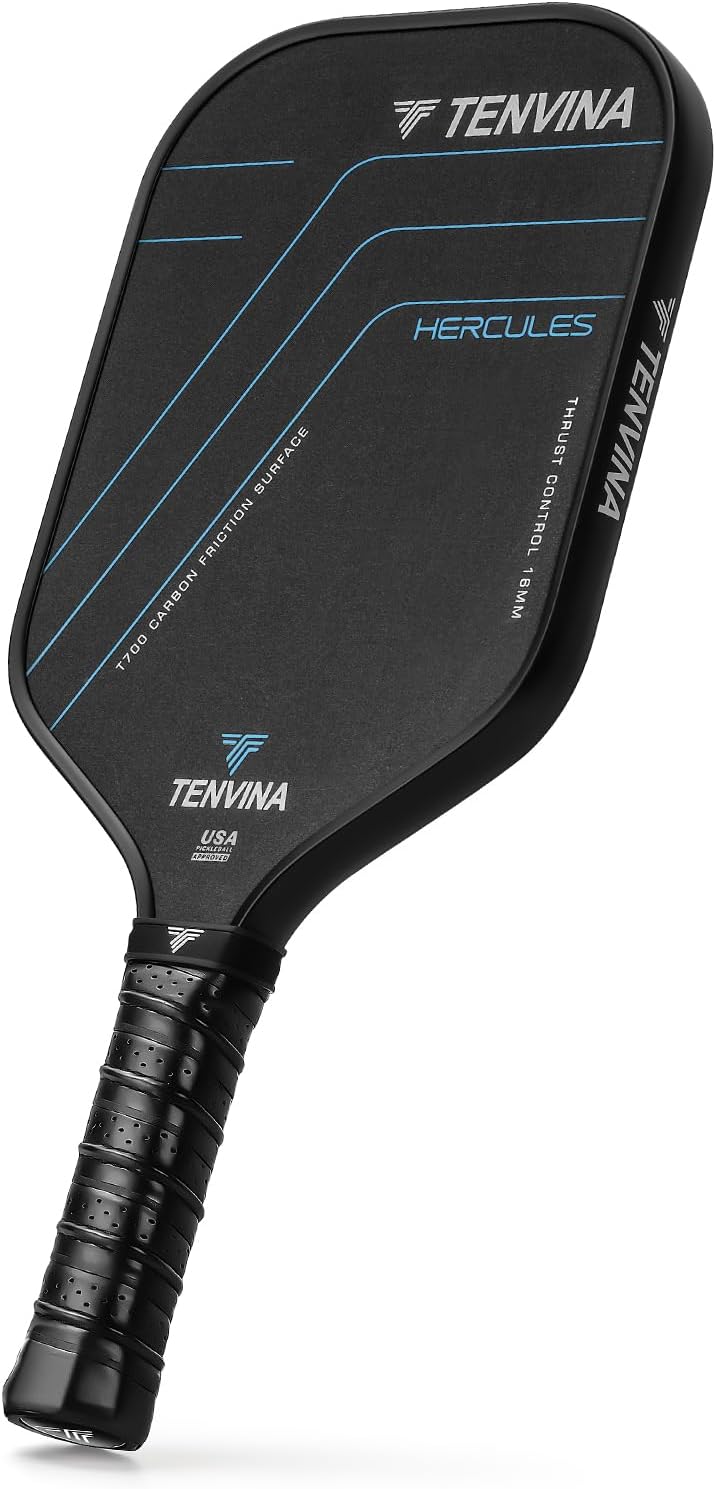
Budget pick: TENVINA Pickleball Paddles, Multi-Layer T700SC Textured Carbon Fiber Pickleball Paddle, Pickle Ball Paddle USAPA Approved with Strong Spin & Power, 4-Types of Shapes and Thicknesses
 Visit on Amazon →
This is the paddle I point at when a member tells me they are not spending pro-model money on a sport they picked up in March. It is a carbon fiber face with a textured finish, it carries the USAPA approval claim, and the listing offers four shape and thickness combinations, which is the part that matters most to me.
That choice of shapes and thicknesses is exactly the decision I described above, made by you instead of by a marketing team. If you want the biggest sweet spot, take the thicker option. If you are a former tennis player who wants to drive the ball, take the thinner one. Either way you are getting a carbon face and a reasonable build at the budget end of the market, which is where I tell most recreational players to live.
Two caveats, and I give them to every member. First, verify the approval stamp on the paddle you receive if you play sanctioned events, because approval claims and delivered paddles do not always match, and that pet peeve of mine has cost players a tournament entry. Second, budget paddles are where the texture wears fastest. If the grit is gone in two months, you got what you paid for, and you should plan on replacing it rather than being disappointed.
Check current Amazon price. At this end of the market the number moves around, and the value case depends on it.
Flaws but not dealbreakers: The stock grip is the weak link, especially in Florida humidity. Budget for a replacement overgrip in your first order and you will not notice.
Anyone new to the sport, or any intermediate player who wants forgiveness and does not want to pay for a pro sponsorship, should start here.
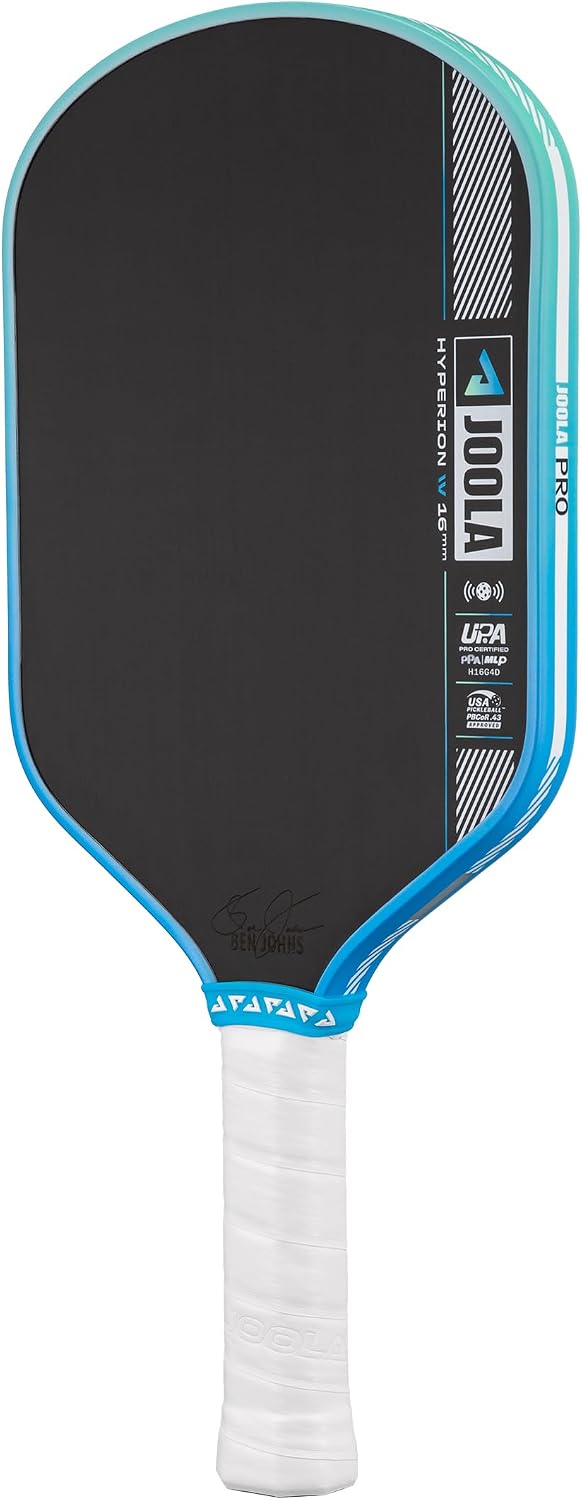
Upgrade pick: Ben Johns Hyperion Pro IV 16mm Pickleball Paddle - Lime Pop
 Visit on Amazon →
Now the other honest answer. This is a signature model, and I want to be careful about what that means. You are paying for a pro name on the face, and I have said for years that the pro-model markup is the worst deal in the sport. So why does it stay in my demo bag?
Because the 16mm in the name is the thickness I steer most recreational players toward, and the player who benefits from a paddle like this is not the beginner. It is the 4.0 and up doubles player who already has soft hands, who already generates their own spin, and who wants a stable, forgiving face on resets while still having enough behind the ball to put away a floater. That player will feel the difference. A 3.0 player with a short backswing will not, and I will tell them so at the table.
The Lime Pop colorway is loud, which is a matter of taste and nothing else. What matters is whether the core holds its feel over a season of hard doubles, and that is the question I would ask any signature paddle before recommending it to someone who plays four times a week.
Check current Amazon price. Signature models get discounted at odd times, and the value case for this one swings a lot with the number.
Flaws but not dealbreakers: You are paying part of this for a name, and you should know that going in. If the price gap over the budget option bothers you, the budget option is not a compromise for most players.
Anyone at the 4.0 level or above, playing sanctioned events or hard club doubles, with a shoulder that handles a heavier frame, should look here.
The buying workflow, six steps
Here is the process I walk members through. It takes about a week and it will save you from a bad purchase.
Step one: Be honest about your level. Not your level on a good day. Your level in the third game of a tournament when your legs are gone. Beginners and low intermediates should be shopping for forgiveness, full stop.
Step two: Pick your core thickness first. Thicker for sweet spot and control, thinner for pop. Everything else about the paddle is downstream of this choice, and it is the one decision you can make before you touch anything.
Step three: Decide edged or edgeless based on your worst shot. If you pop up resets and dig low balls, a slim edge guard is worth more to you than a few grams of weight savings. If you play mostly at the kitchen line and want a clean feel, edgeless is fine.
Step four: Demo before you buy, or buy from somewhere you can return. My whole demo program exists because two weeks of hitting tells you more than two hours of reading. If your club has a demo bag, use it. If not, buy from a seller with a real return window and treat the first two weeks as the demo.
Step five: Budget for the grip and the edge tape. The stock grip on most paddles is the first thing to fail, and a two-dollar overgrip changes the feel more than most upgrades on the spec sheet. In humid climates, plan on replacing it every few weeks.
Step six: Set a review date at 90 days. Write down what you liked on day one and check it against how the paddle feels in three months. If the face has gone smooth or the core has gone dead, you learned something about that brand, and you should remember it at your next purchase.
Mistakes I see every week
The most common one is buying power you cannot control. If your balls sail long with a new paddle, that is not a learning curve you should push through, that is the wrong paddle for your swing.
The second is trusting a fresh-out-of-the-box feel. Every paddle feels good for one session. The ones worth owning feel good in week eight.
The third is paying for a pro model at a level where the pro model does nothing for you. If you cannot already generate your own spin and pace, a stiffer, hotter face just gives you a faster way to miss.
The fourth is ignoring the grip and the edge guard. Those two details decide whether you still like the paddle in three months, and they cost almost nothing to fix.
What this all costs
The budget end of this market gets you a carbon face and a real choice of shapes and thicknesses. The premium end gets you a signature name, a stiffer build, and a markup that you should pay only if your level justifies it. Both paddles here are legitimate, and the gap between them is not as wide as the listings suggest.
Do the math on a per-session basis and it gets clearer. A paddle you play with three times a week for a year is a rounding error per session, whether it came from the budget rack or the pro rack. What is not a rounding error is buying twice because you guessed instead of demoing.
The last thing I will say is the thing I say most at the table. A paddle can add forgiveness, spin, and a little pop. It cannot add footwork, patience, or a third shot drop. If your budget is limited, spend part of it on the paddle and the rest on a lesson, and you will beat the player who spent it all on the pro model every single time.