The carbon fiber paddle aisle has a problem that has nothing to do with carbon fiber. Open play is full of players holding a paddle they cannot explain, standing next to players with the club loaner who just beat them 11-4. The material is real. The price gap is real. The story wrapped around both is mostly marketing.
This guide looks at six currently listed carbon fiber pickleball paddles: four single-paddle designs aimed at players who already know what they want, and two bundled two-paddle sets built for households, beginners, and anyone who wants a spare in the bag. Nothing here is ranked by price. The order follows the specs each listing actually states, how those specs tend to behave for recreational adults, and how much extra money buys once you clear the entry level.
If you are shopping for your first serious paddle, or replacing one that has gone soft in the middle, the sections below walk through core thickness, face material, thermoformed construction, grip sizing, and the approval language worth checking before you click buy.
Related: How Paddle Core Thickness Changes Your Game
Quick answer
The JOJOLEMON Pickleball Paddles, Carbon Fiber Pickleball Paddle with a 16mm Shark Power Polymer Core is the strongest fit for recreational and league doubles players who want one spin-friendly, control-first paddle, because its listing pairs a carbon fiber face with a 16mm polymer core, and the thicker core is the more forgiving direction for a player chasing consistency. Choose the XSPAK PRO Series Thermoformed T700SC instead when you specifically want a thermoformed build and the power-forward profile the listing describes.
Pickleball paddles worth comparing
Six listings, six different answers to the same question. Two are sold as sets with balls and a bag, two lean on carbon construction for tournament play, and two sit in the middle with hybrid faces or thicker cores. That spread is the point: the right pick depends on whether you need one paddle for competitive doubles or two paddles and a bag for the family to share.
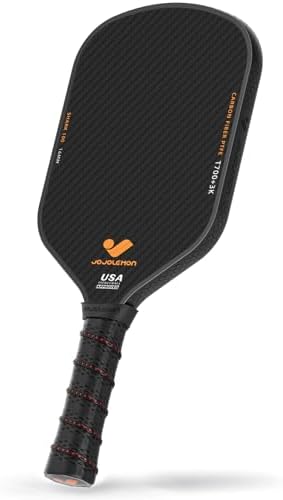
JOJOLEMON Pickleball Paddles, Carbon Fiber Pickleball Paddle with a 16mm Shark Power Polymer Core, The Pickleball Rackets Designed for Ultimate Spin & Consistency
Check current Amazon price
A carbon fiber face over a 16mm Shark Power polymer core, listed by the maker for spin and consistency rather than raw power.
Visit on Amazon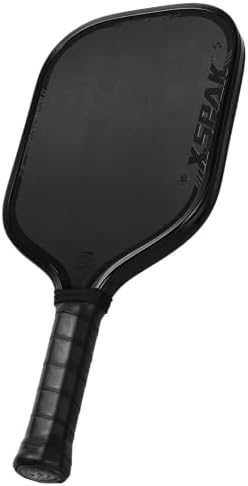
XSPAK PRO Series Thermoformed T700SC Tournament Carbon Fiber Pickleball Paddle, USAPA Certified Honeycomb Core with Comfort Cushion Grip, Dominant Power & Larger Sweet Spot
Thermoformed T700SC carbon fiber build with a honeycomb core, comfort cushion grip, and a listing that promises dominant power and a larger sweet spot.
Visit on Amazon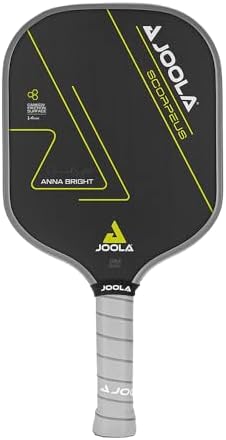
JOOLA Professional Pickleball Paddles, Raw Carbon Fiber Surface, Built for Spin, Speed & Control, Hyperion, Solaire, Perseus & Scorpeus, Swift & Standard Models, USAP Approved, Tournament-Level
Check current Amazon price
Raw carbon fiber surface offered across the Hyperion, Solaire, Perseus, and Scorpeus lines in Swift and Standard builds, listed as USAP approved and tournament level.
Visit on Amazon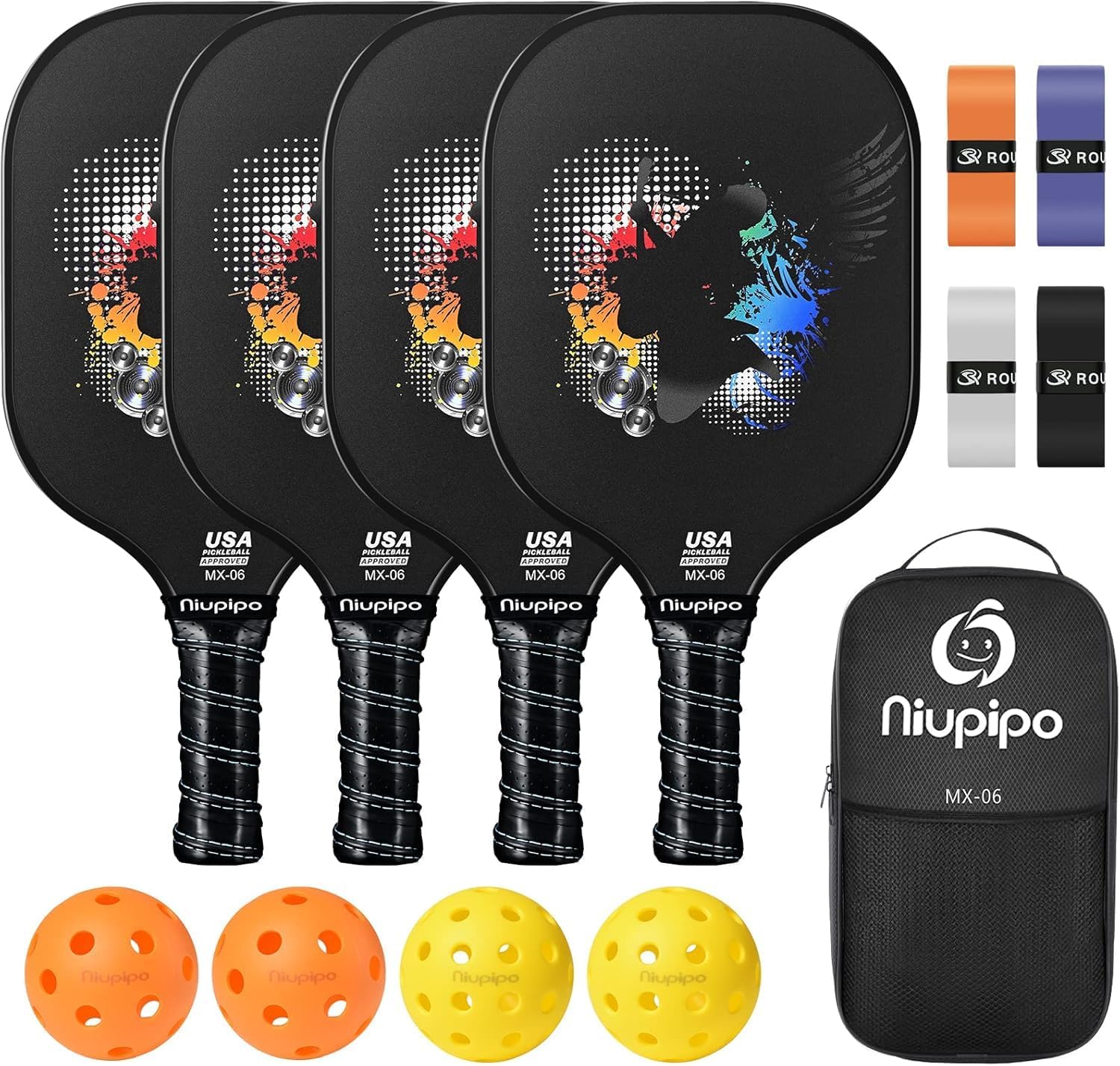
niupipo Pickleball Paddles Set of 2/4/1, USAPA Approved Carbon Fiber & Fiberglass Hybrid, Easy Power, Polypropylene Honeycomb Core, Cushioned 4.72" Grip, Bag/Cover, Pickleball Paddle Set for Men Women
Hybrid carbon fiber and fiberglass face with a polypropylene honeycomb core, cushioned grip, and a bag or cover, sold in set sizes of one, two, or four.
Visit on Amazon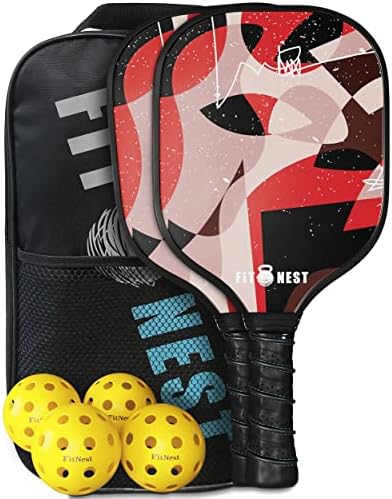
Premium Pickleball Paddles, Set of 2 Lightweight, Carbon Fiber Pickle Ball raquette's and 4 Balls Included, Premium Carry Bag, Suitable for Beginners or Advanced Players
Check current Amazon price
Two lightweight carbon fiber paddles with four balls and a premium carry bag, positioned by the seller for beginners and advanced players alike.
Visit on Amazon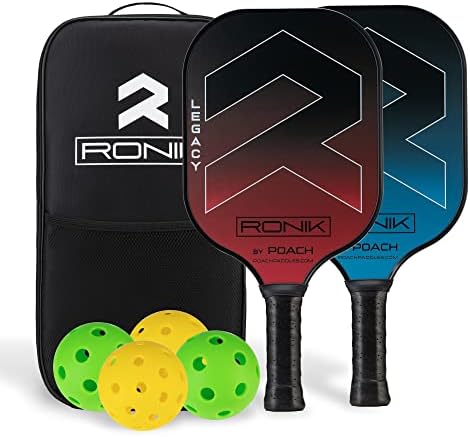
RONIK Premium Carbon Graphite Pickleball Paddles Set by POACH PICKLEBALL - 14mm Poly-Core Pickleball Paddles Set of 2 with 4 Balls & Bag - Midweight Best Pickle Ball Rackets for All Levels (Red, Blue)
Check current Amazon price
A two-paddle set with a 14mm poly core and carbon graphite construction, listed as midweight and sold with four balls and a bag.
Visit on AmazonPrices and availability may change. Check the retailer for current details.
How these products were compared
This guide compares stated face material, stated core construction and thickness, grip size and cushioning, what ships in the box, and the certification or approval language in each listing. Product names, images, and retailer links are matched by ASIN so that every card points to the product shown.
A note on method. The comparisons here come from the specifications each manufacturer publishes and from general coaching experience with how those specifications behave at recreational swing speeds. They are not lab measurements of any individual paddle, and no spin figure or durability figure in this article should be read as a tested result. Where a listing makes a claim such as a larger sweet spot or dominant power, that claim is attributed to the listing rather than repeated as a finding.
Specs also change between production runs. Face texture, core thickness, and grip diameter can all be revised without the model name changing, which is why the checklist at the end asks you to confirm the exact variant before you buy.
How to choose the right pickleball paddle
Core thickness is the first number to check, and it does more for your game than any brand name. A 16mm core, like the one in the JOJOLEMON listing at the top of this guide, sits in the control-friendly range: more material between the faces means a softer feel, a wider effective sweet spot, and less free power on off-center contact. A 14mm core, such as the one the RONIK set by POACH PICKLEBALL lists, trades some of that forgiveness for a livelier response and quicker hand speed at the net. Neither is better in the abstract. If your losses come from mishits and pop-ups, thicker is the direction. If you lose points because you arrive late at the kitchen line, thinner may suit you better.
Face material is the second decision, and it is where carbon fiber earns its reputation. A carbon fiber face, whether the listing calls it raw carbon fiber or a carbon graphite build, gives you a harder, grippier surface than fiberglass alone, and that surface texture is a large part of what players describe as spin. It is also a wear item. Hybrid constructions, such as the niupipo listing that pairs carbon fiber with fiberglass, tend to deliver easier power with a slightly softer response, which is why they show up so often in bundled sets.
Construction details matter more than they used to. Thermoformed paddles, like the XSPAK PRO Series, are built by bonding core and faces under heat and pressure, which the industry treats as the current step up in consistency and edge durability. Non-thermoformed paddles with a separate edge guard remain perfectly playable and often cheaper, but the guard is the part that catches on low resets. On weight, most adult recreational players land in the midweight band, and the RONIK set is listed as midweight for exactly that reason.
Set size and approval language round out the decision. If two people in the house play, or you want a spare for a guest, a set that includes balls and a bag is a better spend than one premium paddle. If you plan to enter sanctioned tournaments, confirm that the specific model you receive is listed as approved, since approval is granted per model rather than per brand. Our breakdown of what USAP approval actually covers goes deeper on that distinction.
JOJOLEMON Pickleball Paddles, Carbon Fiber Pickleball Paddle with a 16mm Shark Power Polymer Core
The JOJOLEMON paddle is the pick because it lands in the middle on both specs that matter most for a recreational adult: a carbon fiber face for spin, and a 16mm polymer core for control. The manufacturer markets the 16mm Shark Power core as the source of what it calls ultimate spin and consistency, and that pairing, a textured carbon face over a thick core, is the profile most improving players benefit from. It sits below the tournament-tier carbon paddles in this roundup without dropping into the entry-level bin, which is the range where extra money stops buying pure marketing.
The trade-off is pop. A 16mm core is not a power paddle. Players arriving from tennis who want to end points with drives will find it takes more work to hit a winner than a thinner, stiffer build, and if your main complaint is that your current paddle feels slow, this is not the fix. There is also no bundled bag or balls here, unlike the two sets in this guide, so factor in a cover if you do not already carry one.
Alternatives to consider
The XSPAK PRO Series Thermoformed T700SC Tournament Carbon Fiber Pickleball Paddle is better suited to players who want a thermoformed build, with a honeycomb core, a comfort cushion grip, and a stated larger sweet spot. The JOOLA Professional Pickleball Paddles line is a stronger fit when you want a raw carbon fiber surface from a brand with a deep tournament lineup, sold across the Hyperion, Solaire, Perseus, and Scorpeus models in both Swift and Standard builds and listed as USAP approved.
The niupipo Pickleball Paddles Set, the Premium Pickleball Paddles set of two, and the RONIK Premium Carbon Graphite Pickleball Paddles Set by POACH PICKLEBALL cover the rest of the shopping list. The niupipo listing offers a hybrid carbon fiber and fiberglass face with a polypropylene honeycomb core and a cushioned 4.72 inch grip, in set sizes of one, two, or four. The Premium set pairs two lightweight carbon fiber paddles with four balls and a carry bag, and the RONIK set adds a 14mm poly core and midweight construction for players who want a livelier response in a two-paddle package.
Day-to-day use and maintenance
The habits that keep a paddle alive cost almost nothing. Store it out of a hot car, because heat is hard on cores and adhesives, and heat plus Florida humidity is the combination that turns a tacky grip into a slick one. Wipe the face with a damp cloth and mild soap rather than a solvent, since solvent and abrasive pads are the fastest way to strip the texture that gives you spin. If your paddle ships with a cover, use it, and keep spare paddles from rattling against each other in a bag.
Grips are the part you should expect to replace. Cushioned grips, including the 4.72 inch cushioned grip in the niupipo listing and the comfort cushion grip on the XSPAK PRO Series, feel good when new and flatten out over a season of regular doubles. Overgrips are inexpensive and take two minutes to wrap. Edge guards are the other wear point. On edged paddles, watch the guard the way you watch tire tread: once it starts lifting at the corners, low balls begin catching it.
Two care notes worth stating plainly. Surface texture on any carbon face is a wear item rather than a permanent feature, so a paddle that feels grippy in month one may feel noticeably slicker in month six regardless of brand. And because specs and approvals can be revised between production runs, confirm the exact model and variant you are buying, especially if tournament entry depends on it.
Buying checklist
- Measure your hand and compare it to the grip size the listing states rather than guessing.
- Choose 16mm if you want control and a wide sweet spot, 14mm if you want a faster, livelier response.
- Confirm the exact model includes the carbon fiber face construction and core thickness you want, since set sizes sometimes change specs.
- Read the cleaning and care instructions before your first session.
- Verify the current retailer price, availability, and return terms.
Final recommendation
Choose the JOJOLEMON Pickleball Paddles, Carbon Fiber Pickleball Paddle with a 16mm Shark Power Polymer Core when you want one spin-friendly, control-first paddle for recreational and league doubles. Choose the XSPAK PRO Series Thermoformed T700SC when a thermoformed build and a power-forward profile matter more to you than maximum forgiveness. Choose one of the two-paddle sets when the household needs two paddles, balls, and a bag in a single purchase.
If none of these distinctions feels clear for your game, that is a sign to spend the money on a lesson instead. The paddle market is loud, the gap between good models is smaller than the marketing suggests, and the player who drills twice a week will beat the player with the more expensive paddle almost every time.