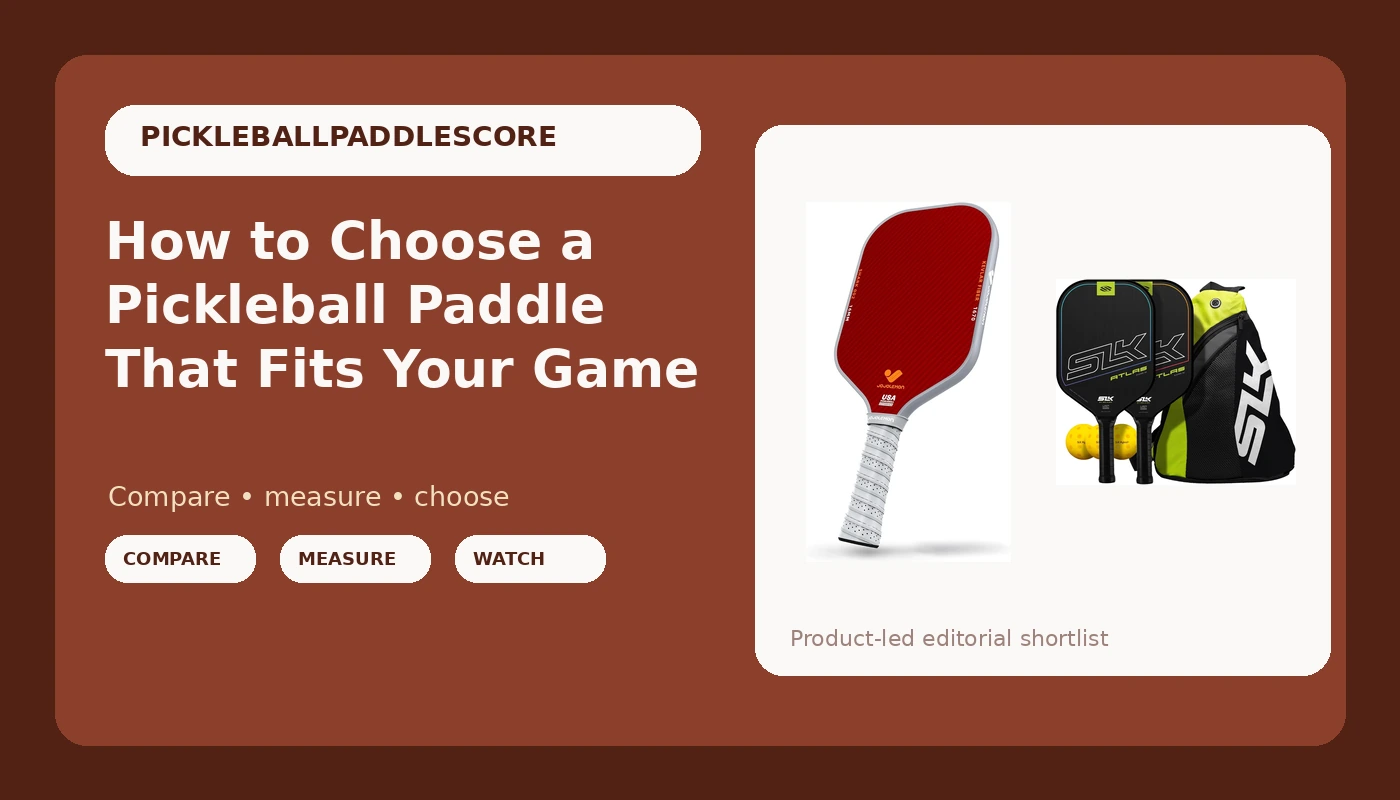
Most recreational players buy a paddle the way they buy running shoes online: one video, one tap, one regret. Learning how to choose a pickleball paddle is not a hard skill, but the marketing around it is built to keep you confused. Nobody sells confusion. They sell "power," "spin," and "pro-level feel," and six weeks later the face texture is smooth and the paddle feels like a cutting board.
I coach at a club with 400 members in Naples, Florida, and I run the demo program that keeps our members from buying paddles off influencer videos. I have demoed more than 60 paddles in five years, and I keep a log of spin rate, sweet spot size, and what each one looks like after three months of doubles. The juniors in our program tell me what feels fast. The 70-and-over league tells me what actually lasts.
Here is the honest summary: the paddle market is about 90% marketing and 10% graphite, and most players would improve more from four lessons than from a new paddle. But you still need something in your hand, and the wrong paddle holds you back more than the right one lifts you up. This guide walks the decisions in the order they matter, then shows you the two paddles I hand a recreational player first.
Why you should trust me
I am not a paddle engineer and no brand pays me. I coach amateurs, from 8-year-olds in our junior clinic to the 70-and-over doubles champs who play four mornings a week. That range is the whole point, because the paddle that feels amazing to a 25-year-old former tennis player is a wrist injury waiting to happen for a 70-year-old with a repaired rotator cuff.
My biases, up front. Sweet spot size beats raw power for nine out of ten players, and you do not need power you cannot control. A paddle that feels wonderful in session one and dead by week six is a failed product no matter how it played fresh. Thermoformed construction is the only real technology story of the last three years, and the "pro model" markup is the worst deal in the sport right now. If that reads like a coach instead of a catalog, good, because that is exactly what this is.
How I put this shortlist together
I judged every candidate on six things: core thickness, face material, edge guard, grip circumference, handle length, and who the paddle is genuinely built for. I did not go hunting for spin-rate charts to paste in here, because a number measured on a machine and a number felt in your hand are two different sports.
The reasoning behind the criteria:
Core thickness decides how much forgiveness you get. A thicker core gives you more dwell time and a bigger sweet spot. A thinner core gives you pop and a smaller margin for error. This single spec drives more outcomes than any other number on the box.
Face material decides the bite. A carbon fiber face holds texture that grabs the ball on dinks and third-shot drops. A fiberglass face is more forgiving and cheaper but generates less spin for most players.
The edge guard decides whether the paddle survives a season of doubles. Edges chip and faces peel. A guard that sticks out too far catches the ball on low resets, which is a real playing cost, not a cosmetic one.
Grip and handle decide comfort more than most buyers admit. Squeezing a grip that is too small wrecks your wrist and your dinks by the second game.
Price bracket matters mostly because I stay in the middle of the market, where the value is. Below it you get dead cores. Above it you pay for pro sponsorships.
Then I matched the two paddles below to the two most common buyers who walk into my club: a household where two people are learning the game, and a single player who wants a carbon face and a control-leaning core.
The paddles I'd start with
Two very different jobs, two very different paddles. Pick the one that matches your situation, not the one with the louder marketing.
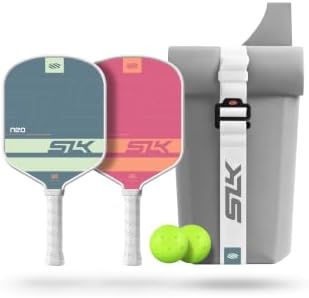
The family and first-paddle pick: Selkirk Sport SLK Neo Pickleball Paddles Set of 2 + Pickleballs + Sling Bag
 Visit on Amazon →
This is the paddle set I point at when two people in the same house are starting together, or when one player wants a spare so a guest can play. You get two paddles, balls, and a sling bag, which sounds like filler until you have watched a beginner carry three loose balls in a jacket pocket for an hour. The bag keeps the paddles out of a hot car trunk and keeps the balls with the paddles, and that alone saves more club arguments than any spec sheet will.
Why a set makes sense at this stage: if you do not yet know whether you will play three times a month or three times a week, buying a matched pair cheaply beats buying one expensive paddle blind. Two people can split the cost, both of you get on a court, and neither of you has committed to a spec until you know how you actually play. The junior clinic parents love this route because the second paddle becomes a sibling's paddle instead of a second purchase.
Flaws but not dealbreakers: this is an entry-level set. Do not expect the grit of a carbon face or the weight tuning of a premium paddle, and do not expect it to be the upgrade for a 3.5 player whose hands are already fast at the kitchen line. If you are the strongest player in your house, buy the set for the family and shop for your own paddle separately.
Anyone buying their first paddles, or outfitting a driveway court for guests, starts here.
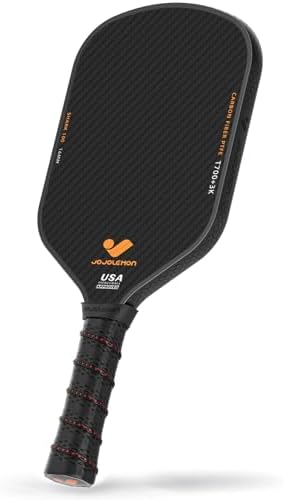
The spin and consistency pick: JOJOLEMON Pickleball Paddles, Carbon Fiber Pickleball Paddle with a 16mm Shark Power Polymer Core, The Pickleball Rackets Designed for Ultimate Spin & Consistency
 Visit on Amazon →
This is the single-paddle route, and the spec sheet tells a coherent story: a 16mm polymer core paired with a carbon fiber face, which is the control-leaning, spin-leaning corner of the market. A core that thick gives you more dwell time and a wider sweet spot, and a carbon face holds the texture that creates bite on dinks, third-shot drops, and the low-to-high roll you need for topspin drives.
Who it is for: the player whose errors come from the ball jumping off the paddle. If you hit the net on your drops and watch your reset shots fly long, the problem is usually rebound speed you cannot manage yet, and a thicker core is the honest fix. It also suits the doubles player who lives at the kitchen line and wins points with placement instead of pace.
Flaws but not dealbreakers: do not buy a 16mm control core expecting free power. If you lose points by failing to finish, a thinner core is the tool you want. Also, carbon face texture wears with play, and in Florida humidity the two ways a paddle dies are a chipped edge and a face that has gone smooth. Inspect the edge guard and the face finish before you commit, and treat the grit as something you maintain, not something you own forever.
Anyone moving up from a rental paddle or a worn out starter paddle, and anyone who wants the spin without the pro model markup, should look here first.
How to choose your paddle, step by step
Now the actual process. Work through it in this order and you will not buy twice.
Step one: Decide who is actually playing. If two people in your house play, a matched set of two is the cheapest path to both of you on a court, and you can upgrade later once you know your games. If you are the only player, buy one paddle and put your whole budget into that one paddle.
Step two: Match the core thickness to your miss pattern. Thicker cores give you dwell time, a bigger sweet spot, and forgiveness on off-center contact. Thinner cores give you pop and a smaller margin. If you lose points by popping the ball up and hitting the net, take the thicker core. If your hands are already quick and you cannot finish points at the line, thin down.
Step three: Pick the face for the spin you actually create. Spin is about 30% paddle and 70% technique. A carbon fiber grit face rewards a player with a real low-to-high swing. A flat, short swing gets almost nothing from it. If your contact is still inconsistent, a forgiving fiberglass face will help you more than a gritty one.
Step four: Get the grip right before anything else. Most adult players land somewhere between 4.0 and 4.25 inches. Too small and you squeeze, which kills your wrist and your touch by the second game. If you are between sizes, buy the smaller grip and add overgrip, which is cheaper than buying the wrong paddle and living with it.
Step five: Check the handle length if you hit two-handed. A two-handed backhand needs a longer handle. If you play one-handed, a standard handle keeps the weight down and the paddle quicker at the net.
Step six: Look hard at the edge guard. Edges chip and faces peel, and an edge guard that protrudes catches the ball on low resets. This is the spec that decides whether your paddle is still playable in October.
Step seven: Demo before you buy, or buy where returns are easy. Hit at least 20 balls, not two. Twenty balls tells you whether the swing weight fits your shoulder. Two balls tells you how the paddle looks in the parking lot.
Step eight: If you are under 3.0, buy the lesson first. Four lessons with a good coach will move your rating further than the most expensive paddle on the wall. I say that as a coach, and I know it is not what the paddle aisle wants you to hear.
What I'd skip, and why
The pro model markup. The difference between a pro model and the standard version of the same paddle line is usually cosmetics, a slightly different core, and a sponsorship budget. That is the worst value in the sport right now.
Anything that arrives unapproved. Check the USA Pickleball approved paddle list by date before you enter a tournament. Paddles that claim approval and arrive without it are a pet peeve of mine and a paperwork problem for you.
Influencer codes that add cost. A discount code on a paddle that was priced up to absorb it is not a discount. Compare the same model without the code.
Ultra light paddles for beginners. Under about 7.5 ounces with a thin core, there is not enough mass behind the ball, and the vibration goes straight into your elbow. Light is a preference for advanced players, not a starting point.
Thermoformed power paddles at the top of the market. Excellent paddles, wrong first paddle. If you cannot control the rebound of a control core, you cannot control a thermoformed power frame either.
No-name bargain sets for a three-day-a-week player. A dead core will not announce itself on day one. It shows up in month two when nothing you hit goes where you aimed, and you have already spent the money.
What this all costs you over a season
I am not going to quote prices here, because they move, and because the math that matters is not the number on the page. It is what you spend per season to stay on the court.
The set of two splits one purchase across two players, which is the lowest cost per person on the list, and it covers the guest who shows up without gear. The single carbon control paddle is one purchase for one player and does not need a partner to justify itself. Either way, you are making one decision now and living with it for the next year of doubles, which is the only comparison that matters.
The expensive path in this sport is buying the wrong paddle twice. The player who starts with a control-leaning core and a face that suits their swing replaces one grip a month and nothing else. The player who starts with a pro model power frame because an influencer said so replaces the paddle by spring, and usually adds an elbow brace to the order.
So work the steps in order. Be honest about your miss pattern, buy the core that fixes it, check the edge guard, and demo anything you can before you spend. Do that and you will not be back in the paddle aisle in six weeks.
That's the job. The paddle is a tool, not a ranking. Buy the one that fits your game today.