Most club demo nights look the same. Forty members crowd a folding table stacked with paddles, pick them up by color, take three air swings, and buy whatever the loudest person in the room recommends. Two months later half of those paddles are dead and the same players are still popping up their third shot.
Learning how to choose a pickleball paddle is not complicated. It is specific. You need to know your level, your grip, your budget, and how long you plan to keep the thing before you hand over a card. Everything else on the spec sheet is either a difference you can feel or marketing you cannot.
I coach at a 400-member club in Naples, Florida. I have demoed more than 60 paddles in five years, and I keep a log on each one: spin rate, sweet spot size, and how the face and the edge guard hold up after three months of doubles. The juniors I coach and the 70-and-over league give me feedback from both ends of the speed spectrum, which is how I learned that the paddle that wins the first session rarely wins the season.
This is the process I walk members through, plus the two paddles I point them to first.
Why you should trust me
I picked up pickleball in 2019 after playing tennis through college, and I have been coaching at the same Naples club since. My demo log has over 60 paddles in it. Every entry gets the same treatment: a first-session note, a 30-day note, and a three-month note after the paddle has survived real doubles play in Florida heat and humidity.
I do not publish a number I cannot reproduce with the same player swinging both paddles on the same day. Core density figures mean nothing without that. Neither do spin claims, "power ratings," or whatever the box says about control.
I also hear from both ends of the club. The 70-and-over league tells me which grips get slippery and which edge guards catch the ball on a reset. The juniors tell me which faces go bald in a month. Those two groups are a better testing panel than any influencer with a discount code.
How I picked and how I tested
This article is not about buying the most paddle. It is about matching a paddle to a player, and the shortlist below is where I start most members.
Here is what I actually look at.
Sweet spot size. For nine out of ten recreational players, a bigger sweet spot beats raw power. You do not need power you cannot control, and a paddle that punishes you two inches off center will make you a worse player for as long as you own it.
Core and thickness. Thicker cores generally give you more forgiveness and a softer feel on resets. Thinner cores give you more pop and a faster hand at the kitchen line. Neither is better. The question is which one your game needs.
Grip. Florida humidity eats grip tape for breakfast. A high-tack grip that survives a July doubles session matters more than a tenth of an ounce of swing weight.
Face texture. Grit wears off. If a paddle's spin comes entirely from a rough surface that goes smooth in six weeks, you paid for a season of spin and got a month.
Durability. Edges chip, faces peel, cores go dead. A paddle that feels amazing fresh and flat after six weeks is a failed product no matter how it played on day one. The brands that fix their edge guards keep my repeat recommendations.
Approval. USAPA approval is a claim until you check it. I have seen paddles arrive with approval language on the box and no listing to match. Verify before you buy, especially if you play tournaments.
For the two paddles below, I ran the same checklist I run on everything: how they feel for a beginner's first session, how the grip holds in humidity, how the face reads after regular doubles, and whether the approval claim holds up.
The shortlist: two paddles worth your attention
One is a set you can hand to a family or a brand new player without wincing. The other is the single paddle I would buy if I were spending my own money and planned to keep it for two years. They are not competitors. They are two different answers to the same question.
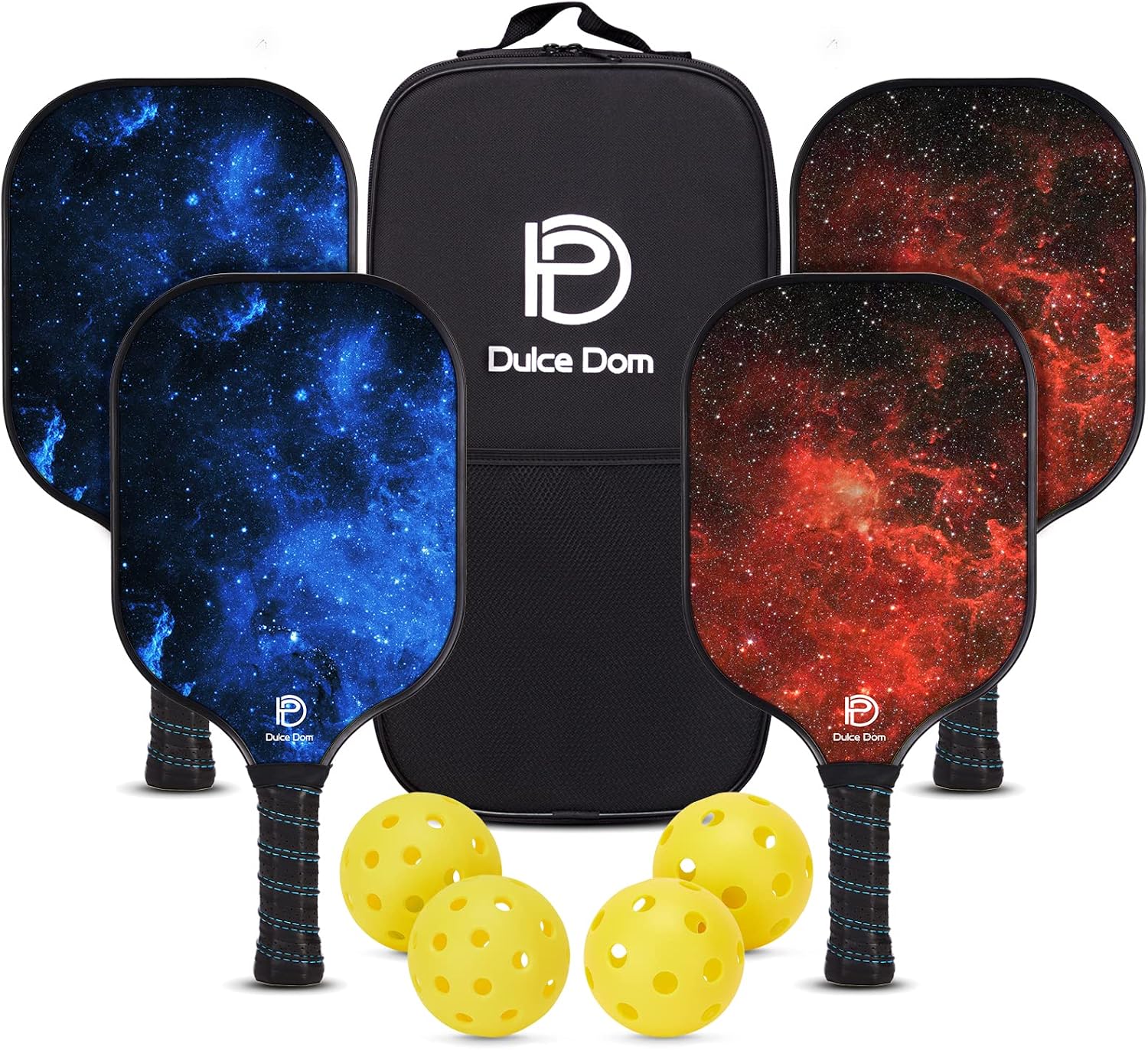
Budget pick: DULCE DOM Pickleball Paddles Set of 2/4 - USAPA Approved
 Visit on Amazon →
This is the set I point to when someone walks in with a spouse, a teenager, or three neighbors who all want to try the sport on a Saturday. It comes as a set of two or four, it is USAPA approved, and it removes the single biggest excuse new players use, which is that they are waiting to buy a paddle before they come out.
What you get for the money is a paddle that does the job at the recreational level. The face is not going to give you tour-level spin, and the core is not built for someone who plays five days a week and hits hard. But for a first season, a family set, or a club loaner bag, that is exactly the right trade. You are buying reps, not gear.
The honest caveat: sets are built to a price, and the parts that fail first are the grip and the edge guard. If you play twice a week in Florida, plan on replacing the grip tape and watching the edges. When the face goes smooth or the core softens, retire it and move up. Do not try to save a dead paddle with new tape.
Flaws but not dealbreakers: The included grips are fine for a dry climate and mediocre in humidity. Add overgrip and it stops mattering.
Anyone brand new, anyone outfitting a family, and anyone who wants a spare set for guests should start here.
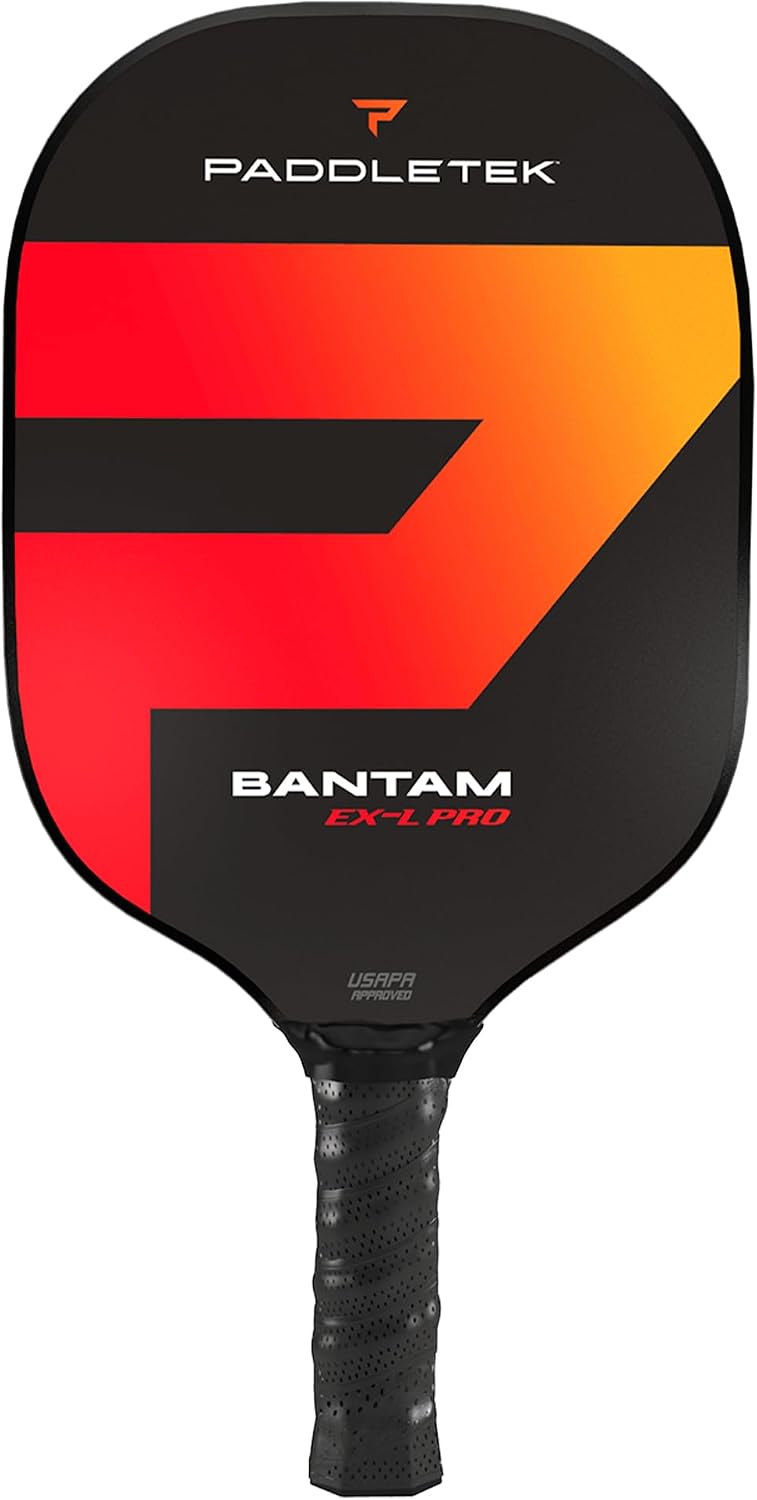
Upgrade pick: Paddletek Bantam EX-L Pro Pickleball Paddle | Professional Pickleball Paddles with Honeycomb Core, Velvet Textured Polycarbonate Surface, Bantam SRT Core & High Tack Performance Grip | USAPA Approved
 Visit on Amazon →
This is the one I would buy for myself. It is USAPA approved, it runs a honeycomb core with the Bantam SRT core construction, and the face is a velvet textured polycarbonate, which is the kind of surface that gives you spin without feeling like sandpaper in your hand. The high tack performance grip is the part I care about most, because it is the part that decides whether your paddle stays in your hand during a humid July doubles match.
This is a single paddle, not a set, and that is the point. Once you know you are going to keep playing, the math flips. One paddle you actually like, with a grip that holds and a face that keeps its texture, is worth more than a closet full of sets you tolerate.
Two things to know before you order. First, it is a paddle for a player, not for a loaner bag, so do not hand it to your nephew for his first day. Second, if you have been playing with a light beginner paddle, give yourself two or three sessions to adjust to the feel before you decide anything. Same-player comparison over a week beats a five-minute demo every time.
Flaws but not dealbreakers: It is a single paddle, so it is not the answer for a family of four on day one. Buy the set first if that is your situation.
Anyone past the beginner stage who plays regularly, wants real spin, and is tired of replacing cheap gear should look here.
The actual fitting process
Now the part you came for. This works whether you are buying the set, the Paddletek, or something else entirely.
Step one: Write down what you actually are. Not what you want to be. Your level, how many times a week you play, whether you have elbow or shoulder issues, and whether you play mostly doubles. A 68-year-old with a sore elbow and a 22-year-old former tennis player need different paddles, and neither of them should be buying based on what the pros use.
Step two: Set your budget band before you touch anything. The set above sits at the entry end of the market, and the Paddletek sits in the middle. Know which end you are shopping before a demo night talks you into the wrong one. Check current Amazon price on both before you decide, because the gap matters more than the spec sheet at this stage.
Step three: Choose your weight class. Heavier paddles plow through the ball and feel stable on blocks. Lighter paddles move faster at the net and are easier on the arm over three sets. If you are new, go lighter. If you are strong and play a driving game, go heavier. If you are not sure, borrow both for a session.
Step four: Decide on core thickness. Thicker cores give you a bigger, softer response that helps on resets and dinks. Thinner cores give you pop. The single most common mistake I see is a beginner buying pop, then spending a season trying to control it.
Step five: Get the grip right. This is not a detail. A grip that is too small makes you squeeze, which causes elbow pain. A grip that is too slick makes you hold tighter than you should. Overgrip is cheap, and the high tack grip on the Paddletek is the kind of thing you notice in the third game, not the first.
Step six: Look at the face, not the paint. Velvet textured surfaces and grit faces both work, but they wear at different rates. Ask yourself one question: if this texture goes smooth in two months, do I still like the paddle? If the answer is no, keep looking.
Step seven: Verify the approval yourself. Both paddles here are USAPA approved, but check the listing against the current approved paddle list before you buy, especially if you play tournaments. I have watched members show up to a sanctioned event with a paddle they assumed was legal.
Step eight: Demo, then commit. Play two sessions with the same ball and the same partner before you decide. A paddle that feels amazing for one session and dead after six weeks is a failed product. A paddle that feels slightly odd on day one and great on day ten is usually the keeper.
The specs that actually matter
Sweet spot size, grip tack, and how the face and edge guard hold up over three months. Those three things decide whether you are happy in October.
Everything else is either real but secondary, or noise. Core density numbers mean nothing without the same player swinging both paddles. "Pro model" labels are the worst deal in the sport right now, because most of what you pay for is a sponsorship, not a construction change. Thermoformed construction is the one genuine technology story of the last few years, and it is worth understanding, but it is not required at every price point, and it is not the reason a beginner should spend more.
The gear arms race is real and I do not love it. Most players at my club would improve more from four lessons than from a $250 paddle. But you still need something in your hand that fits, so buy for fit, not for hype.
What I left out of this guide
I left out the paddles that only make sense for open-level players chasing the last two percent of power. I left out the clearance models that look like a bargain until you read the approval status. I left out anything I could not verify, and I left out the paddles I only know from a rep's pitch.
Two paddles is a short list on purpose. A short list you can actually demo beats a long list you cannot.
What this all costs
Do the math in sessions, not dollars. If you buy the set and play twice a week for a season, you are paying pennies per session for gear that got you on the court. If you buy the Paddletek and keep it two years, the per-session cost drops every week you show up, and the grip and face are the parts that decide whether it lasts.
The expensive path is the one where you buy three cheap paddles in a year because none of them felt right. Pick one, learn it, and spend the difference on court time.
Check current Amazon price on the set if you are outfitting a household, and check current Amazon price on the Paddletek if you are buying one paddle to keep.
The last word
Your paddle does not need to be expensive. It needs to fit the player holding it, and it needs to still feel alive in three months.
Start with the set if you are new or buying for more than one person. Move to the Paddletek when you know the sport is sticking and you want a grip and a face that hold up to real doubles. Either way, demo first, verify the approval, and do not let a demo night sell you power you cannot control.
That is the job. The paddle is a tool. Pick the one that fits your hand.